

The first thing you notice on a couture runway isn’t always the embroidery or the silhouette. It’s the colour palette. At India Couture Week 2026, colour emerged as one of the season’s strongest storytelling devices, quietly setting the mood before a single detail came into focus.
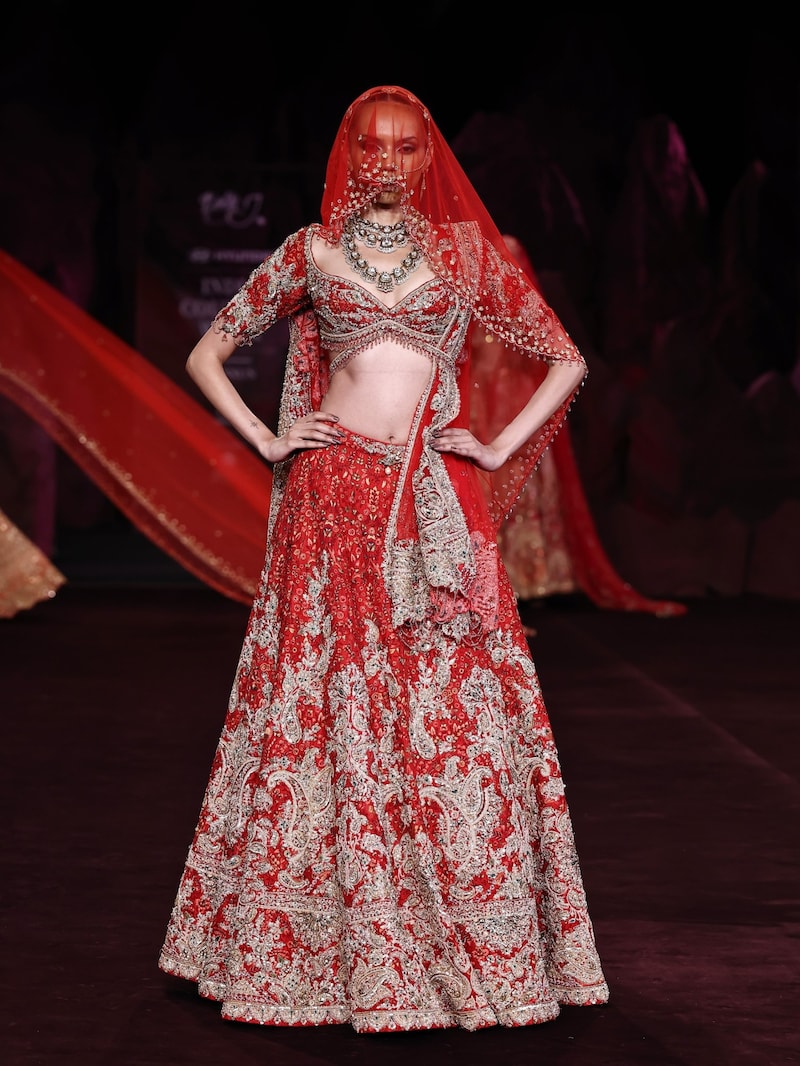
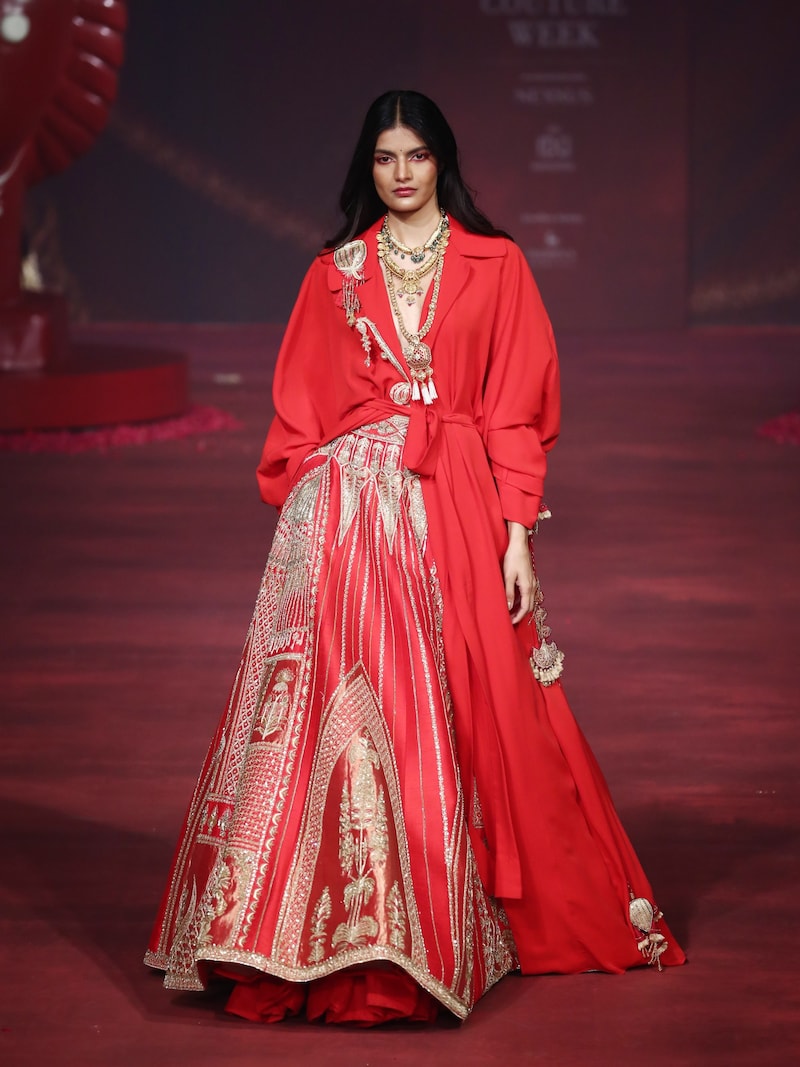
For the longest time, couture in India has been closely associated with bridalwear, and bridalwear has, in turn, been synonymous with red. As much as designers and customers continue to embrace pastels, ivories and muted tones, red has an enduring ability to command the couture stage. At ICW 2026, it returned with the same unmistakable presence, but in interpretations that felt distinctly contemporary. Designer Masaba Gupta made her bridal debut this season with a collection steeped in the colour, making a case for an all-red bridal wardrobe. Creative director Fraze Tasnim, meanwhile, turned to regal velvets drenched in deep reds, creating a sense of old-world opulence. Designer Dolly J brought the hue into sharper territory, using red across sculpted silhouettes, high-slit gowns and lehengas. Together, these collections reaffirmed the status of red as couture’s most enduring colour.
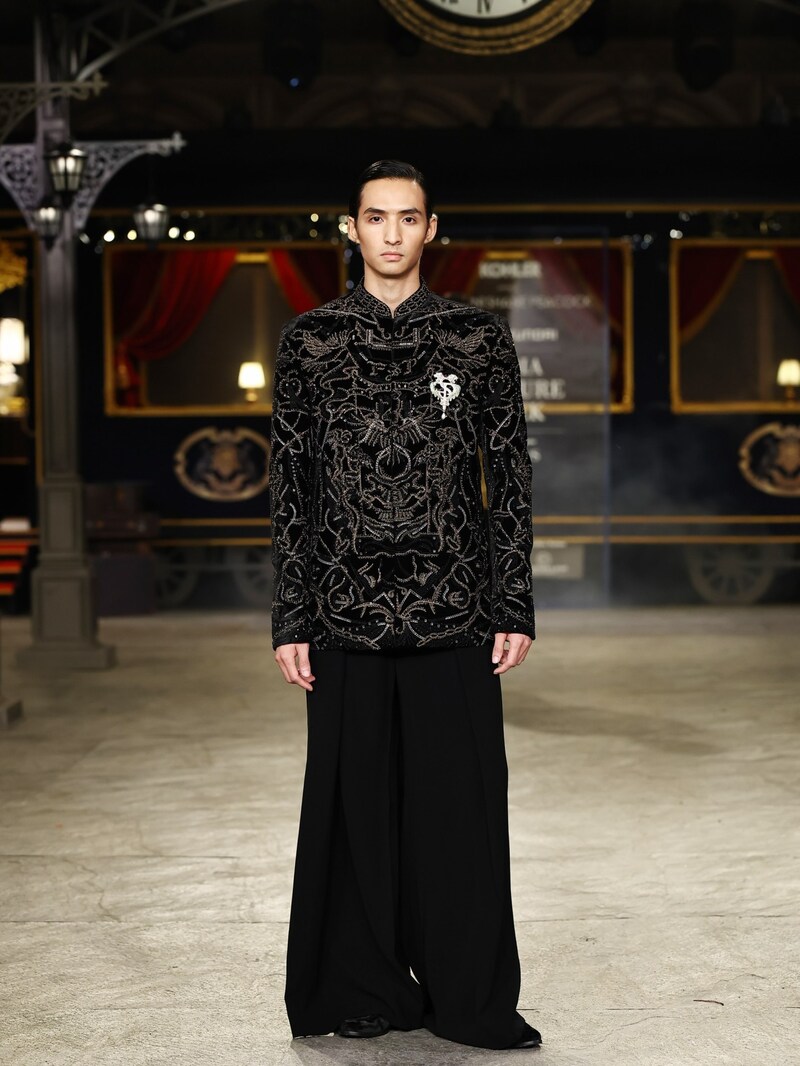
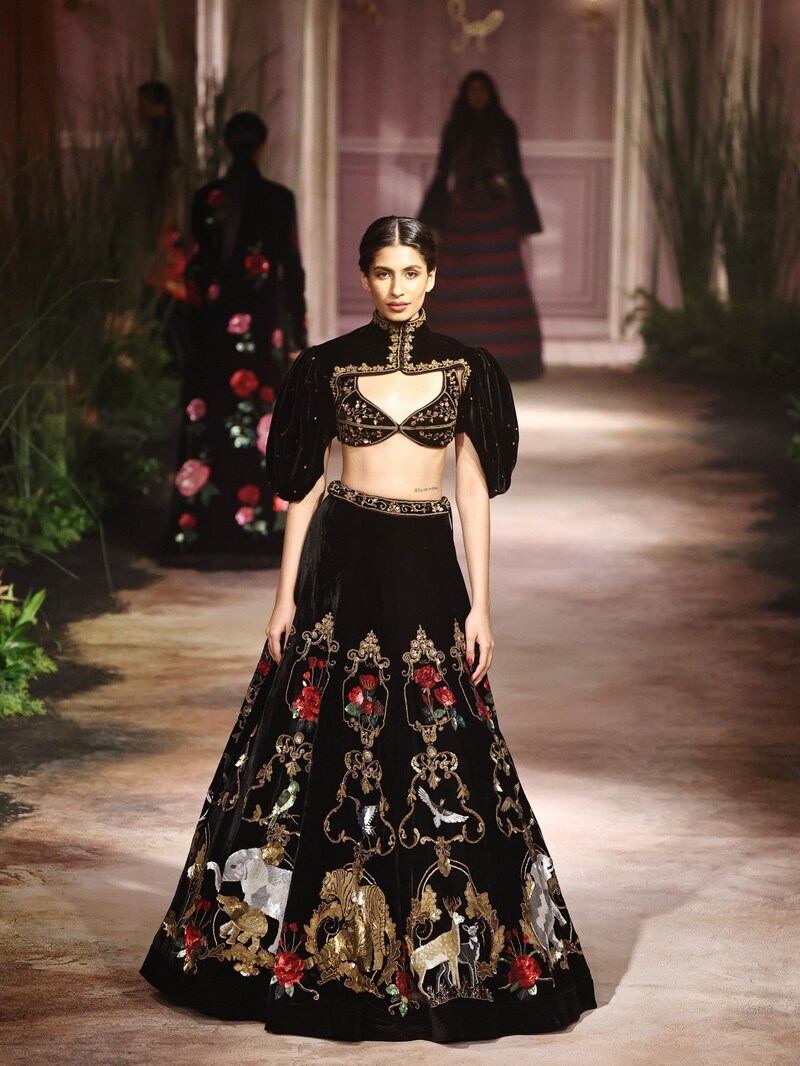
If red represents couture’s romance with tradition, black speaks to its inherent sense of drama. This season, the darkest shade on the palette felt anything but predictable. House of Rohit Bal employed jet black to present a collection rooted in regal legacy, allowing the depth of the colour to heighten its grandeur. At Falguni Shane Peacock, black found a place, bringing a polished, commanding quality to the silhouettes.
But perhaps the most interesting story at ICW 2026 was happening beyond the expected colour codes. As designers looked beyond the conventional bridal palette, unusual and saturated hues began to redefine what couture could look and feel like. The shift wasn’t necessarily about abandoning tradition, but about expanding it.
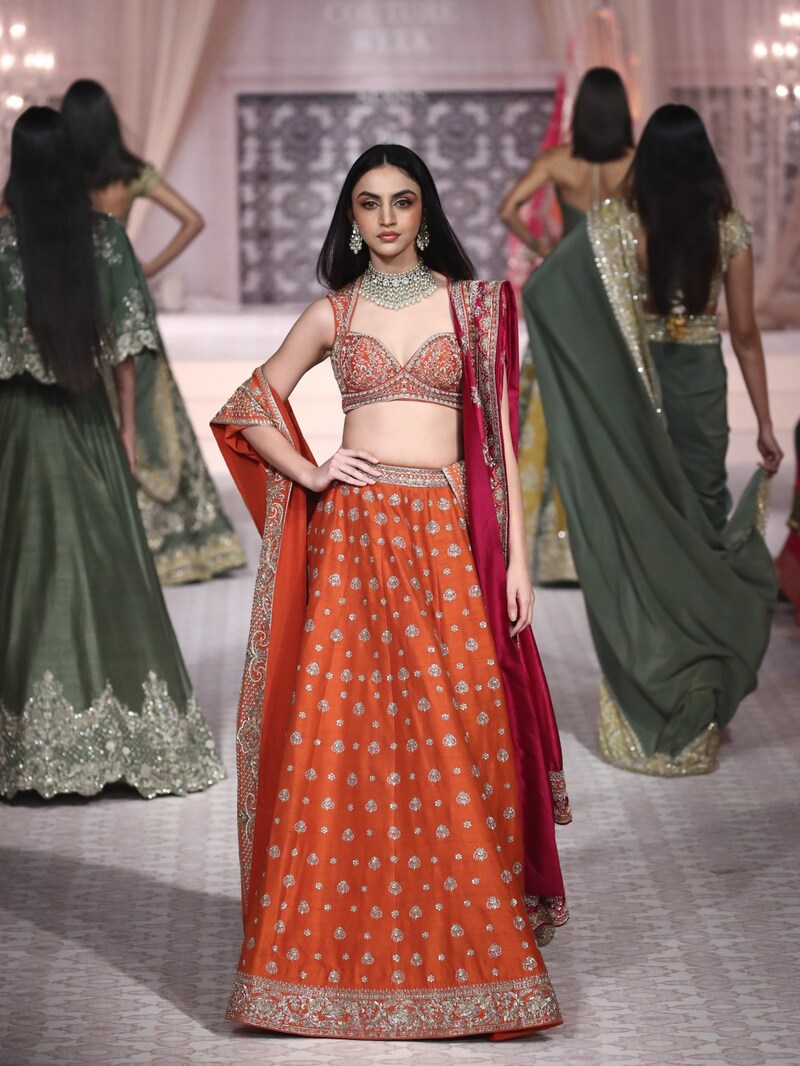
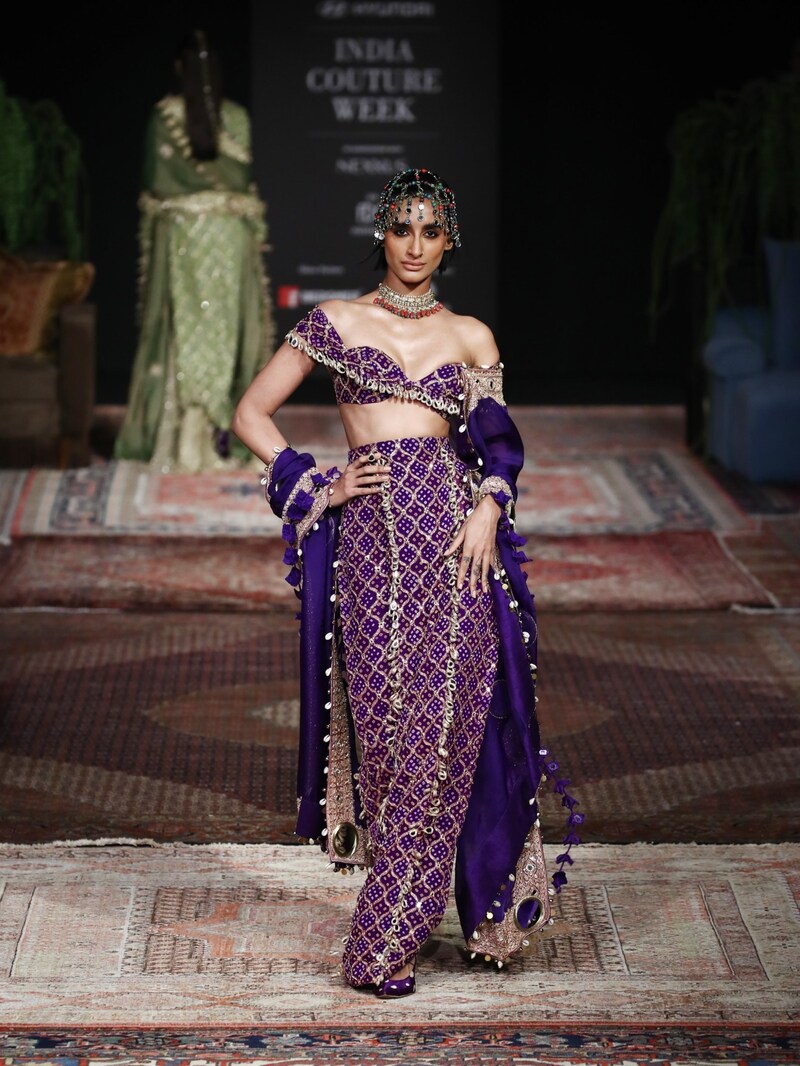
For her couture debut, Arpita Mehta moved decisively beyond the pastel-and-ivory vocabulary, introducing burnt orange, teal and royal purple into her collection Ceremonial. The colours brought a fresh energy to familiar couture techniques, appearing across sculpted lehengas, fluid saris and contemporary drapes. Aisha Rao similarly embraced purple, using the rich hue across dramatic lehengas that felt playful, unconventional and distinctly modern. At Rimzim Dadu, colour took on an entirely different character through metallic surfaces, where reflective silver and molten-looking textures made the garments appear almost illuminated from within.
Perhaps this is where Indian couture is headed: not away from its traditions, but towards a more expansive interpretation of them. After all, couture has always been about making an entrance. This season, colour simply made sure it was the first thing you noticed.


Really loving the game variety here. I had a great run last night and the bonuses are actually worth it. Check out pk888gj if you want a fun experience.
I have tried a few platforms lately but this one really stands out. The interface is smooth and the payouts are surprisingly fast. Definitely worth a try for anyone looking for a reliable spot. Check out kr855win for a great experience.