

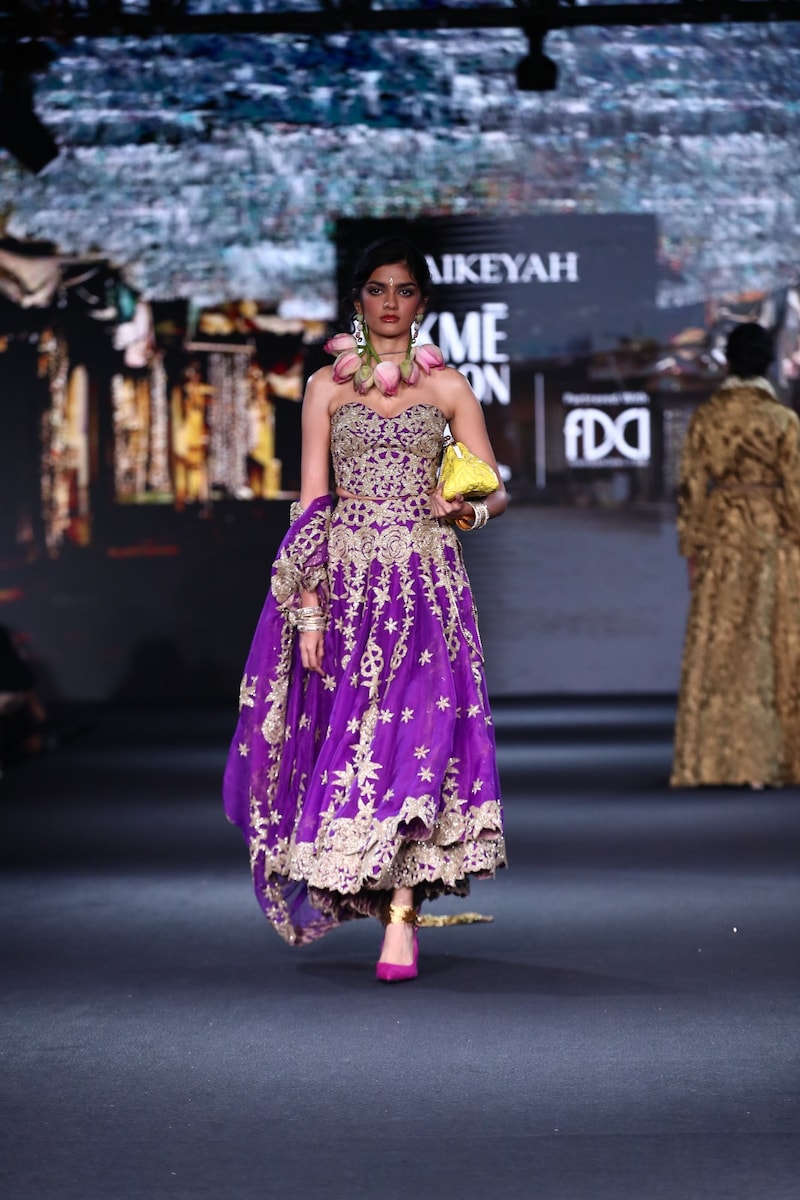
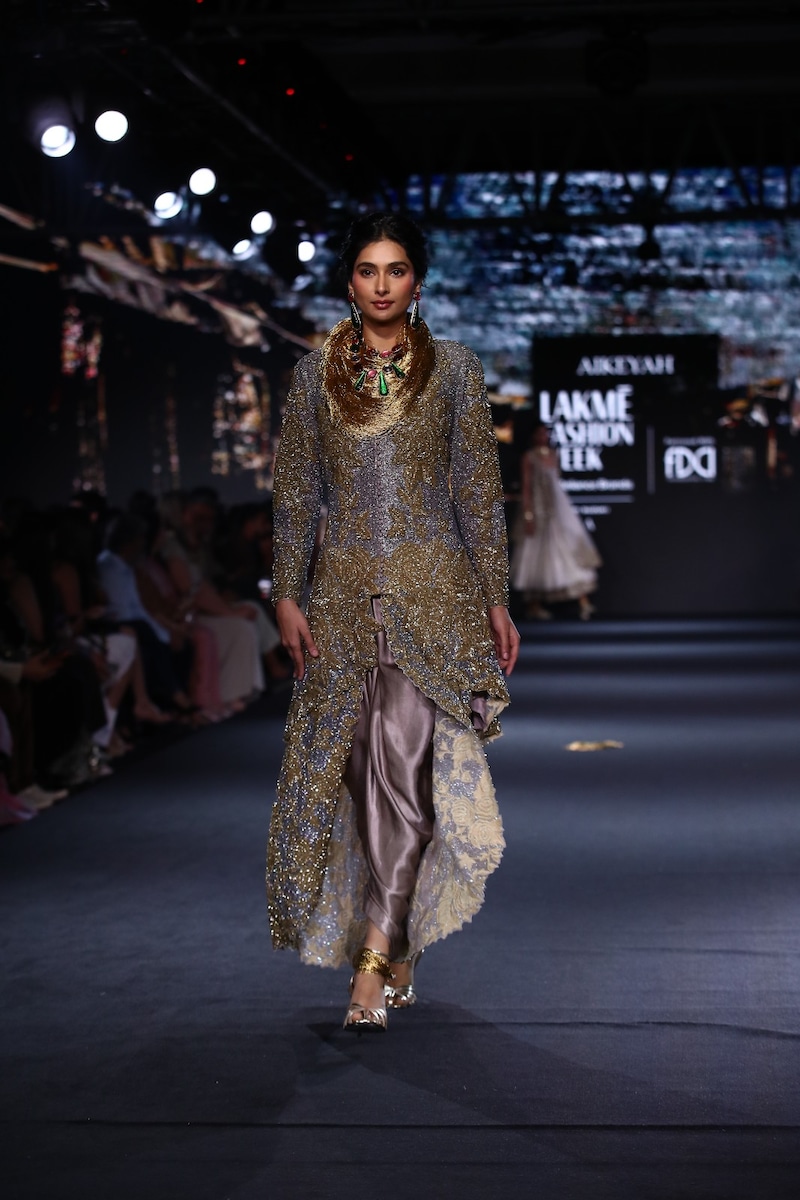
The Indian bazaar has never been one for following rules. Colours, textures, and unexpected combinations come together with an ease that feels entirely instinctive. It is this distinctly Indian approach to dressing that inspired Aikeyah’s BAZAAR, presented at Lakmē Fashion Week 2026. Rooted in the label’s signature idea of minimal maximalism, the collection found a balance between restraint and expression through considered layering, distinctive silhouettes and metallic accents. Beyond the runway, BAZAAR was a celebration of individuality and the freedom to dress without prescriptions.
We spoke to Isha Dhingra about finding order in chaos, making excess feel effortless and creating clothes that leave room for personal interpretation.
FL: What drew you to the everyday chaos of Indian local markets, and how did their colours, textures and unexpected combinations shape this collection?
ID: I’ve always been fascinated by the apparent disorder of India. Particularly in our bazaars, where colours coexist without necessarily coordinating, textures overlap, and seemingly unrelated elements come together with remarkable ease.
There is an inherent order within this chaos, a certain visual confidence that is distinctly Indian. Nothing necessarily matches, yet everything belongs. With BAZAAR, I wanted to explore this unburdened approach to dressing – the way everyday Indians combine colour, ornamentation and influences without being particularly concerned with conventional rules of fashion. The collection is less a literal interpretation of the marketplace and more a celebration of that instinctive individuality.
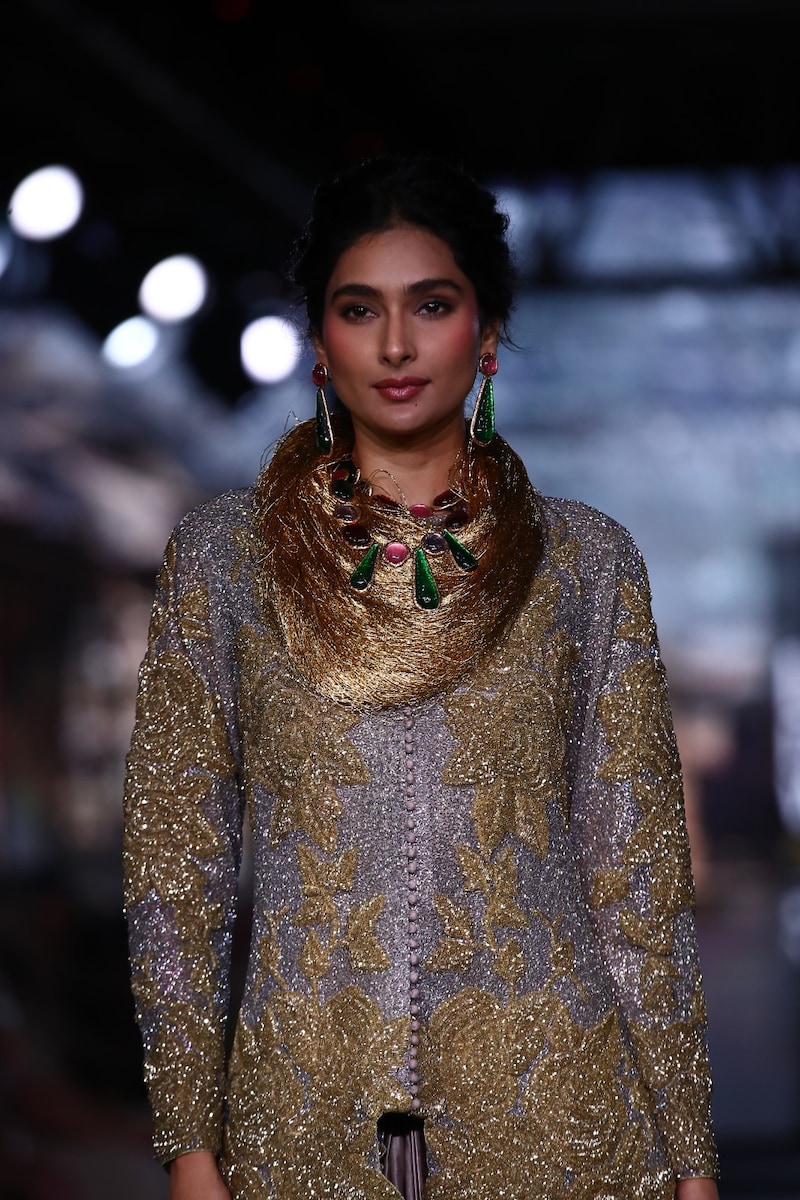
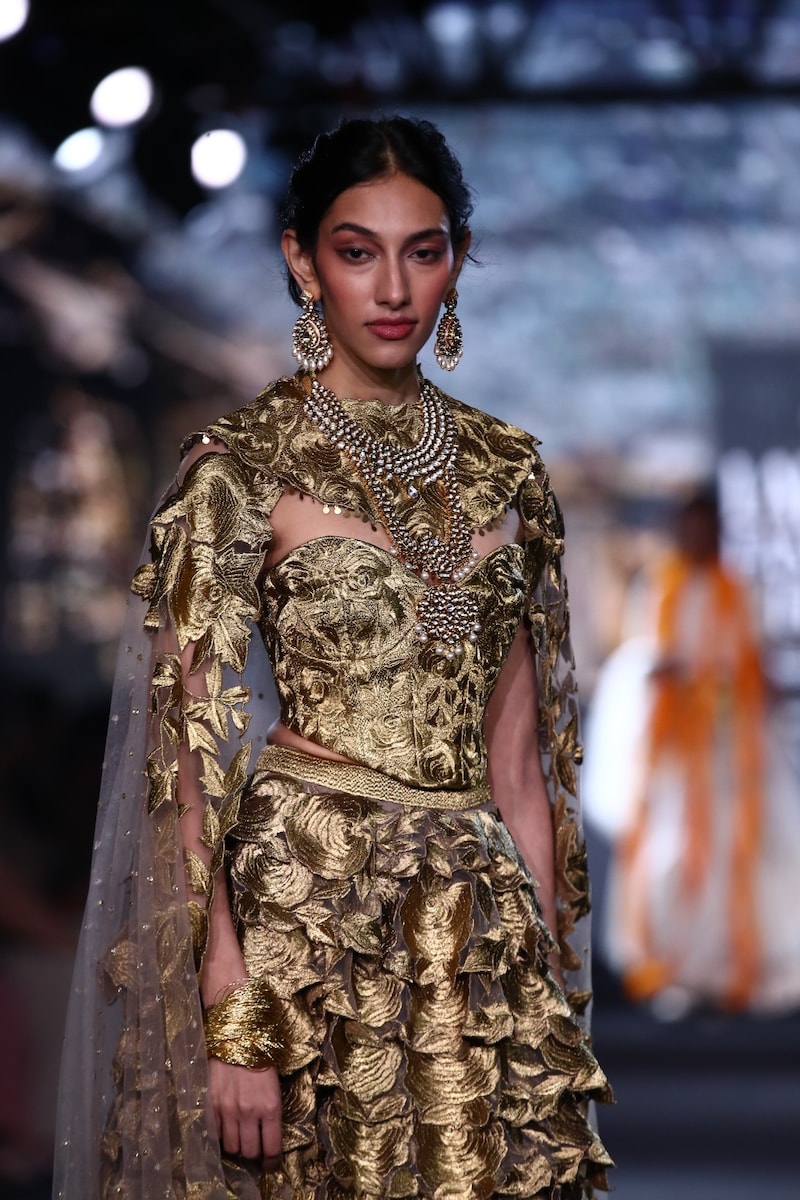
FL: AIKEYAH’s design philosophy centres on “minimal maximalism.” How did you translate this balance of restraint and excess into the collection?
ID: For me, minimal maximalism is not about reducing excess, but about making it intentional. I’ve always believed that a garment can be expressive without being overwhelming, and that extravagance doesn’t necessarily have to be elaborate.
With BAZAAR, we explored this through distinctive silhouettes, considered layering and metallic accents. There is a certain restraint in how these elements are brought together, even when the individual pieces are quite expressive.
It’s really about finding that balance – an ease with excess, a comfort with contrast, and allowing every element to have its own identity without competing for attention.
FL: How did you approach layering to create visual interest without overwhelming the wearer?
ID: Layering has always been integral to AIKEYAH’s design language. I find it particularly interesting because it allows a garment to evolve depending on how it is worn. With BAZAAR, we approached layering through variations in proportion, length, texture and silhouette. Rather than simply adding more, the idea was to create depth and movement while retaining a certain lightness and ease. I think the most interesting combinations are often the ones that appear effortless, even when they have been carefully considered. For me, layering should add personality to a look, not take away from the person wearing it.
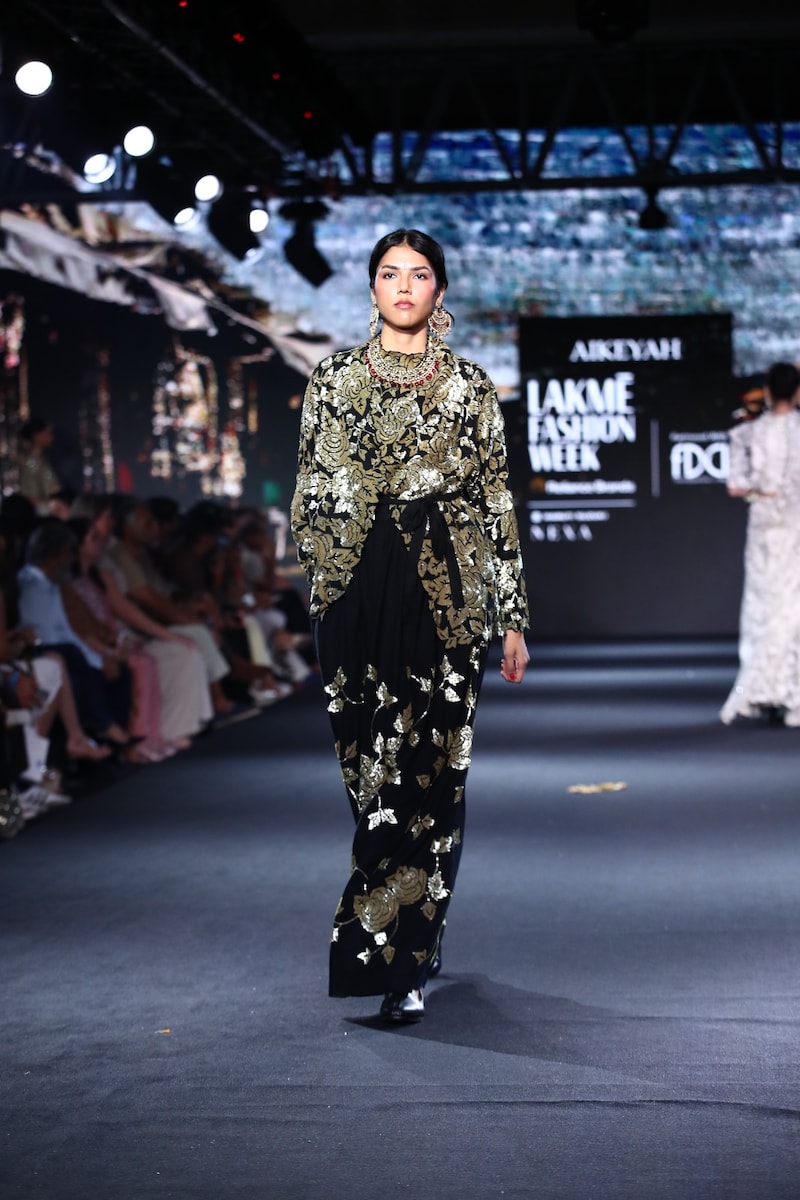
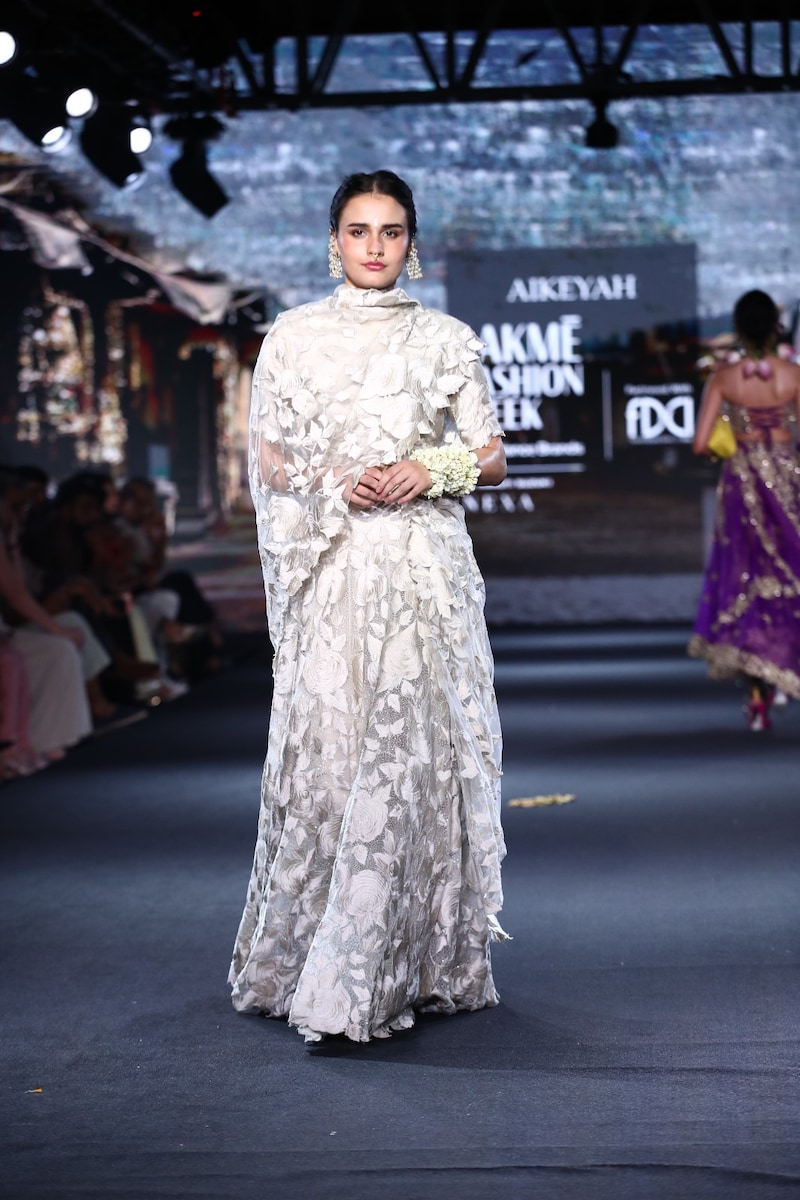
FL: The collection encourages women to trust their individual instincts rather than follow conventional styling rules. How would you like them to interpret these pieces and make them their own in everyday dressing?
ID: I would love for women to wear these pieces without feeling obligated to style them the way we presented them on the runway. I’ve never particularly believed in rigid rules of dressing, or the idea that certain things must be worn together, or reserved for specific occasions. Indian wardrobes have always had this wonderful freedom – mixing old with new, precious with ordinary, traditional with contemporary.
A heavily embellished piece can be worn quite casually, just as something simple can become extraordinary through the way it is styled.
Ultimately, I would like women to take these pieces into their own wardrobes, reinterpret them, repeat them, and wear them in ways that feel entirely personal. Good design should allow individuality, not dictate it.
FL:After the milestone at Lakmé Fashion Week 2026, what’s next for AIKEYAH?
ID: Lakmé Fashion Week has been an important moment for us, particularly because BAZAAR allowed us to put our design philosophy at the forefront. For me, the focus has always been on building a distinct design vocabulary rather than simply following seasonal trends. I want AIKEYAH to continue evolving through experimentation with silhouettes, textiles, craftsmanship and the many ways in which Indian clothing can be interpreted.
There is still so much to explore within our own cultural and sartorial vocabulary. The idea is to continue creating clothes that feel relevant to contemporary wardrobes without losing the individuality and character that define AIKEYAH.
More than anything, I want to build a body of work that is recognisably AIKEYAH – not because it follows a particular trend, but because it has a point of view of its own.


