


The first time I met Pratik Gandhi was over a Google Meet call, somewhere in the middle of a day he casually described as “ fairly free.” In reality, it was one that was overflowing with calls, events, looming schedules, and another meeting waiting immediately after this one. Knowing we had just an hour with him, we expected a conversation shaped by the clock. Instead, he made time feel irrelevant, settling into a dialogue that gradually developed with an ease and generosity that belied the schedule.
That quality lingers around Pratik Gandhi. When he speaks, he carries this specific kind of pause – not silence in the literal sense, because conversation with him moves quickly, tumbling through detailed anecdotes, laughter, and self-correcting detours. Instead, it’s a magnetic pull that feels like he’s narrating a story just for you, leaving you wanting to know more.

But this stillness contrasts with his hyperactive internal clock. When asked what downtime looks like for the busy actor, he said, “Good that you asked this question, because I can bluff here. If you ask the same question to my family members, they’ll tell you the truth. It’s very difficult for me to completely not do anything.”
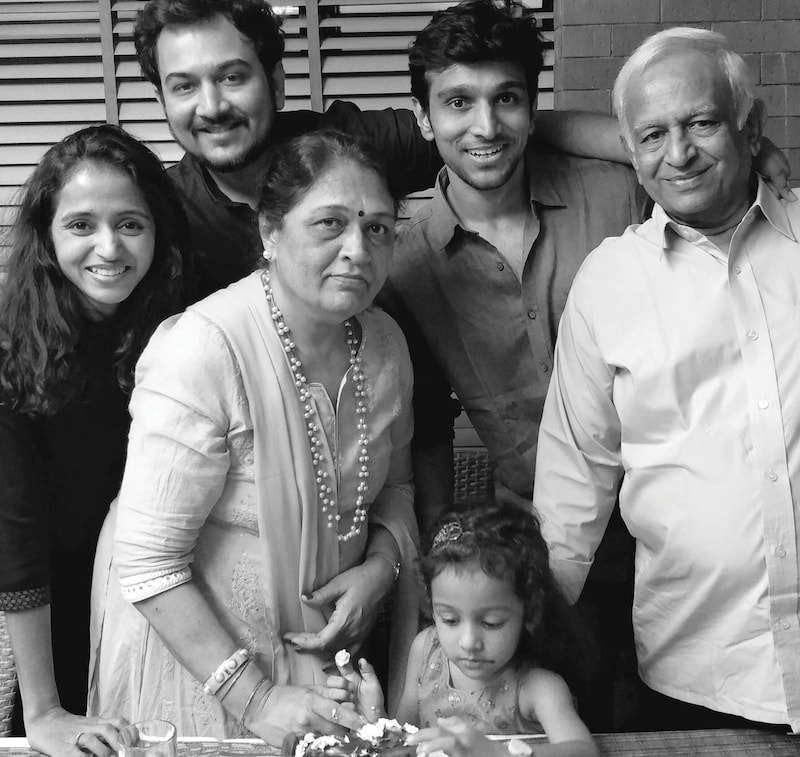
Pratik isn’t exaggerating about his family blowing his cover, either. His brother and close confidant, Punit, backs up this claim. Chatting on the sidelines of our cover shoot, Punit laughs at the memory of Pratik’s many failed attempts at relaxing. He shares, “You know, when Kajal [Pratik’s manager] informs us he has ten free days, we already know what’s going to happen. The first day, he’ll be all in on doing some leisurely activities. By the third day, he’ll call and ask her to set up pending meetings. He just can’t sit still.”

But this is a quality that he’s trying to change. He admits, “I used to laugh at people who used to say that doing nothing is an art. Because this is a particular art form that I could never relate to. But now I’m slowly understanding that slowing down is important, especially for performing artists.” On the rare day off that we caught up with him, he was preparing for theatre performances scheduled later that week. “Closer to the performance, I get extremely nervous,” he confesses. “I have to constantly give myself pep talks like ‘okay, you’ll be able to do it again.’”
This honesty and the need to be on the move, he gets from his mother. When the conversation shifts to what it was like growing up in Surat, he shares, “Doing was always more fun to me than just sitting. I think my mother has a similar personality. She’s 69 now, and I still have to remind her that she needs to sit down for a while.” Asking his mother to relax is now a reminder for him to relax. His childhood mirrored this movement. Before fame arrived, Pratik grew up in a one-room kitchen flat where drinking water had to be carried upstairs every morning from a common tap below the building. “There was no elevator,” he recalls. “We used to stay on the fifth floor. So every morning, I would make five to six rounds carrying water upstairs before school. I used to enjoy it as a workout; I turned it into a game.”
Movement defined him early; so did performance. His first encounter with acting came in fourth grade at Pravrutti Vidyalaya, a school that encouraged agriculture, carpentry, theatre, dance and public speaking alongside academics. Every month, students were encouraged to perform something in front of the entire school. Pratik wrote and staged a five-minute skit with his friends, inspired by stories his grandmother narrated at home. What stayed with him was not applause alone, but the thrilling unpredictability of audience engagement. “I never told people to laugh,” he says. “But they laughed exactly where I thought they would. That felt magical to me.”

“Theatre is an actor’s gym. You constantly churn out everything from within.”
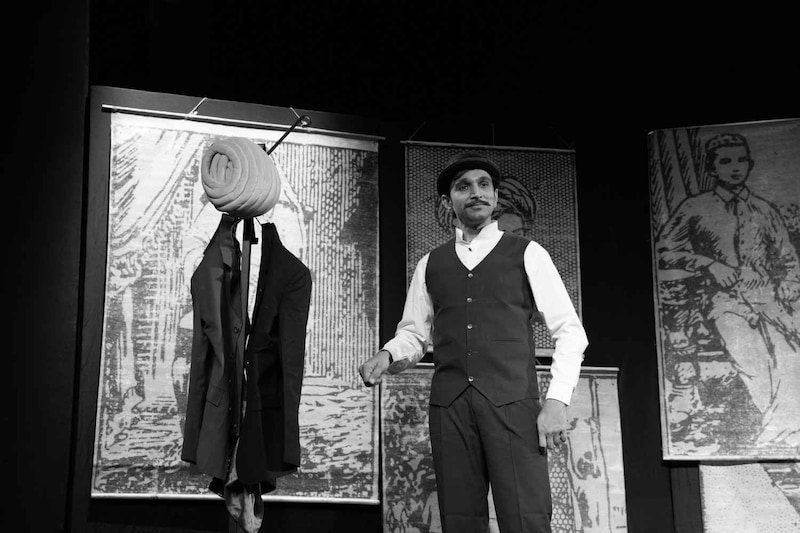
Decades later, he finds that same magical feeling in theatre rehearsal rooms. It’s not the applause that fascinates him; what he loves most about theatre is the preparation that brings it all together. “You’re constantly experimenting with each line, saying it in multiple different ways. Reaching out to that same emotion from different roots. Engaging the whole body, mind, and soul in creating that one scene, or one punch line, or a character.” At one point during our conversation, he recalls an experiment that sounds almost absurd in hindsight. In 2016, he performed the same play, Mohan No Masalo, three times in a single day – first in Gujarati, then Hindi, then English.“It’s a hundred-minute monologue,” he says, laughing at the memory. “And one day I just thought, why don’t we perform the same show in three different languages on the same day? So we did an 11 o’clock show in Gujarati, a 4 o’clock show in Hindi, and an 8 o’clock show in English.”
What he found fascinating about pulling this off is the subtle differences each language demanded. “Language-wise, it’s not only the grammar that changes,”he explains. “The performance grammar changes too. The point of landing a joke changes, the pauses change, the rhythm changes. The English version of the play is precisely ninety-five minutes. The moment I perform the same play in Gujarati, it goes to one hundred and ten minutes. The construction of sentences changes, and the audience’s response changes. Everything changes.”
He studies performance the way an engineer studies systems – taking things apart to understand how they work before putting them back together again. For years, acting existed alongside everything else for him. Engineering college, consulting projects, and Mumbai local trains went hand in hand with late-night rehearsals. Nothing about Pratik Gandhi’s journey resembles the mythology of overnight arrival so often attached to contemporary fame. If anything, his life moved through parallel tracks for so long that neither world seemed willing to fully release him.
After a long stint of working across Surat’s theatre circuit, he moved to Mumbai. Gujarati theatre became his first entry point into the city, a thriving parallel ecosystem where actors could survive entirely through stage performances and touring productions. “We would rehearse for six months for one competition,” he says fondly. “Nobody was a full-time theatre person. Someone had a shop, someone had a job, someone worked somewhere else. But every evening, everybody gathered to rehearse.”
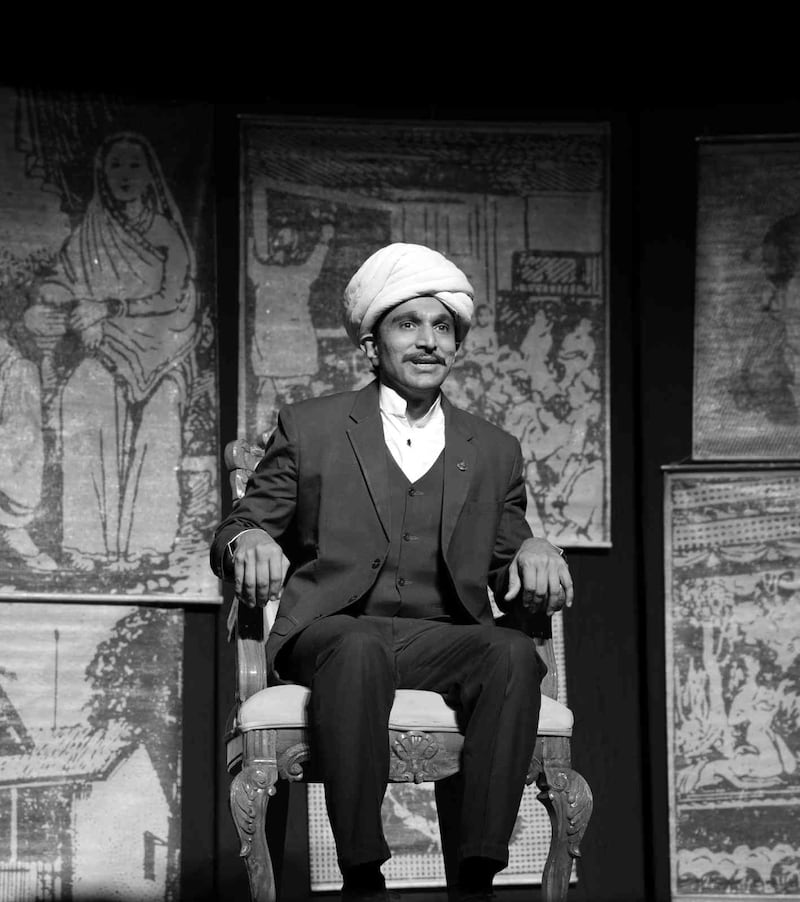
His first commercial Gujarati play eventually ran for more than 230 shows. “That play got me my passport,” he says, smiling. “I travelled on a flight for the first time because of theatre.”
There is a matter-of-factness with which he talks about that period, as though spending entire days at work before rushing off to rehearsals was simply how life functioned. Looking back, he rejects the idea that those years were a sacrifice. “People always say you can’t ride two horses together,” he says. “But what I realised was that the moment you start doing multiple things, your productivity doubles. Your focus doubles up.”
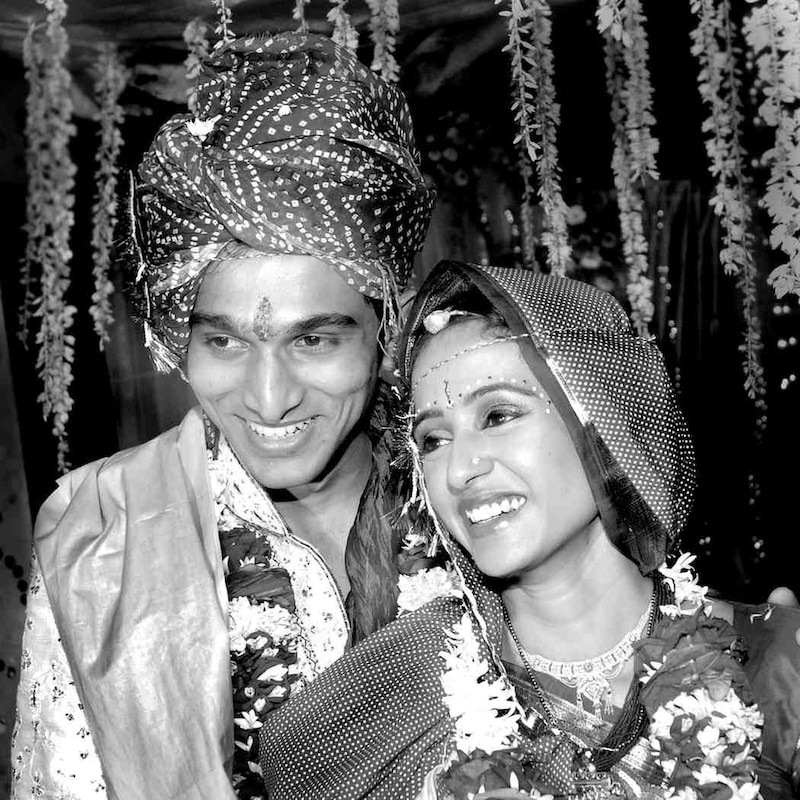
Theatre became his anchor in a city that can often feel indifferent to ambition. But consulting and shows alone were not enough to sustain a life in a city as expensive as Mumbai. In 2008, after 4 years together, Pratik and Bhamini decided to get married. With responsibilities increasing, he joined Reliance Infrastructure as an industrial engineer while continuing theatre simultaneously.
The logistics of continuing the two, however, required a punishing precision. When his corporate office shifted from Santacruz to Ghansoli, his daily commute stretched into a gruelling three-train ride. “So what I started doing is, the moment I got a play, I started learning my lines on the train during the journey. By the time I land at the rehearsals after office, I’m ready with lines and everything. They also used to feel a little comfortable, knowing that I don’t intend to waste their time.” There was an unwritten contract he made with himself to ensure neither world suffered because of the other.
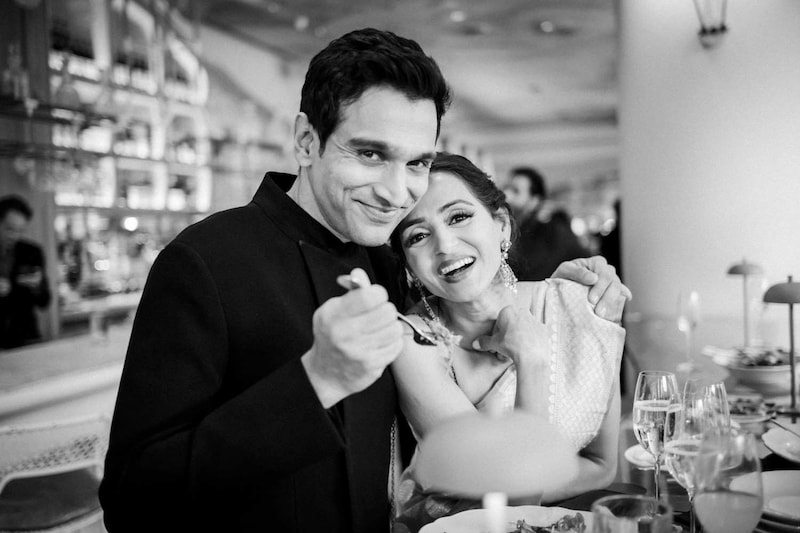
He credits his survival during those exhausting years entirely to his wife, Bhamini. As a fellow theatre professional, she understood the demanding nature of the craft. When you trace their partnership back to its origin, it feels entirely fitting that their worlds collided at a theatre. In 2007, Pratik spotted Bhamini in the audience at a theatre festival production titled Master, Maestro, Swami. Their love story then went on to unfold like an old indie rom-com: an unexpected meet-cute, missed timing, theatre rehearsals, Barista coffee dates, SMS conversations, and a proposal delivered just before he left for a project. “The dumbest thing I ever did,” he laughs, recalling their first coffee date, “was asking her what kind of life partner she was looking for.” And yet, somehow, it worked.

“Success is a very interesting stage of life. The first thing that comes with success is fear. Fear of losing it.”

He looks back at the compassion his family has shown over the years with gratitude. “I was lucky; I got patience, understanding and support from my family. Otherwise, this industry becomes extremely difficult.”
But parallel tracks, by their very nature, eventually demand a choice. For Pratik, that crossroads appeared in 2016. He was 36-years-old when his second feature film, Wrong Side Raju, won the National Film Award for Best Feature Film in Gujarati, breaking a nearly thirty-year drought for regional cinema. “2016 was a time that I thought that it’s now or never for me,” he reflects. What followed was a gradual success in the Gujarati theatre and film circuits. But a wider audience had not yet discovered him.


That discovery eventually arrived through Scam 1992. The Hansal Mehta show made Pratik Gandhi a household name almost overnight. “We finished shooting on 5th March 2020,” he recalls. “And then, from 15th March onwards, there was lockdown.”
The world came to a halt, leaving the team unsure of when the world would get to witness this work. Months passed. At one point, Mehta called Pratik with a message that he still remembers vividly. “He said, ‘Pratik, just be patient. This is gold. You don’t know what you’ve done. Hold your horses.’”
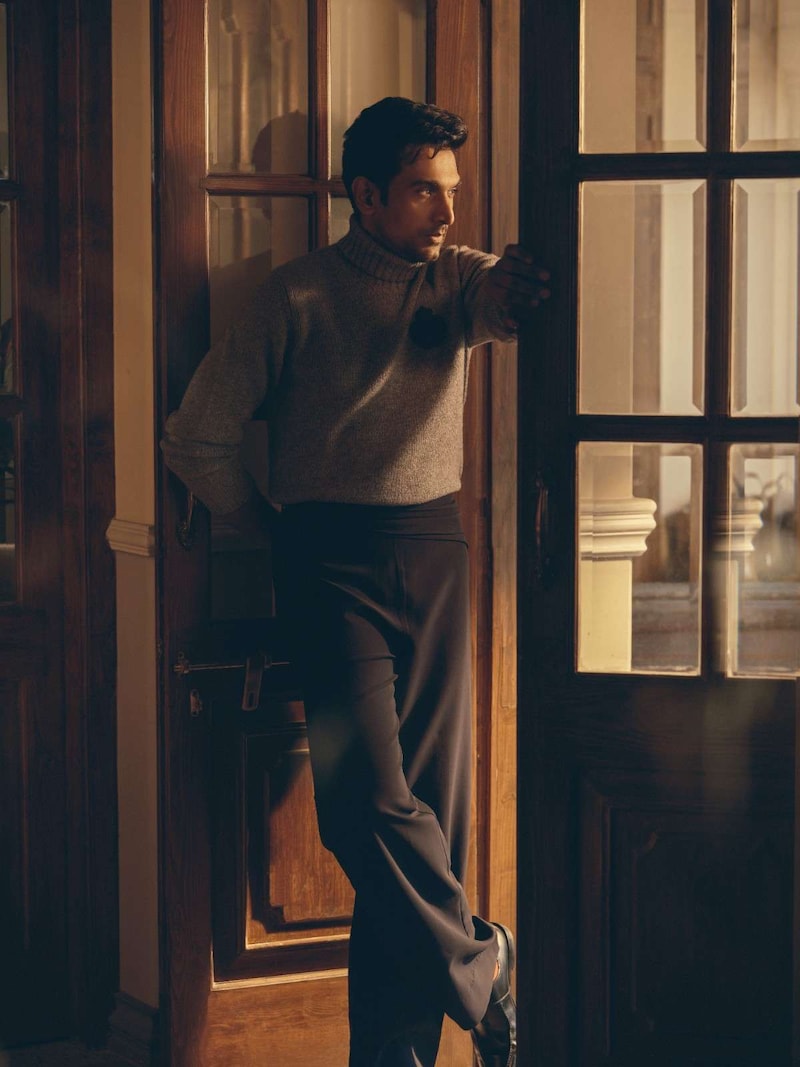

When October 9, 2020 finally arrived, Scam 1992 was released on SonyLiv, but not without a bizarre technical glitch. Only the first nine episodes were uploaded at midnight, leaving viewers with a cliffhanger. But that did not faze the impact of the show. A few days after the release, he went down to the local market to buy vegetables, carrying a specific set of instructions from his mother. He was deep in negotiations over potatoes when he noticed a young girl and her father looking curiously in his direction. “I thought maybe she’d seen one of my Gujarati films,” he laughs. Moments later, the father walked up to him, asking, “Are you the actor who played Harshad Mehta? We watched the whole series last night.”
That was the moment Pratik first realised what Hansal Mehta meant when he said: “This is gold.”Going back to that moment, he shares, “This was released just yesterday,” he says. “It’s a nine-and-a-half-hour series. I thought it was practically impossible that so many people have already watched it.” But they had. A lot of us did.
“I want to be in a position where the moment audiences see me on screen, they don’t know what to expect.”
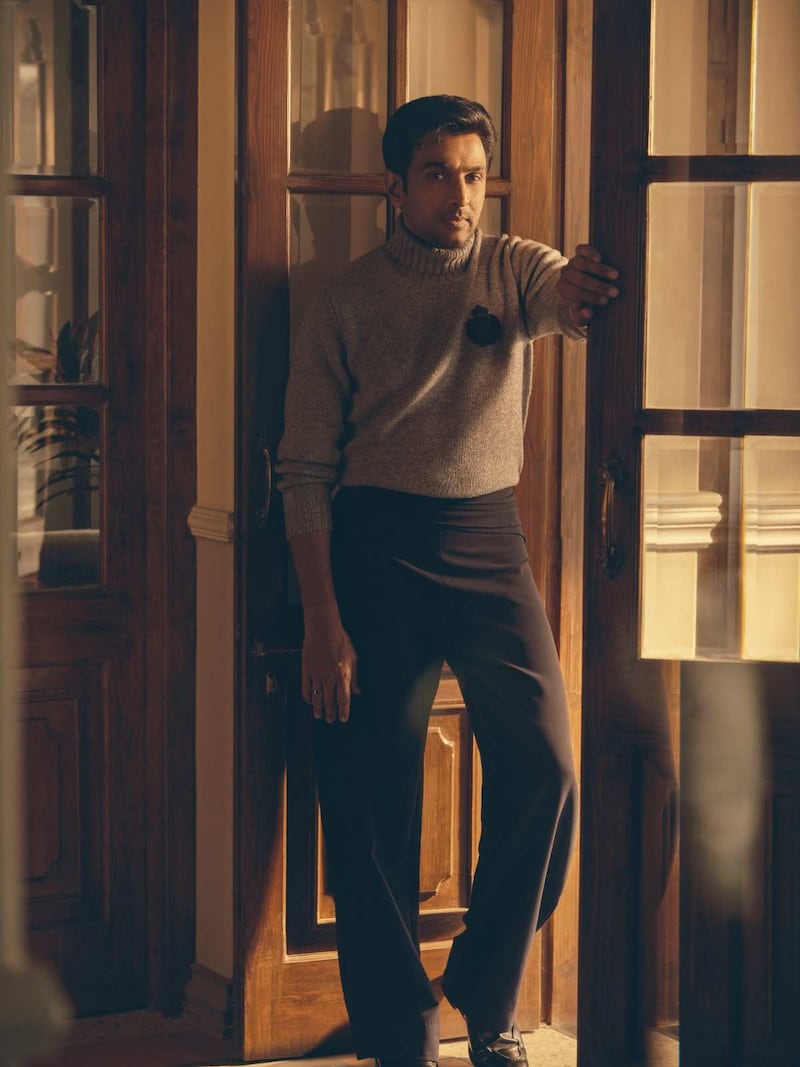
The following weeks unfolded in a blur for him. For nearly forty days, he remained confined to a corner of his house, moving from one virtual interview to another. “Six interviews a day,” he remembers. “For forty straight days.”
Yet perhaps the most remarkable thing about this “overnight success” is what he chose to do afterwards. Instead of protecting the image that had finally brought him mainstream recognition, he deliberately disrupted it with the kind of projects he chose after. “I never wanted to think that people want to see me only in this kind of character, so I should keep doing similar roles. Then I’m becoming the enemy of my own career,” he says.
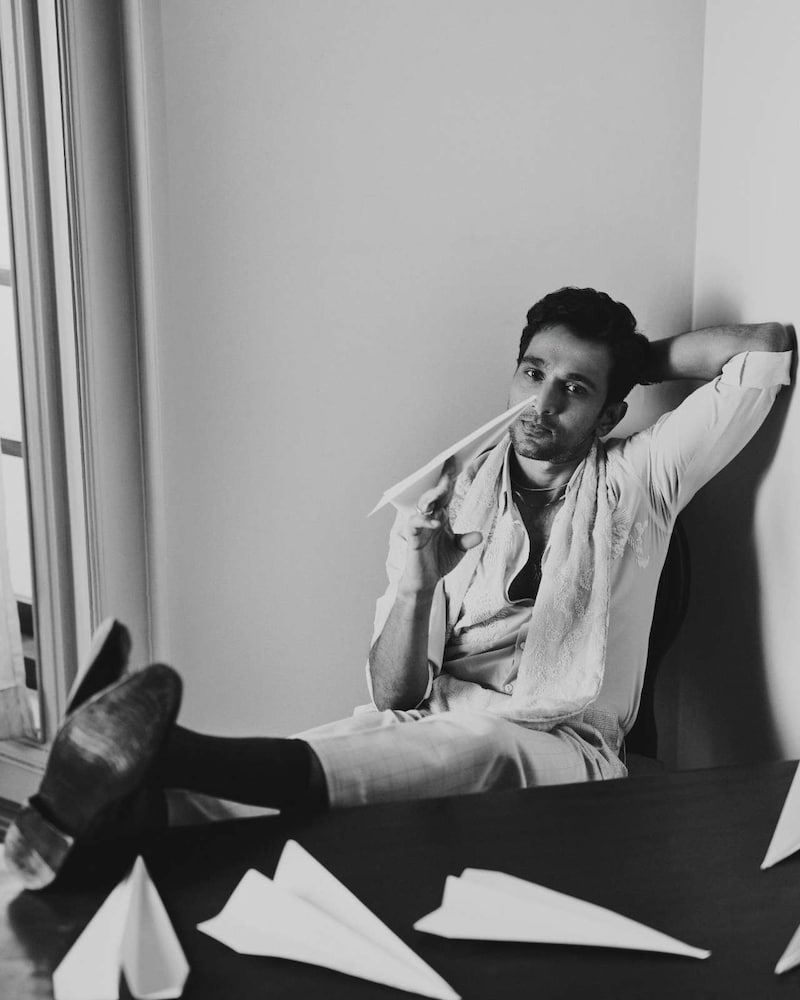
Instead of leaning into predictability, he chose to step into the unknown, intentionally dismantling expectations. The physical comedy of Madgaon Express, the hilariously likeable characters in Do Dooni Pyaar and Dhoom Dhaam, the emotional and ideological complexities of projects like Hum Hindustani and now, perhaps the most ambitious, Gandhi. “This is the time when I want to explore all different genres and different kinds of characters,” he says.
To the audience, this may have felt like Pratik’s attempt at reinvention. But for him, it was simply pulling an old tool out of a very familiar kit. “Frankly speaking, I have explored multiple genres on stage already. It is just new for people to see me on the screen this way. I’ve already explored all these subgenres of comedy on stage – slapstick, situational, physical humour,” he explains.
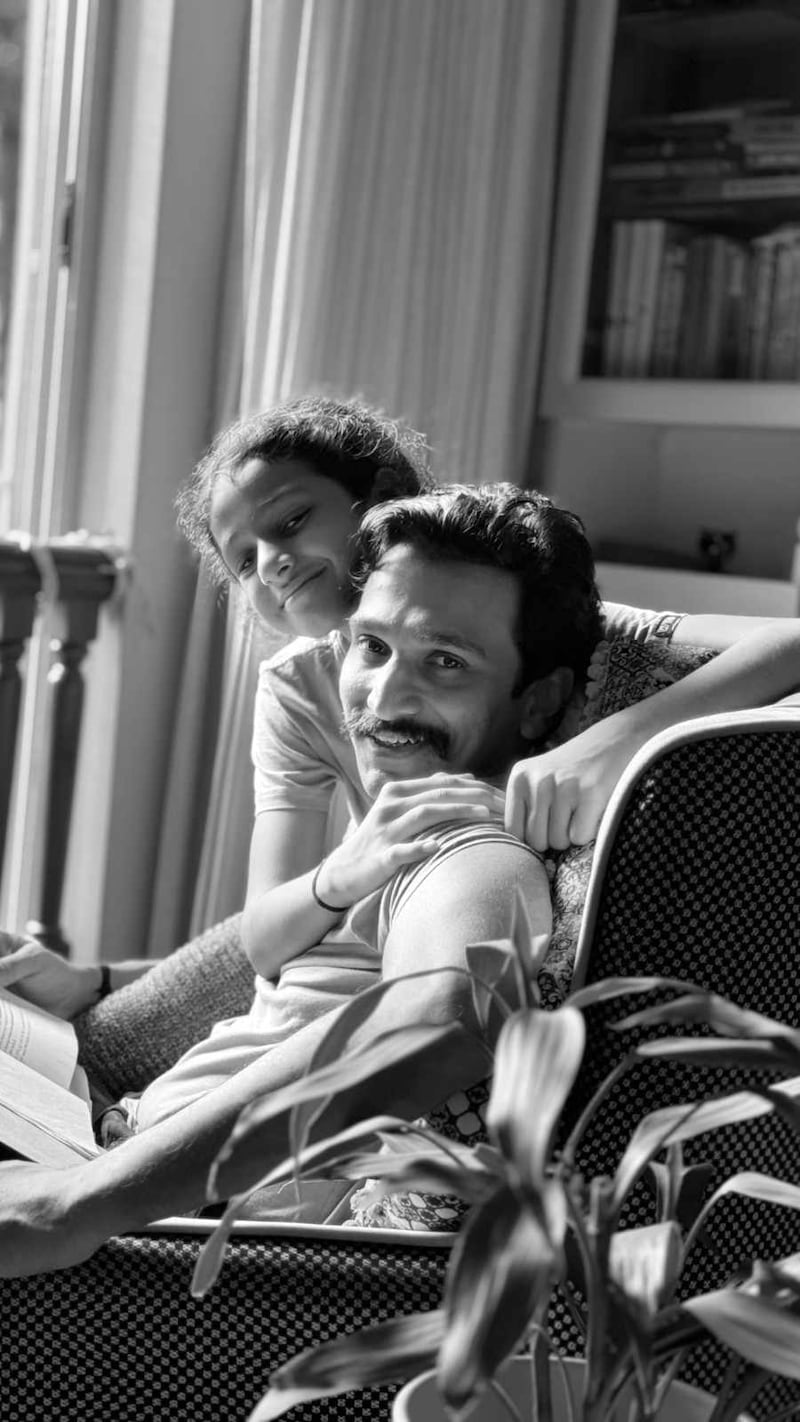
Scam 1992 may have brought Pratik’s talent to our screens for the first time, but for those close to him and fans who have followed his work for decades, this was nothing new. At the peak of the show’s success, his daughter, who was six at the time, asked him, “Papa, what happened? You have always been acting. Why are people talking so much about you now?”
And, she was right. He had always been rehearsing, performing, travelling, and shooting. The only difference was that more people could suddenly see it. The same sentiment echoed from friends and audiences who had watched him perform for years. “They would call and say, ‘Nice, Pratik. Bahu saras.’ But that’s it. Because they had already seen me perform. For them, it wasn’t new.”
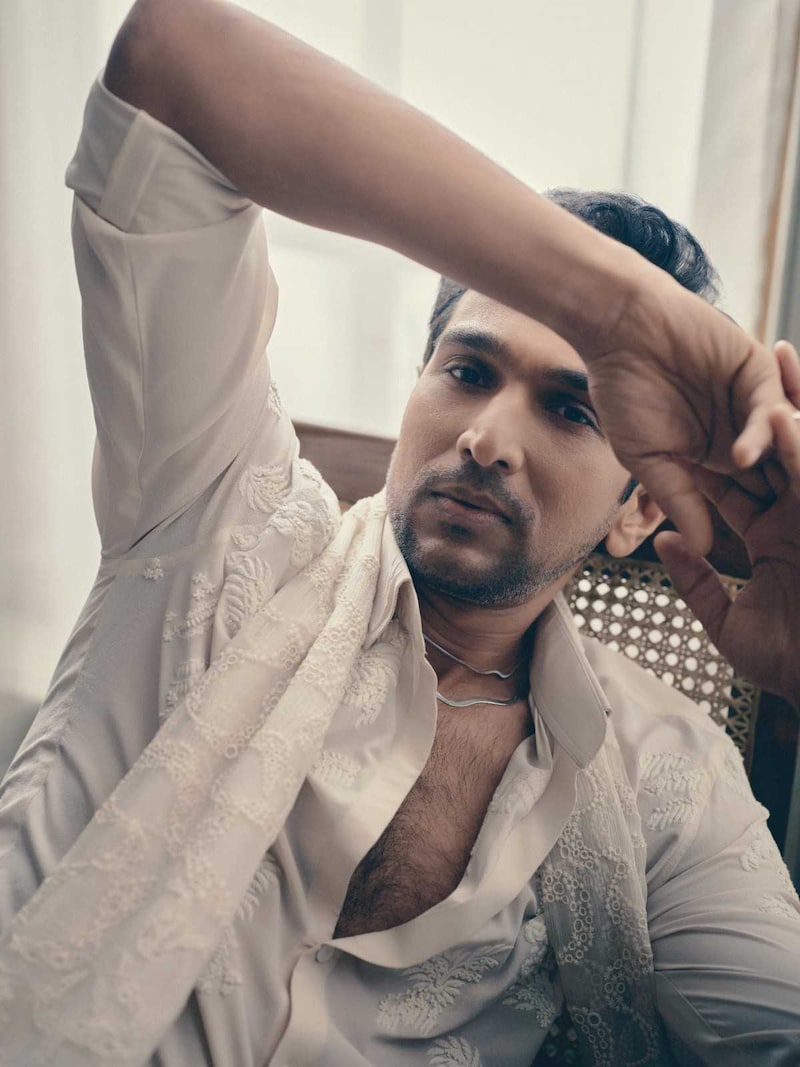
“People always ask, ‘Where were you all these years?’ I was always working. People just saw me now.”
What changed was not the actor, the craft, or the skill; it was solely the scale. For the first time, his work was captured in a way that travelled beyond regional boundaries. “I always credit the entire team,” he says. “This success is not only my success. I am just a tiny part of a much bigger success story. Everything came together. Costumes, writing, cinematography, music, art direction. Every department excelled.”
The freedom that came with that success for him was never about comfort or a set formula; it was about the new set of opportunities that were arriving. “The way I processed it was: people are excited to work with me now. So let me just go all out and explore.”
Even now, 6 years after the show premiered and changed almost everything for him, he speaks about success with remarkable detachment. “Nothing is permanent,” he says matter-of-factly. “After Scam, people would say, ‘Okay, you’ve proved yourself on OTT. But will audiences come and watch you in theatres?’ Then you have to prove yourself there. There are always different challenges.”
“I don’t want to keep everything in my backpack and make my shoulders so heavy that I can’t create characters anymore.”
The hunger for exploration is perhaps why Pratik approaches storytelling with surprisingly little interest in moral rigidity. In an era where public personalities are constantly under the microscope, he remains deeply protective of storytelling’s right to complexity. When I ask whether he feels a social responsibility while choosing projects, he pauses for a moment before answering. “My personal morality should never come in the way of the morality of those characters in the story; otherwise, stories will never be told.”
That answer reveals a great deal about the kind of actor he is. “I don’t judge my characters through my personal moral lens,” he continues. “I’m not supposed to do that. If I do, every character I perform will become a single-tone character. I can empathise with a character. I don’t have to sympathise with them.”


“Storytelling is one of the strongest mediums to bring change or communicate anything to the world.”
For him, storytelling has always been more about exploration than anything else. He speaks about stories the way he speaks about theatre rehearsals: as spaces where contradictions are allowed to exist. “Even with my daughter, I use stories to communicate things without sounding preachy.”
This conviction is particularly relevant considering the role he is preparing for the audience to see him in next. For most actors, portraying Mahatma Gandhi would be intimidating enough. For Pratik Gandhi, it is a culmination of work he has been doing for more than a decade. “I’ve been performing Gandhi on stage for the last twelve years,” he says, referring to Mohan No Masalo, the acclaimed play he has performed hundreds of times. “So when I was offered this project, I felt like I’d been preparing for it already.”
Taking us back to the initial stages of how this project came to be, he shares, “I went to the office, they called me into the conference room, started the projector, and showed me a single slide: a photograph of me from my play Mohan No Masalo. Samir said, ‘We want to make this into a series.’ That’s it. One line. I said yes in a heartbeat.”
The project reunites him with the director who altered the course of his career and brought him onto our screens. “With Hansal sir, the understanding is such that we don’t even need to talk too much about what we want to do,” he says. “He empowers actors so much that you can just go all out and explore.”

Listening to him describe the series, one gets the sense that he is not merely interested in portraying the man history remembers; he is fascinated with the person beneath the mythology. “There is so much about Gandhi that the world will explore for the first time. An entire generation doesn’t really know what it took for him to become who he became.”
Even as he speaks about one of the most ambitious projects of his career, he reiterates something that is very personal to him: the idea of remaining open – to genres, languages, people, failures, and the surprises that make up this journey. It is perhaps the most consistent thread running through his entire journey. Even today, success does not take precedence over experimentation for him. “It’s nothing less than a dream. I have been lucky to have worked with passionate people all my life. Fame, money, and all that glitter is just a byproduct of your work. That’s my hardcore belief, and I’m glad I work with people who share it.”
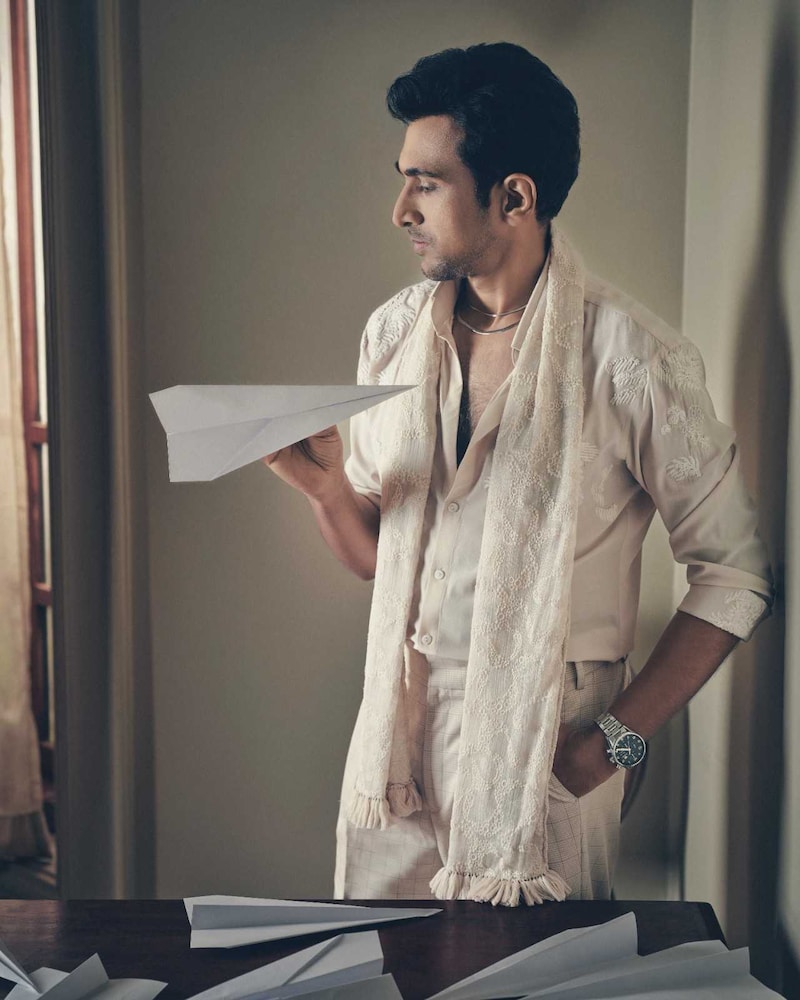
“Whether it’s standing ovations or extreme criticism, I take everything with a pinch of salt. Keep it there, and move on to create new things.”
Towards the end of our conversation, I ask him what he believes deserves preservation in today’s culture. In an instant, he states, “Individuality.” He elaborates, “Your thought process, your colour, your height, your weight, your uniqueness – preserve it. Because if all of us try to become like each other, it will become a very boring world.”
The answer feels fitting. After all, Pratik Gandhi’s career has never followed a set formula. It was built through finding magic in theatre rehearsals after long working hours, through years of regional cinema, through patience, his own and of those close to him, and a stubborn refusal to stop exploring.
The interview had long crossed the one hour mark that we had decided upon by the time we finally wrapped up. Yet somehow, as always, he never seemed in a hurry. Maybe because he approaches life the way he approaches his work: not something to just rush through, but something to be curious about and be present in, for as long as possible.
MUA: Sayyed; Hair Artist: Sandy Panwar; PR: Mindworkz.


The login process is super quick and I haven’t faced any glitches so far. Great job on the optimization! 7sjilicomlogin
uZ8rlF0ykP7dzW5kxD3zdJ6ng_soobshenie
Incredible story there. What happened after? Good
luck!
Promo: C4bjWthY7dcX8qi
Here is my web page стрічка транспортерна ціна
The app is lightweight and doesn’t crash, which is exactly what I need. The login is seamless every time. Love using 95jiliapplogin.