

What can a process of decay teach us about creation? For Abhishek Chauhan, quite a lot. Presented at Lakmē Fashion Week 2026 in partnership with FDCI, ALCHEMY takes its cue from nature’s changing surfaces: oxidation, corrosion and the structures hidden beneath the naked eye. Translating these observations into sculptural forms and experimental constructions, Chauhan finds beauty not in perfection, but in transformation.
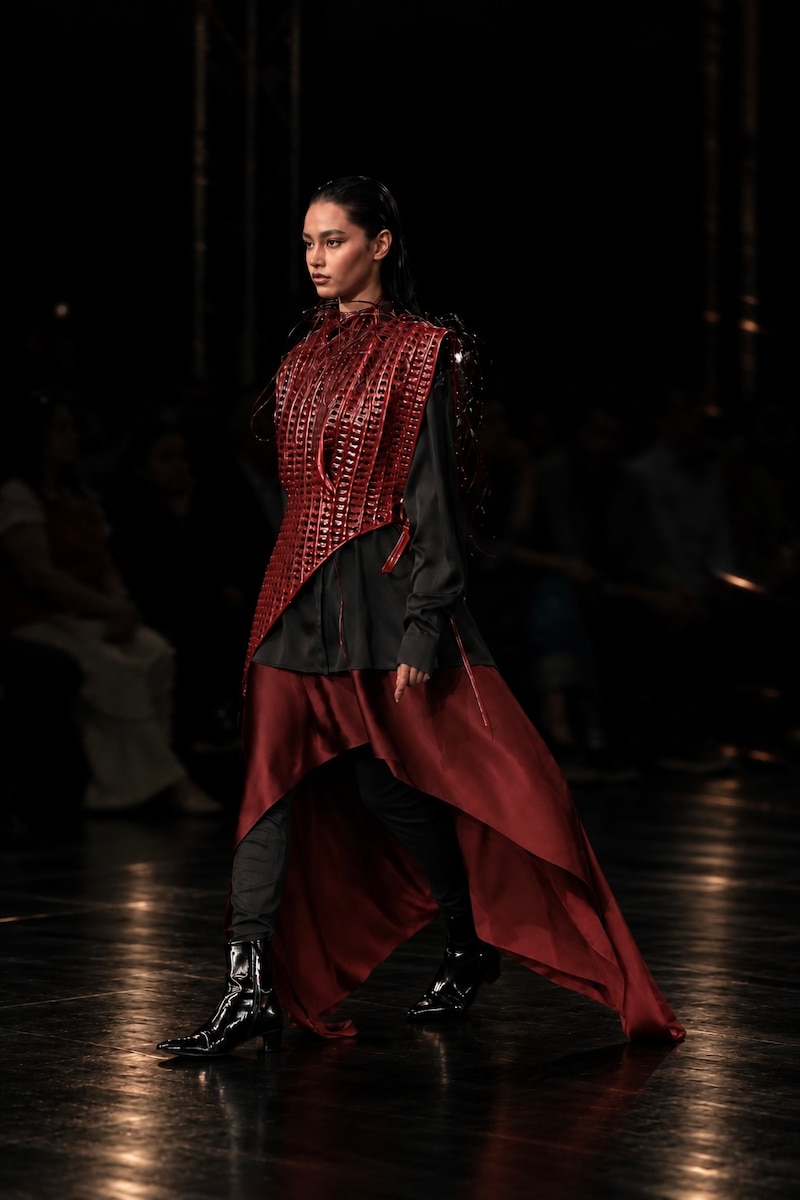
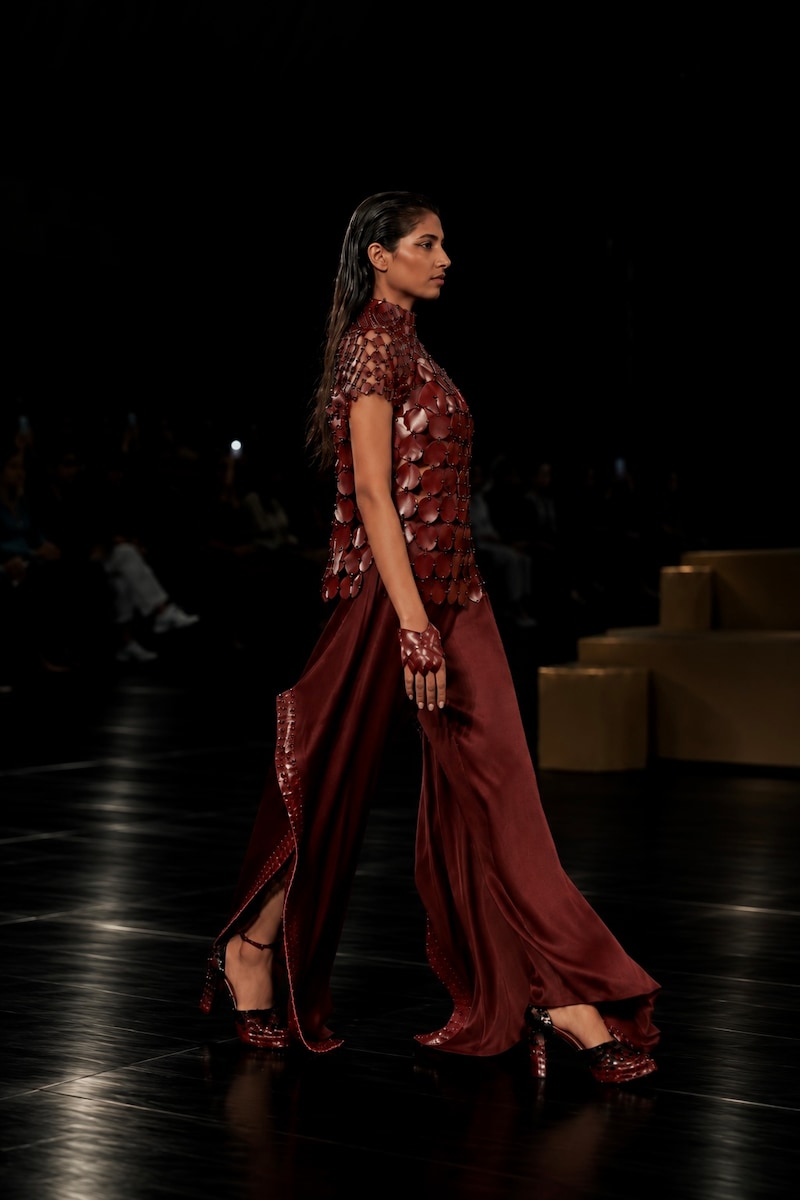
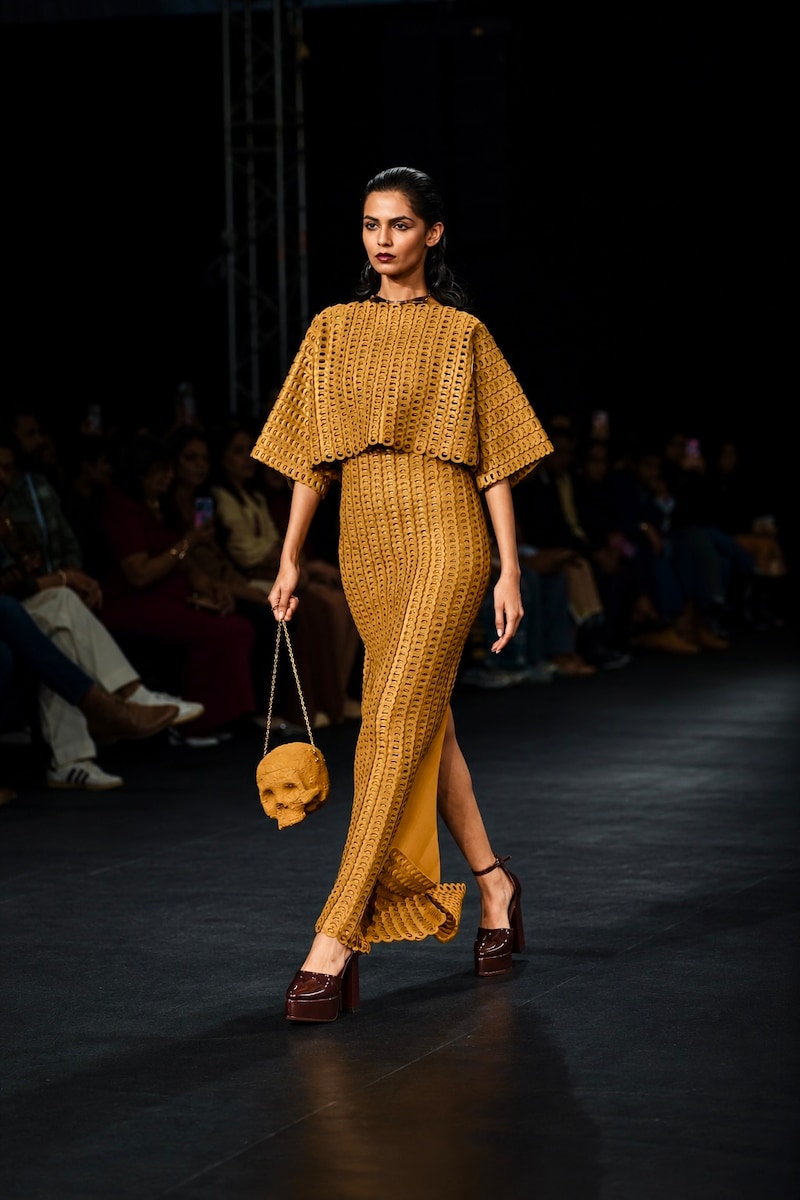
It started with rust. The shifting colours and irregular textures of weathered surfaces first inspired him to explore them through prints. But the more he explored the subject, the further he moved beyond its visual appeal. “We became fascinated by the processes taking place beneath the visible surface, at a microscopic level,” he says. The way corrosion spreads from atom to atom became a design reference. This thinking appears in laser-cut leather circles joined with metal eyelets and jump rings, and interlooped leather pieces that build textile-like structures. Even the offcuts from laser cutting found a second life in new textures and surfaces. In ALCHEMY, the making of a garment is as closely tied to the idea as its finished form.
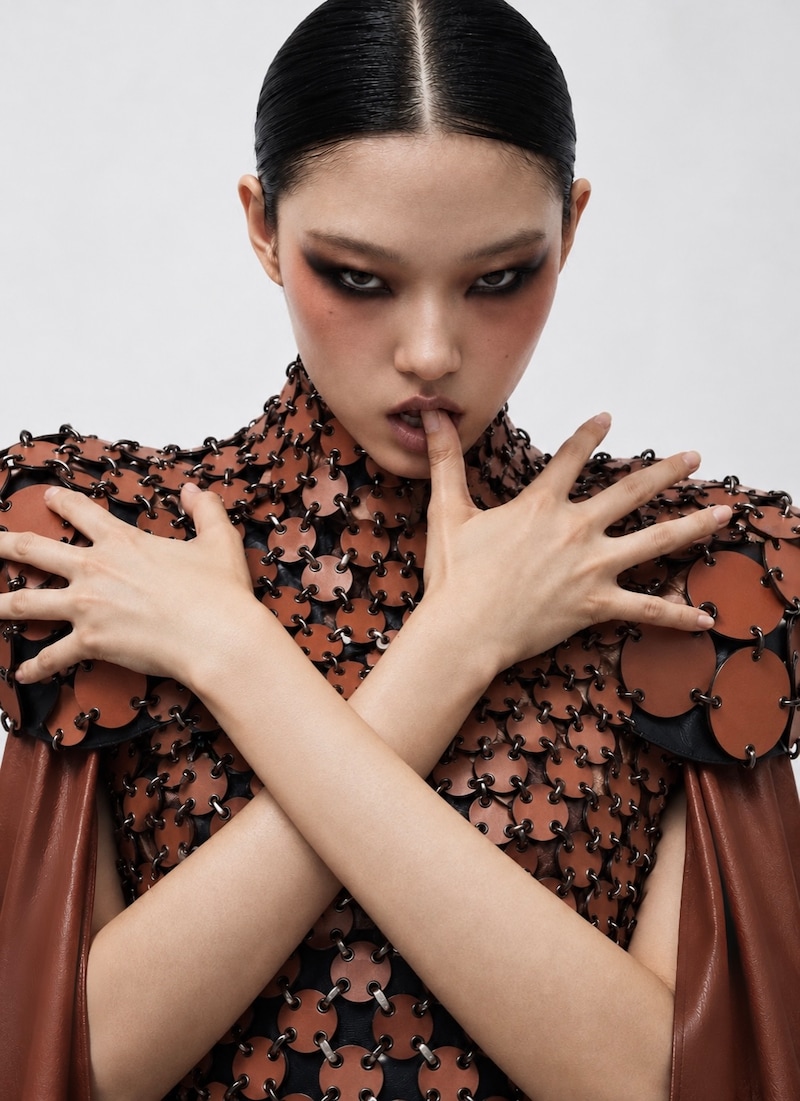
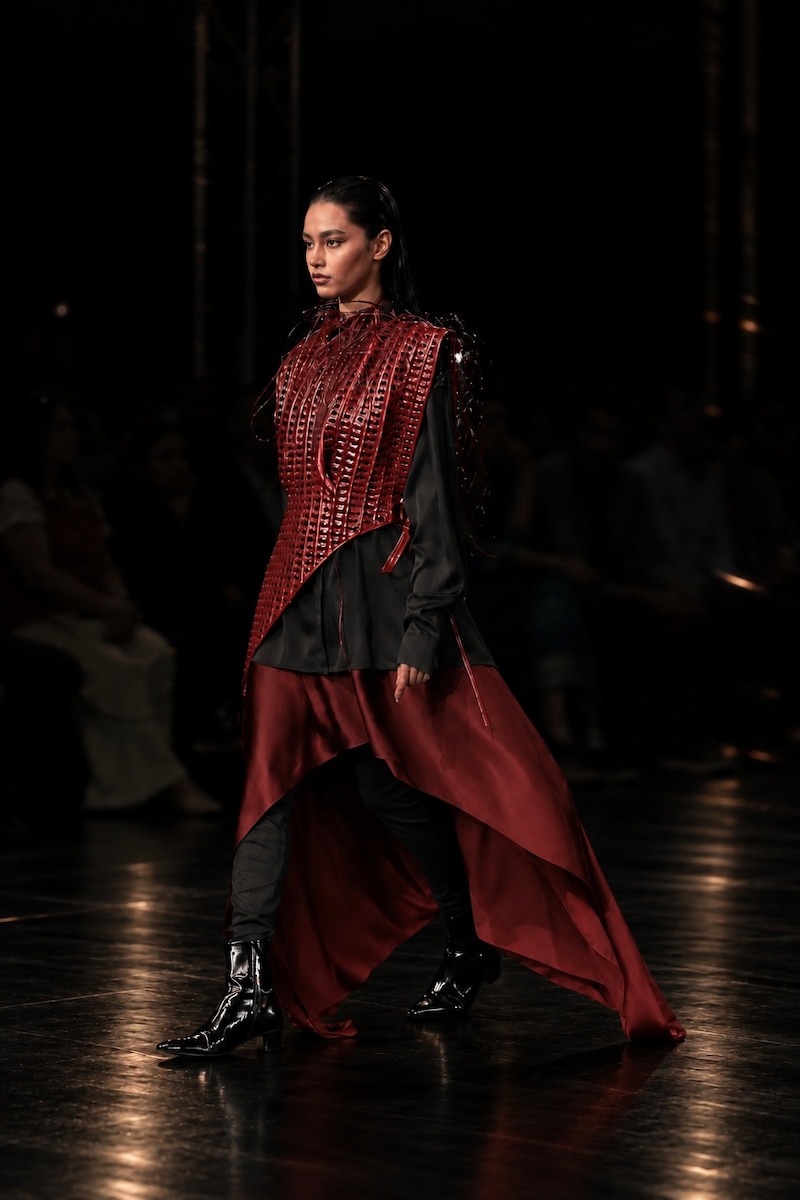
The same spirit of experimentation carries into the materials. The collection brings together bio-based leathers made from mango, cactus and tomato with fabric derived from orange fibres. Chauhan was interested in exploring these alternatives while challenging the way sustainable fashion is often imagined. “We wanted to explore how sustainable materials could move beyond these established visual associations and create something more sculptural, contemporary and luxurious,” he explains. Working with them meant understanding how each responded to cutting, shaping and construction. Rather than treating them as replacements for conventional fabrics, the studio approached each as a material with its own character and potential.
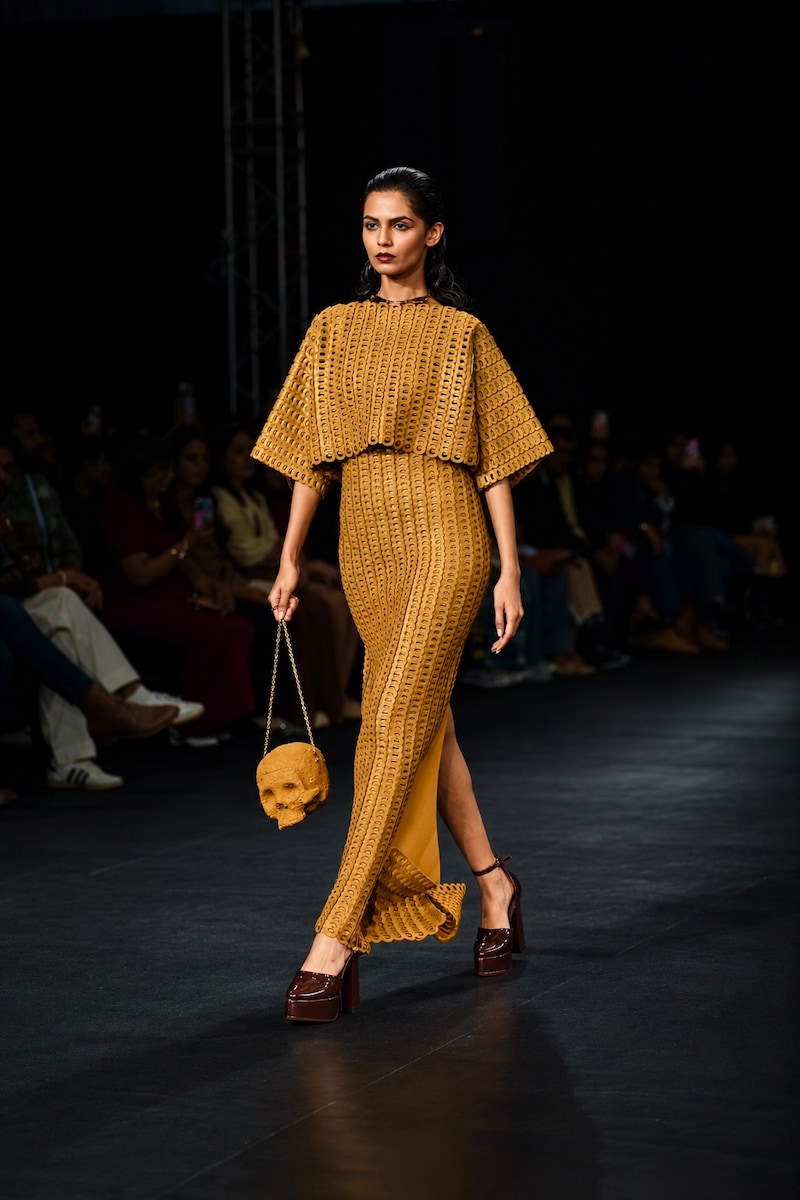
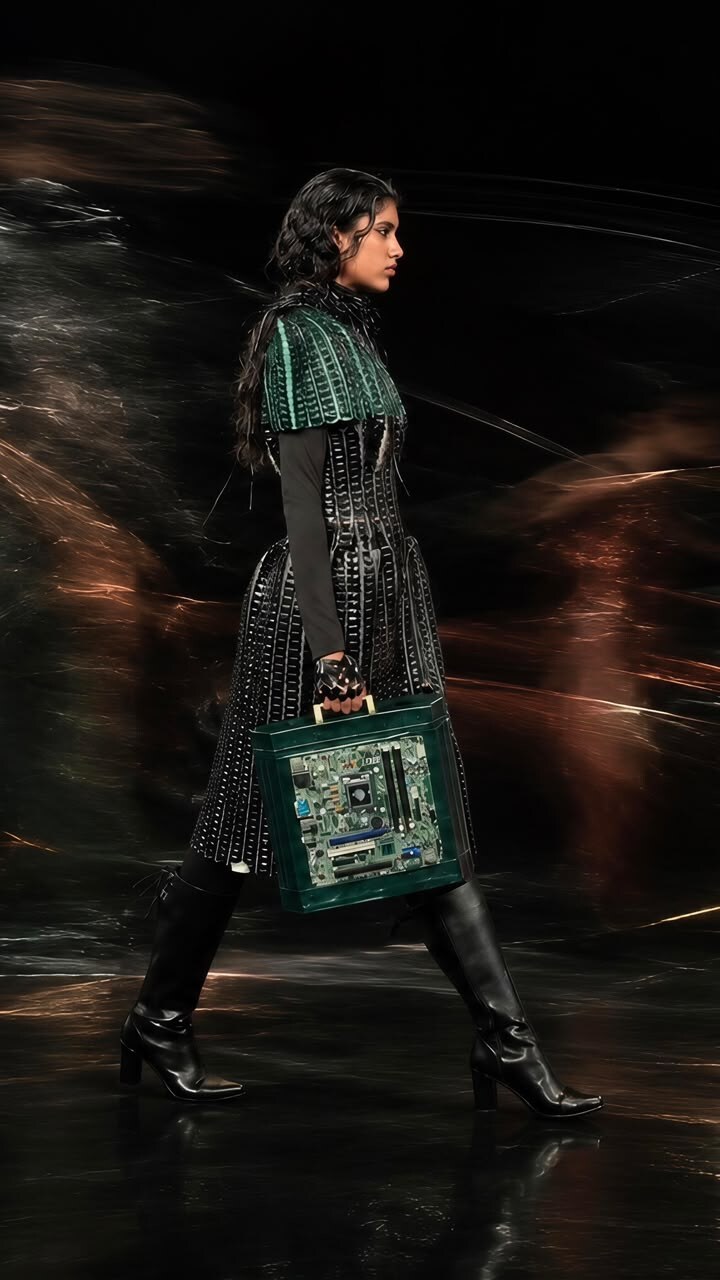
That willingness to look beyond the familiar is central to Chauhan’s identity as a Fashion Xenologist. For him, fashion is a way to explore the unknown and question how we see the world, not simply a means of making clothes. At Abhishek Chauhan Studio, this outlook informs unconventional material choices, experimental pattern-making and surface development. “I look at fashion as more than clothing; it is a way to question our surroundings and how we perceive ourselves,” he says. He hopes the pieces also encourage individuality.
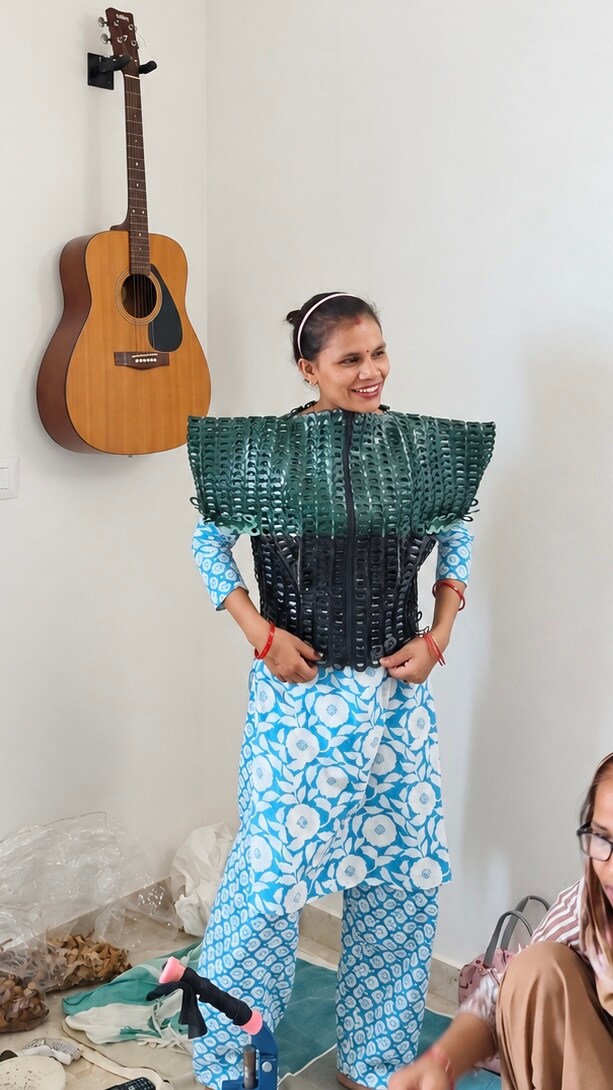
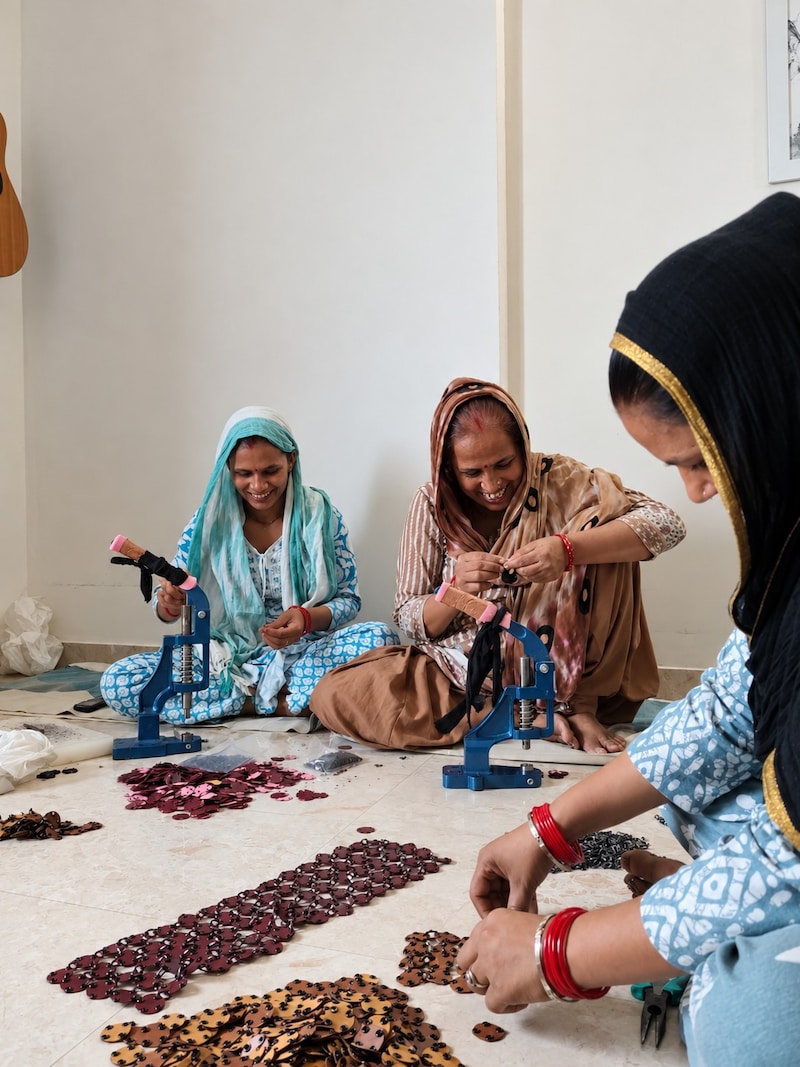
ALCHEMY’s story, however, is not only about materials and techniques. The women involved in making the collection gradually became collaborators in its development, moving from executing techniques to suggesting colours and shaping design decisions. The green-and-black interlooping jacket is one example of that exchange. Their growing involvement prompted Chauhan to reconsider the relationship between designer and craftsperson. “Creativity does not belong to a single person or role,” he reflects. The experience also expanded his idea of sustainability: alongside material innovation and waste reduction, it means creating space for people to contribute their knowledge, ideas and sense of ownership.
Following the Lakmē Fashion Week showcase, the studio plans to keep exploring alternative materials, new construction techniques and more considered ways of using resources. For Chauhan, the relationship between nature, craft and technology is an ongoing exploration, not a theme confined to one collection. ALCHEMY captures that approach: looking closely at the world, questioning what materials can do and allowing unexpected processes to point towards new possibilities for fashion.


