

There’s something oddly familiar about a place you’ve never been to. Maybe it’s a reel you watched at 1 am. Maybe it’s a travel vlog paused halfway through because the colours looked too good to scroll past. Or maybe it’s just how we travel now, through screens first, reality later.
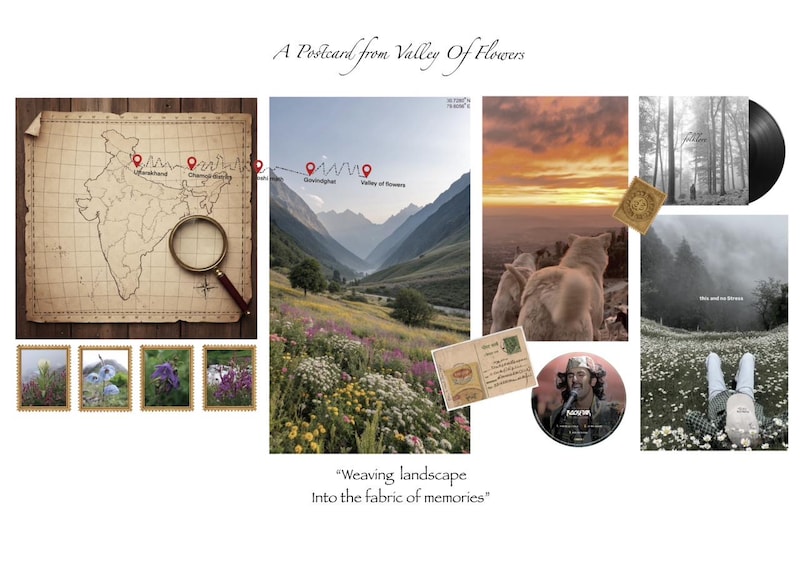
For Jubinav, that feeling became the starting point for A Postcard from Valley of Flowers, a collection that sits somewhere between memory and imagination. Presented at Lakmē Fashion Week SS26, the collection is rooted in the Valley of Flowers in Uttarakhand, but not through lived experience. But through digital fragments, borrowed visuals and someone else’s camera lens.
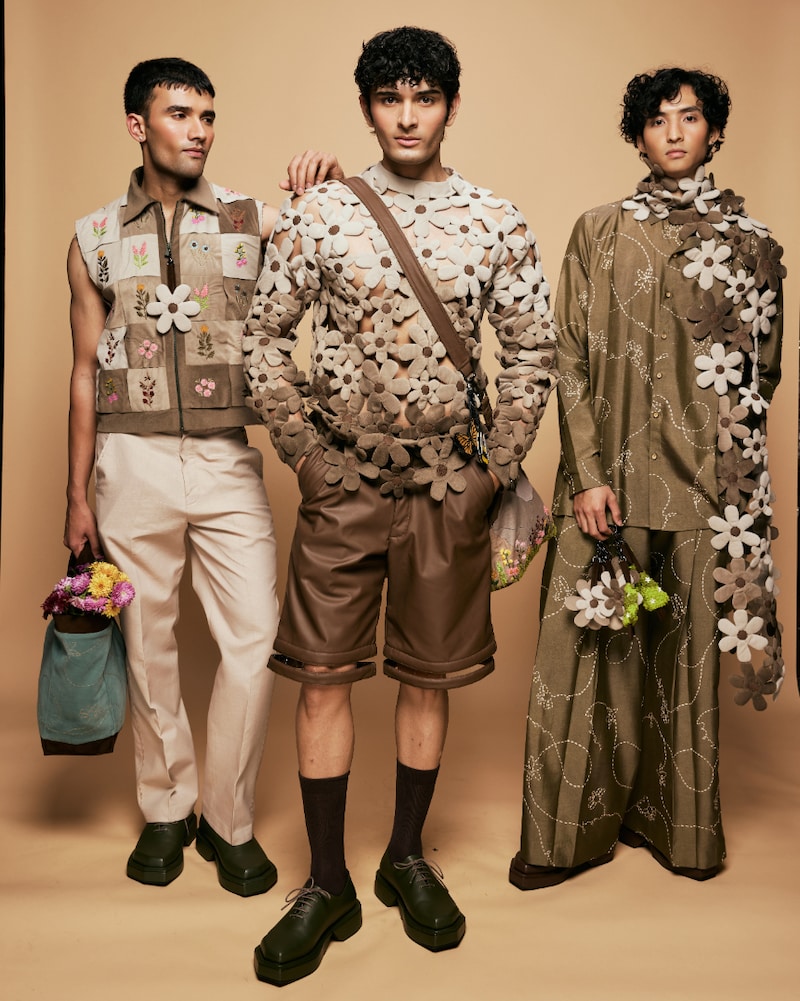
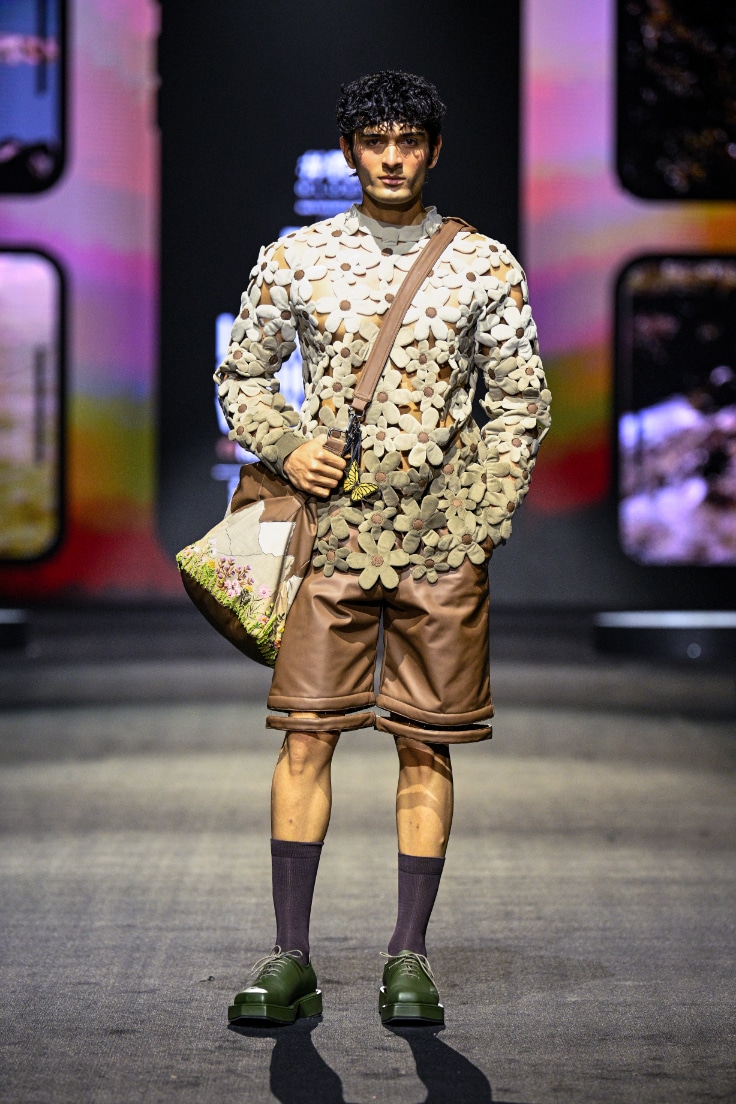
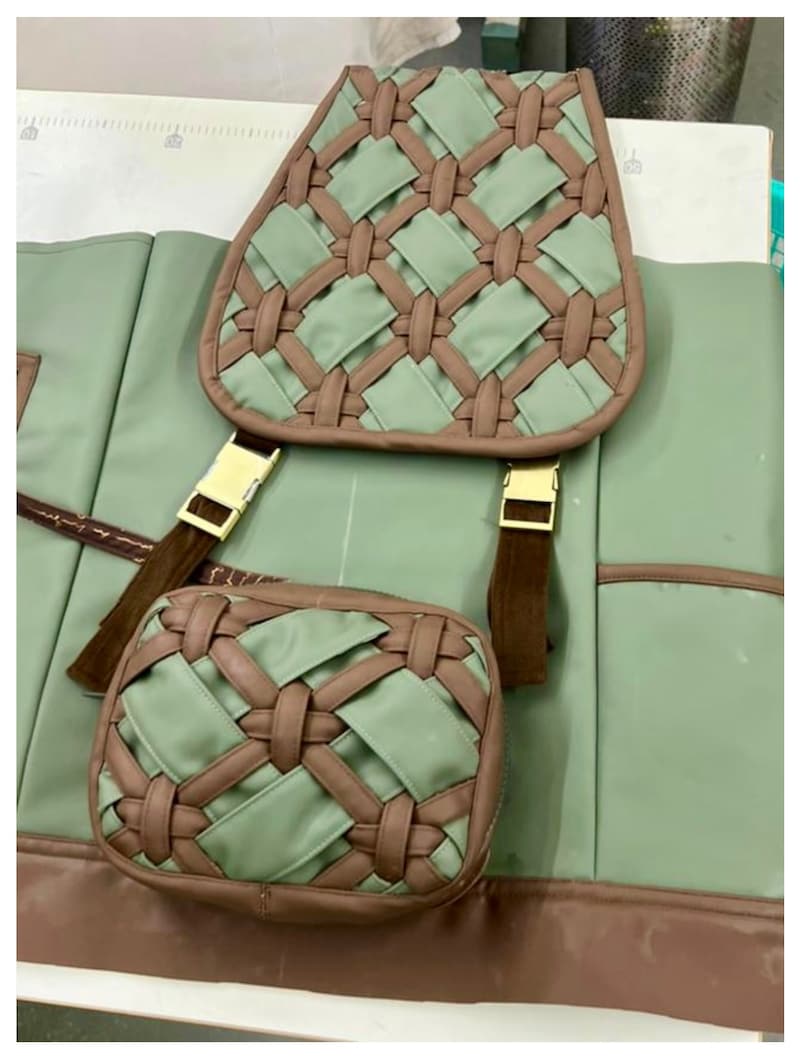
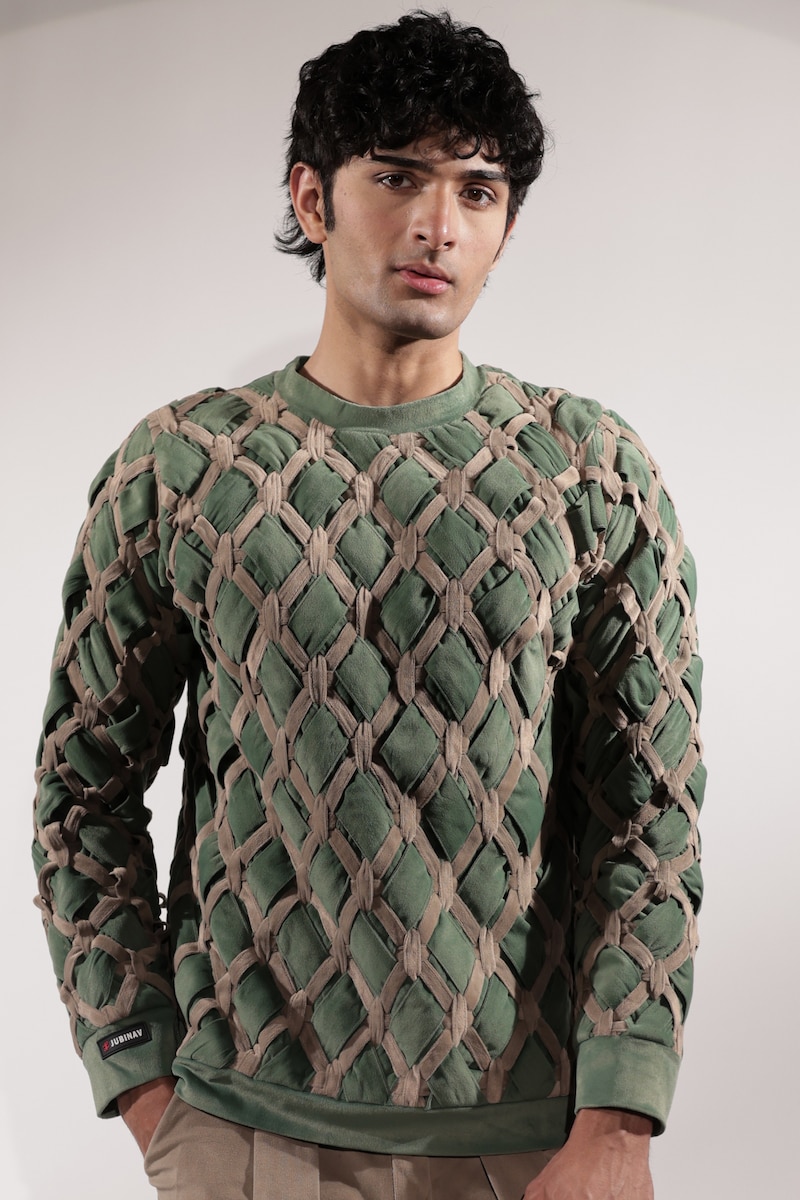
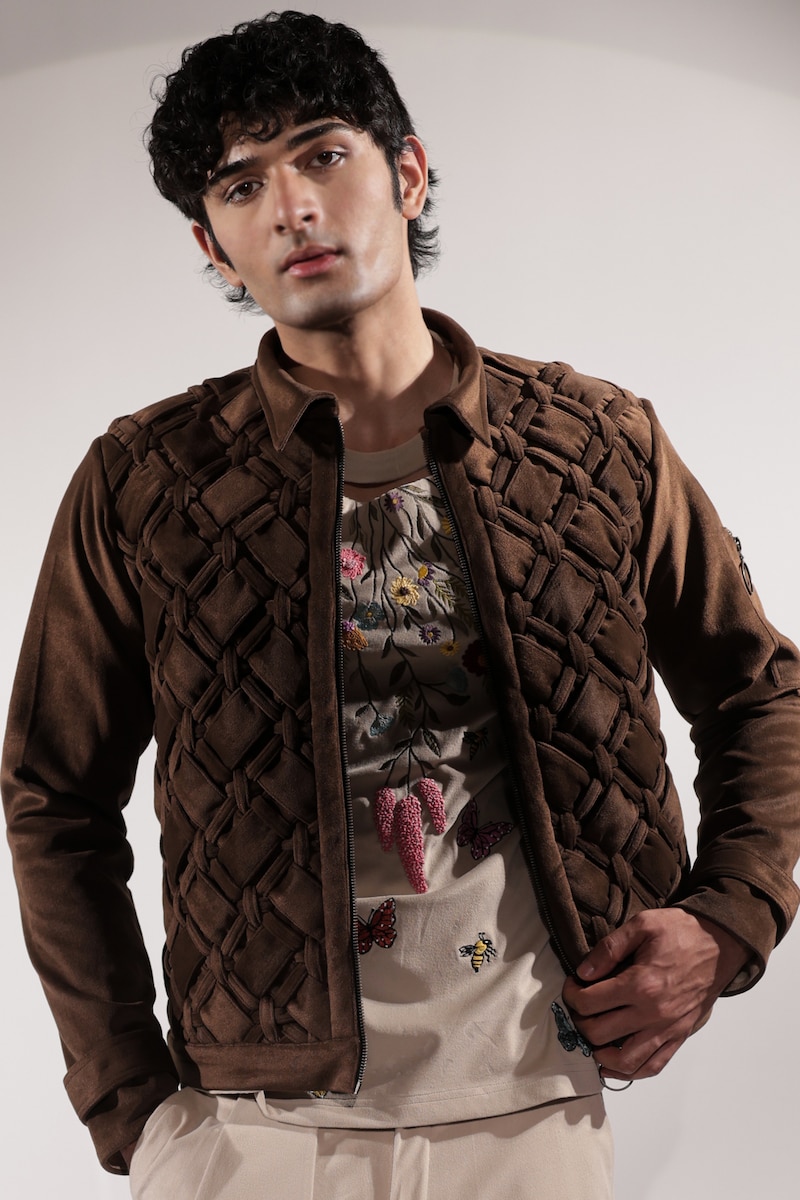
And that’s what makes the collection interesting. It doesn’t romanticise travel in the old-school “wanderlust” way. Instead, it asks a question: what happens when a place becomes emotionally familiar before you’ve even stepped into it? The answer comes through texture, quilting, weaving, and soft impressions of landscapes that feel half-remembered.
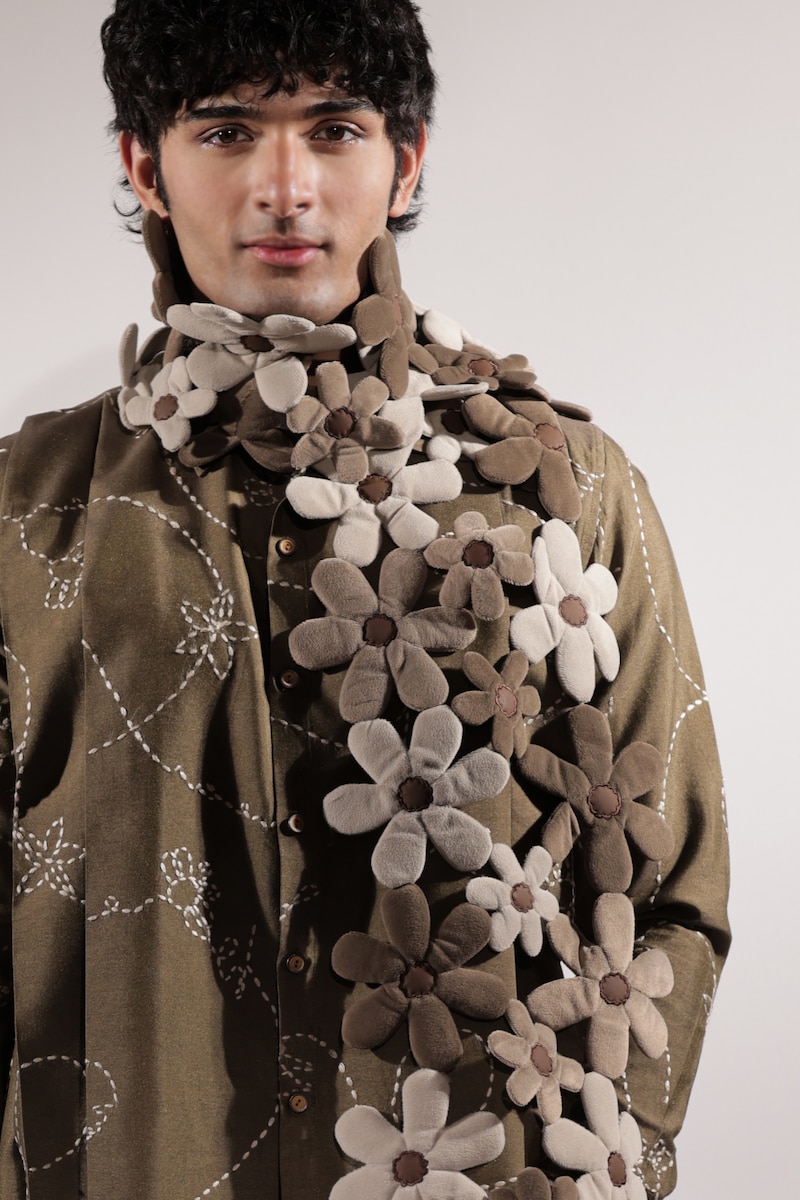
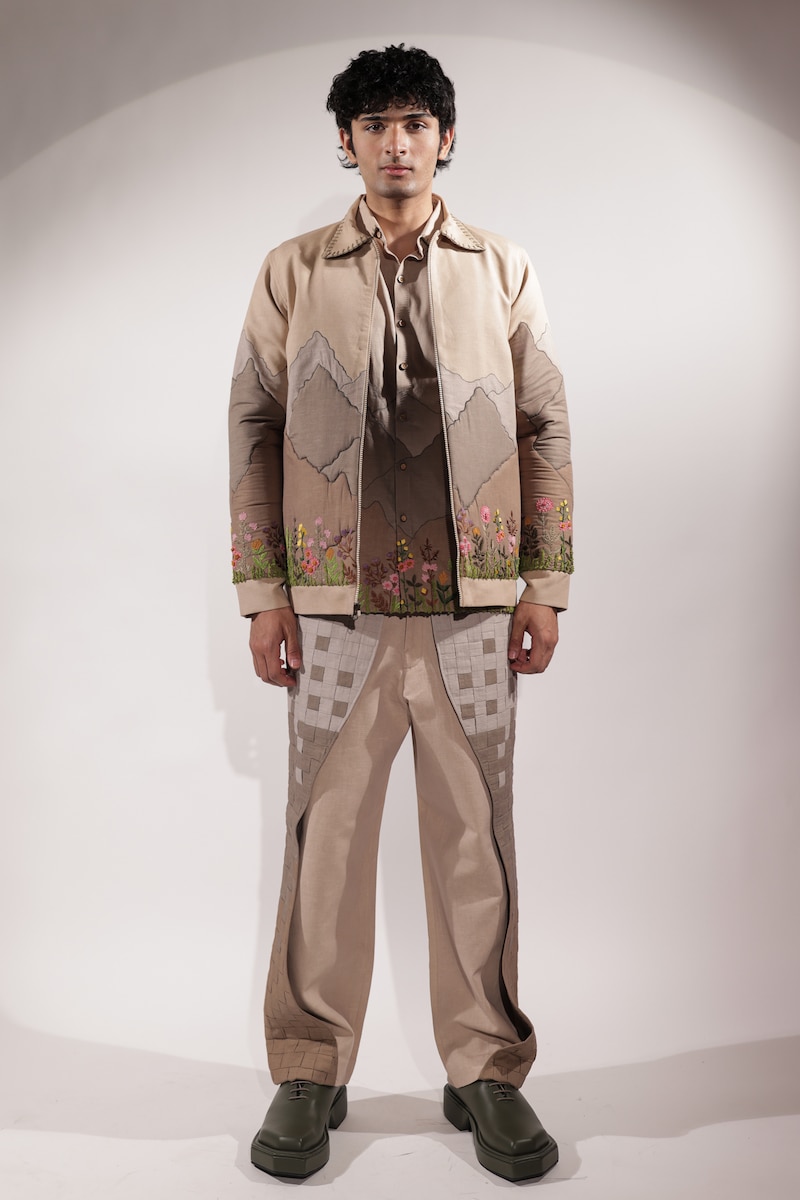
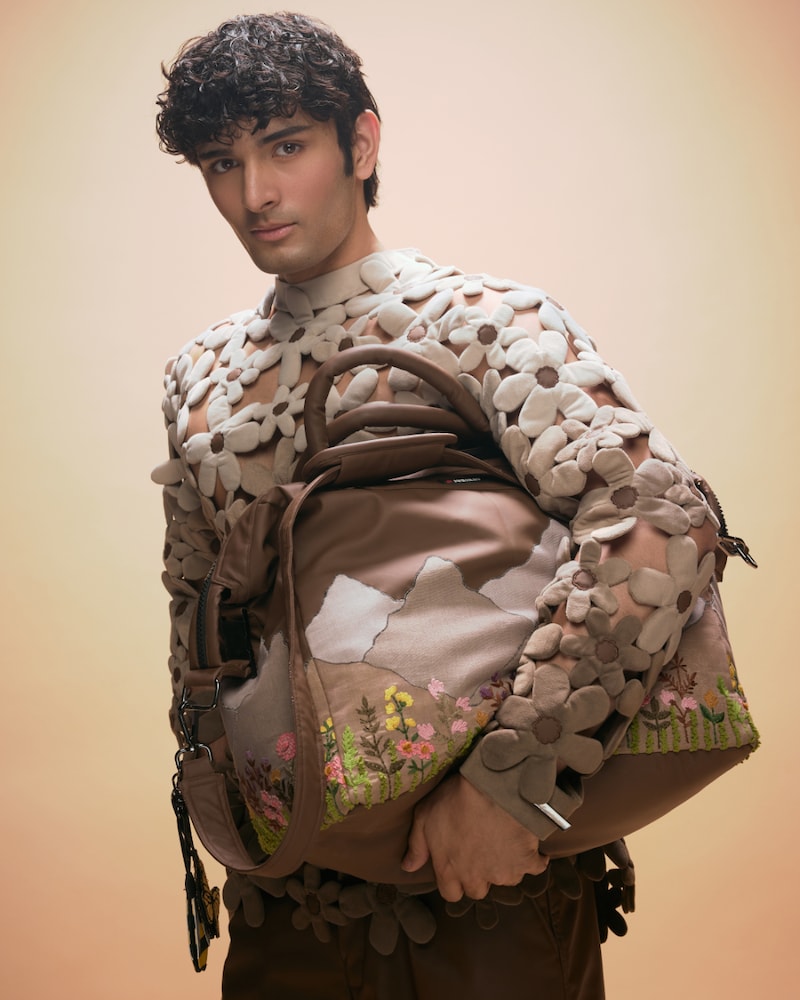
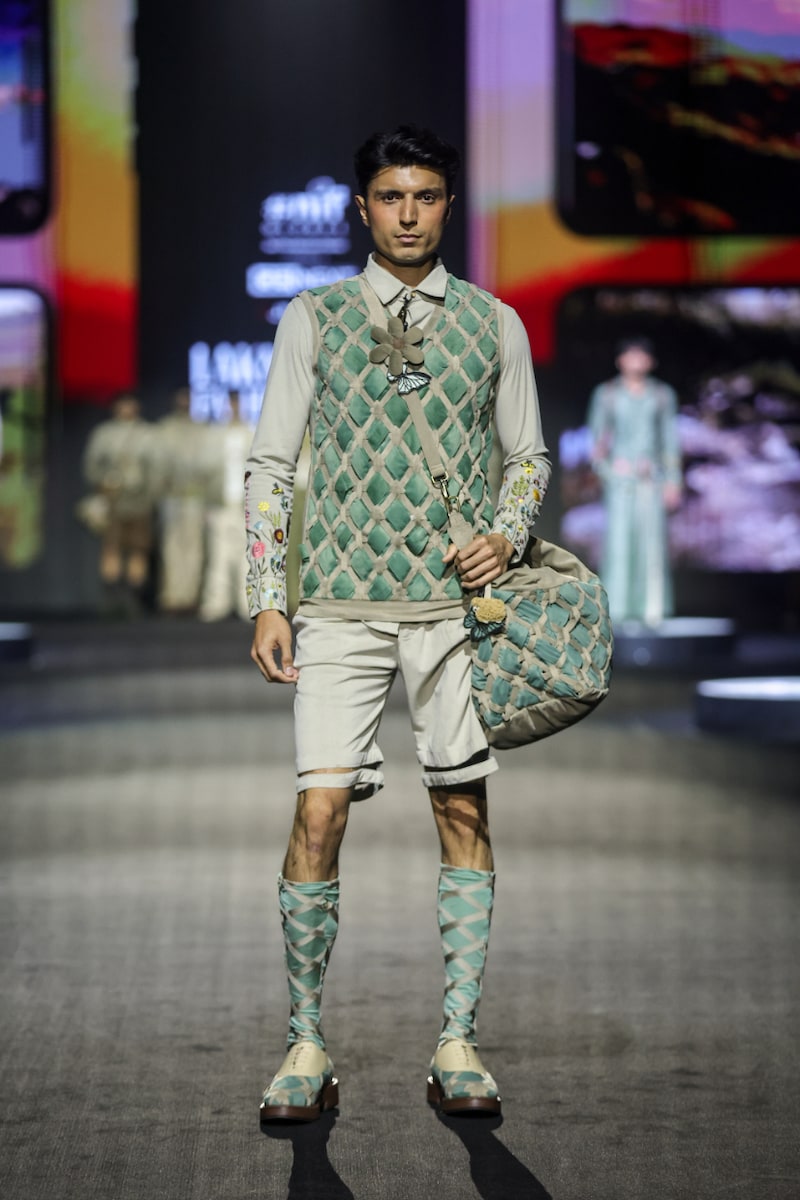
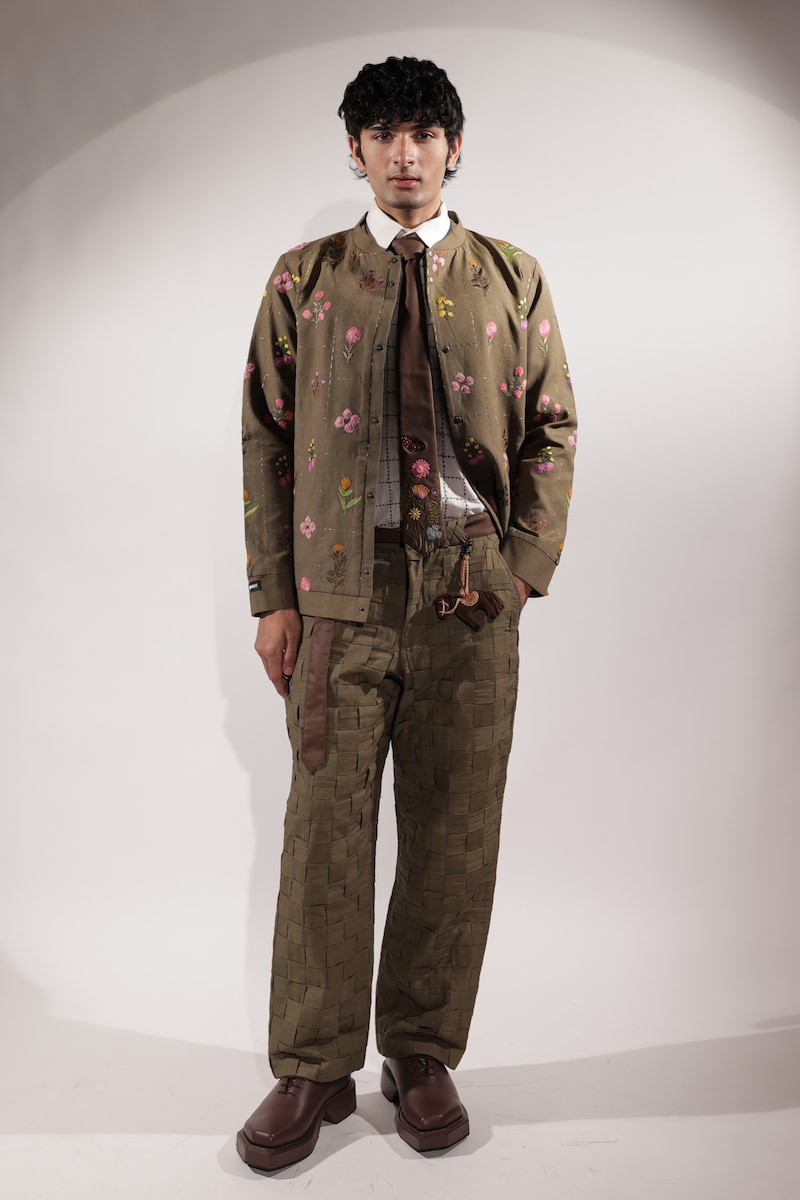
The collection works with two parallel ideas: visual memory and symbolism. Quilted valleys appear like fading topographies; floral motifs resemble stamps pressed onto old travel mailers. Even the woven textiles carry meaning – coordinates, maps, movement, journeys. Geography becomes the fabric.
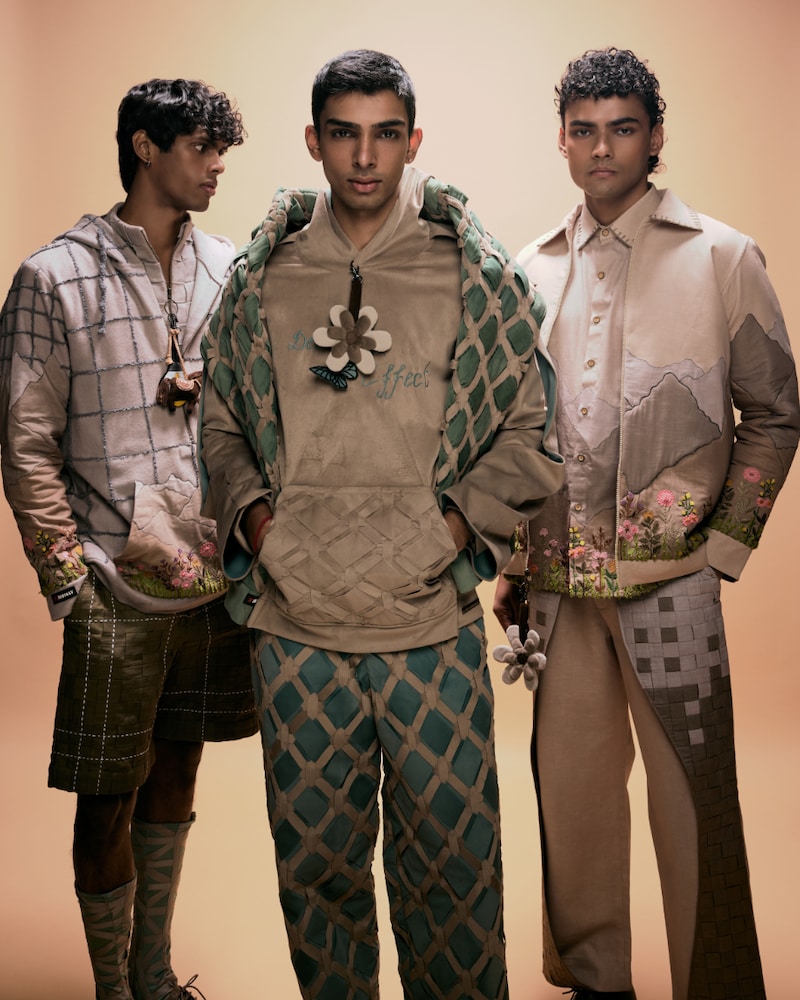
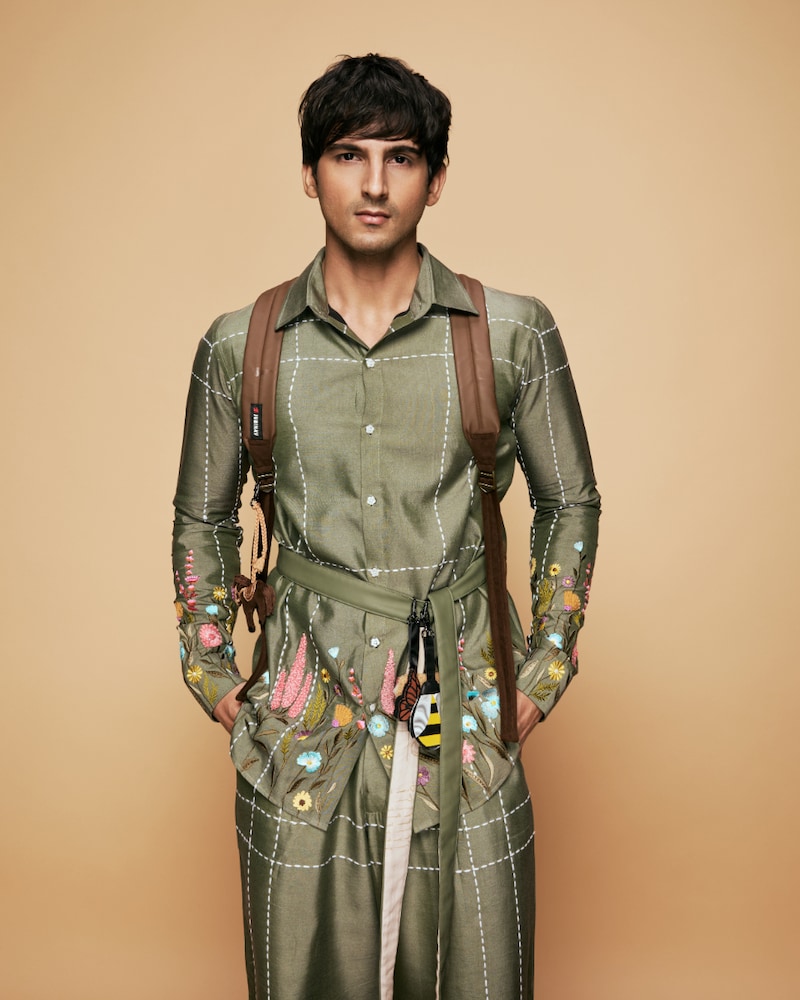
And there’s something very current about that. Fashion right now is obsessed with “experience,” but this collection leans into mediated experience instead. The kind shaped by algorithms and collaborative saved folders on social media. Through endless lists of places to go, destinations to see, cultures to experience someday. I know I have far too many of those saved collections sitting on my Instagram. Tiny digital moodboards of lives and landscapes I have not yet lived. YouTube recommendations from strangers, blurry screenshots, half watched travel reels. Strange, certainly. But also completely true to how we move through the world now.
We spoke to the designer about digital memory, translating coordinates into cloth, and why the valley itself almost becomes secondary to the feeling of remembering it.
FL: What drew you to the concept of “digital memory”?
JC: In today’s world, travel rarely begins with arrival online. We research, watch, scroll, and mentally construct a place long before we physically experience it. That shift fascinated me. The idea that we can “visit” somewhere digitally and form an emotional connection to it felt like a new kind of memory making. This collection stems from that reality. Where memory is not always lived, but often mediated.
FL: How did you translate the unseen Valley of Flowers into a design narrative?
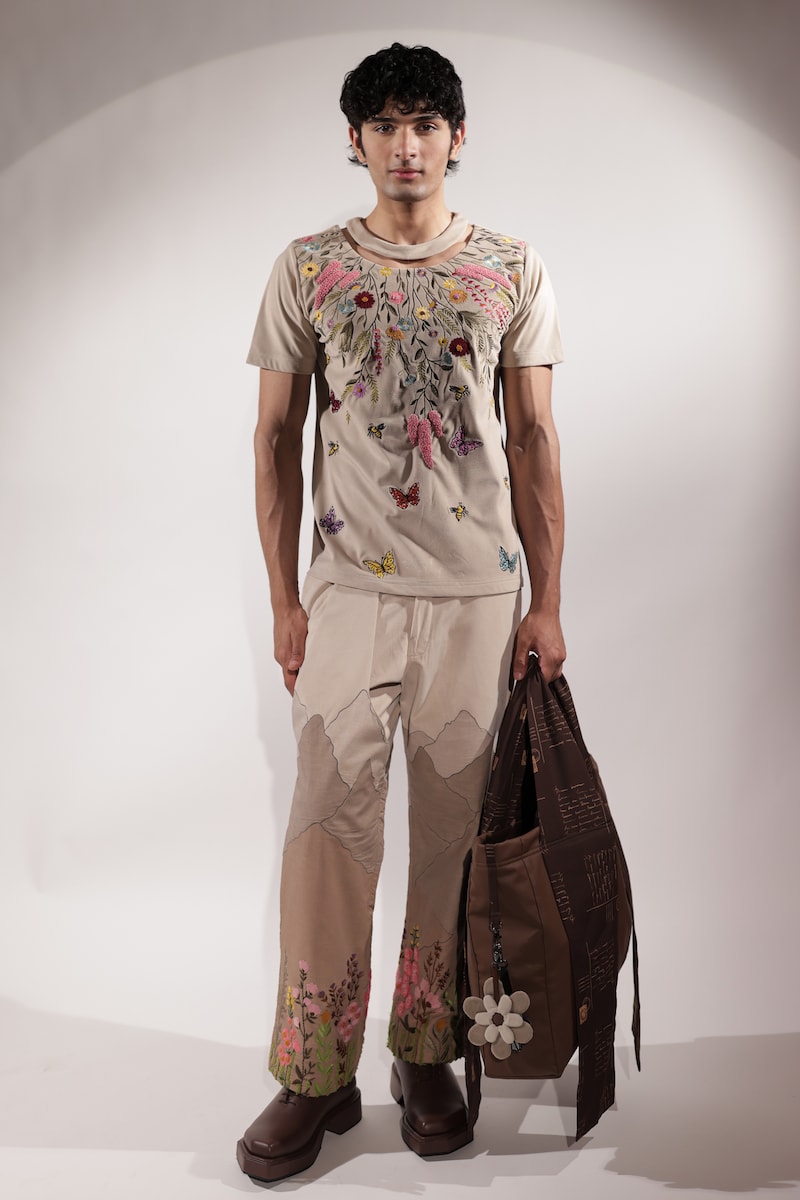
JC: The collection, A Postcard from Valley of Flowers, uses the idea of a postcard as its core lens. The Valley itself becomes a visual reference, but not the story. My understanding of the place comes entirely through vlogs and digital imagery, which inherently makes it a borrowed experience. That translated into a softer, more interpretive design language, valleys appear as impressions rather than detailed depictions, and flowers function almost like stamps or preserved fragments. It is not a literal floral collection; it is about memory, not souvenir.
FL: What was the thought process behind translating coordinates into textile through weaving?
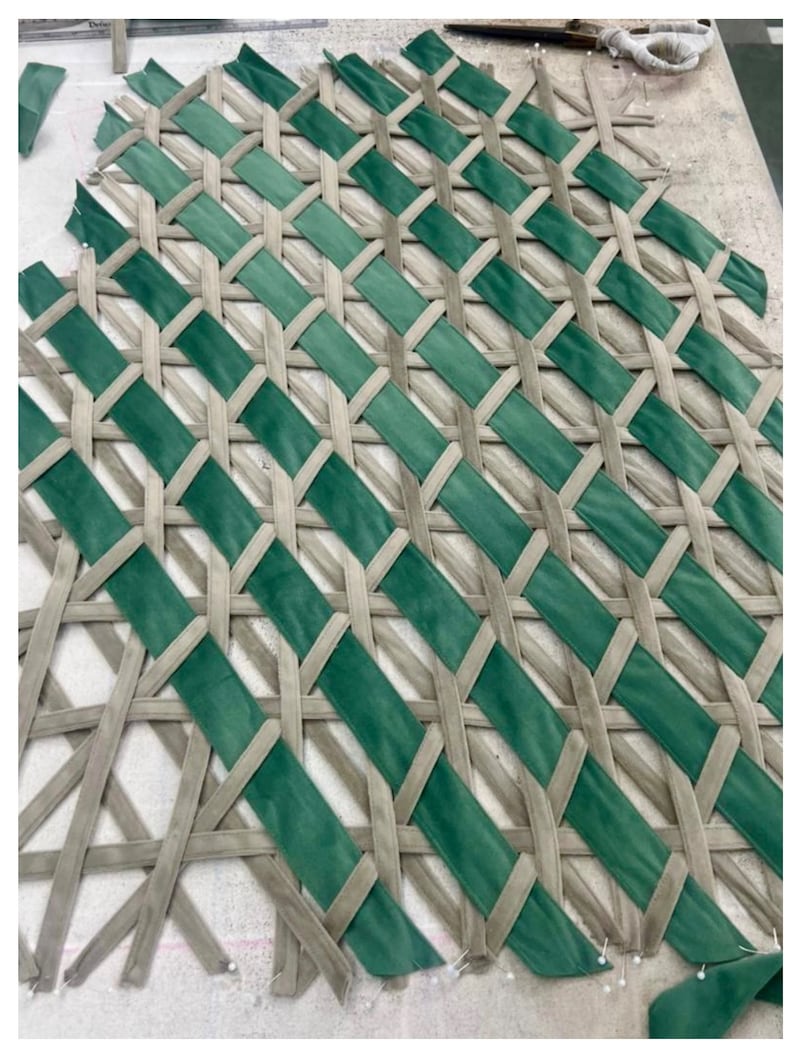
JC: A postcard, much like travel, is always defined by movement – there is a “to” and a “from.” What connects both is geography, and more specifically, coordinates. Latitudes and longitudes, when visualised on physical maps, form a grid-like structure. That geometry became the foundation for textile development. We translated this idea into woven surfaces, allowing the fabric itself to embody the journey rather than just illustrate it.
FL: Which element feels the most personal to you?
JC: The quilting of the valley is the most personal element. It was the first technique we sampled, and it immediately felt right. There was an instinctive clarity in that moment, it set the tone for everything that followed and anchored the emotional core of the collection.
FL: What makes this collection relevant to today’s digital-first world?
JC: The collection exists at the intersection of digital perception and physical reality. Visually, it reads as graphic and accessible almost immediately in its appeal. But the deeper value reveals itself upon closer interaction, where the craftsmanship, textures, and layered detailing come through. It reflects how we consume imagery today quickly and digitally, but also reasserts the importance of tactility and depth when experienced in real life.
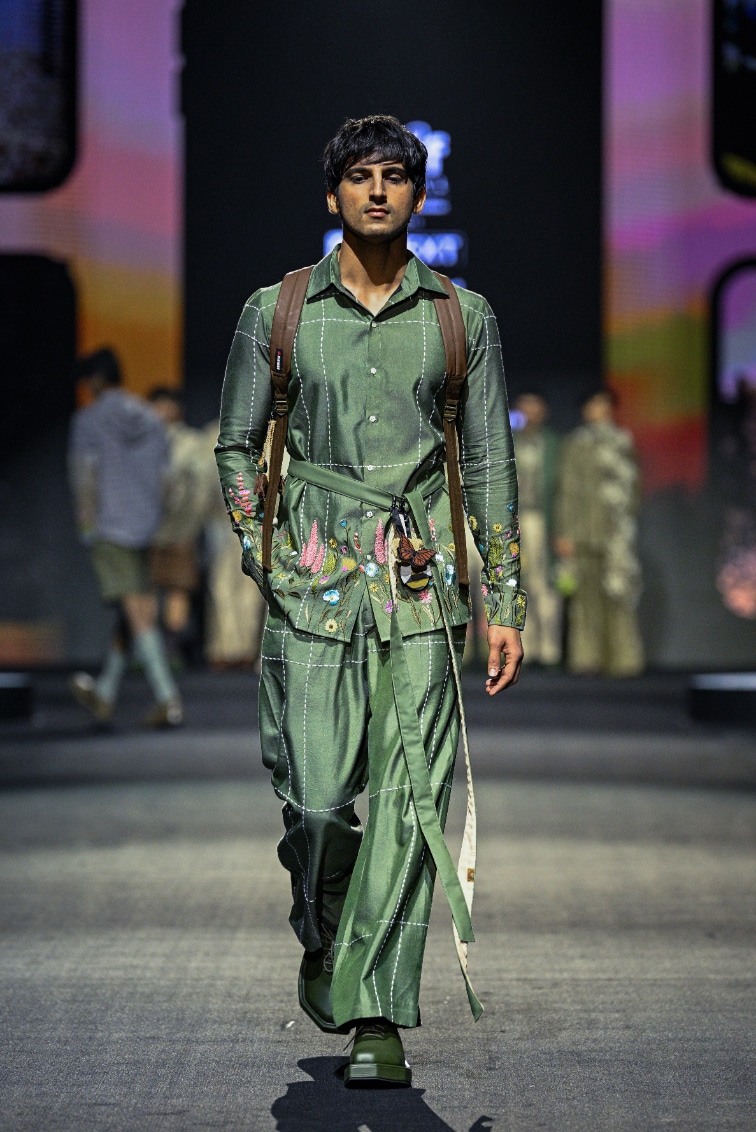
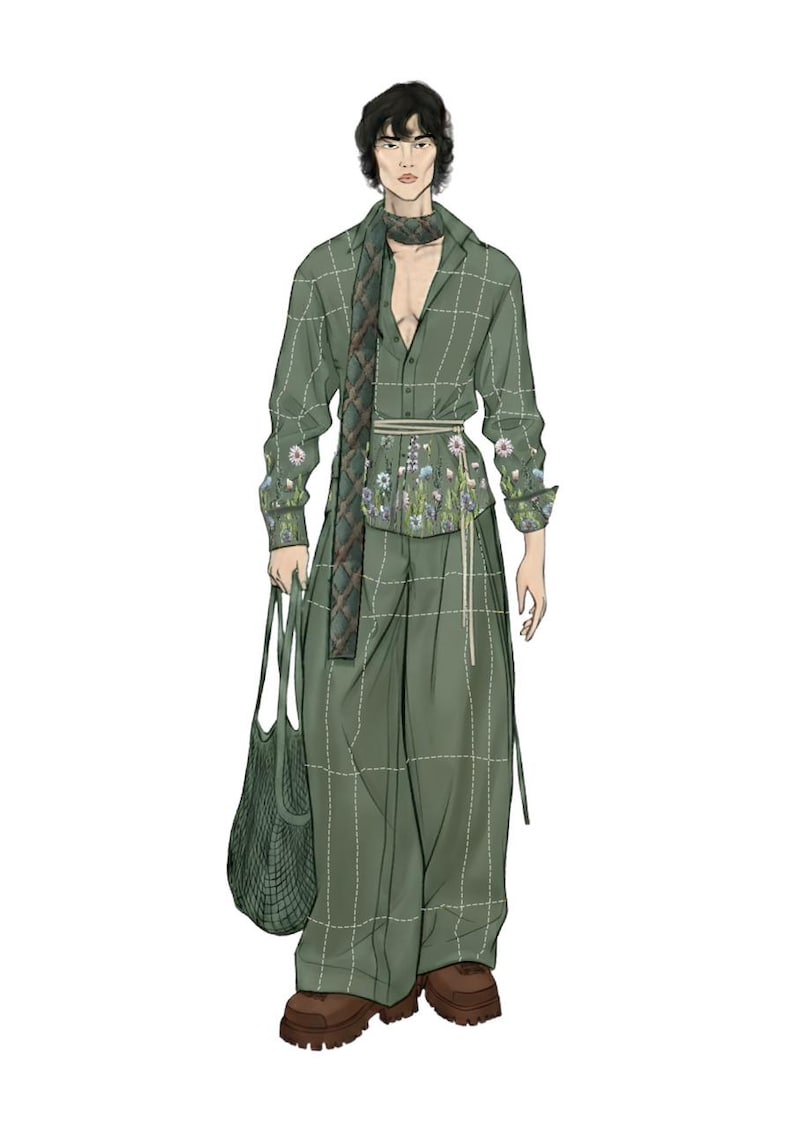
Maybe that’s the real point here. Screens give us immediacy, fashion still gives us touch.
And A Postcard from Valley of Flowers sits right in that tension. Between scrolling and feeling, seeing and remembering, visiting and imagining. It understands that modern memory is messy now. Half-lived, half-uploaded. Yet somehow still personal to each of us.


Really impressed with the variety of options available. It is refreshing to find a platform that is both reliable and fun like kulisbetyeni.
Finally found a site where the login process is straightforward and doesn’t glitch out. Very impressed with the overall security here at deespincasinologin
The theme of the site is amazing and the bonuses are actually generous. I feel like I have a real chance of winning here. Join armegafaraon
Finally found a site that doesn’t lag during peak hours. The interface is very user friendly and the bonuses are actually fair. Great job by idselalubet.
This place has a great selection of games and the rewards are actually reachable. It is my go to spot for some weekend fun. Check out bd3777bdt.
I love how easy it is to navigate through the different categories. It makes the whole experience much more enjoyable. Big thanks to vny088 for the great service.