

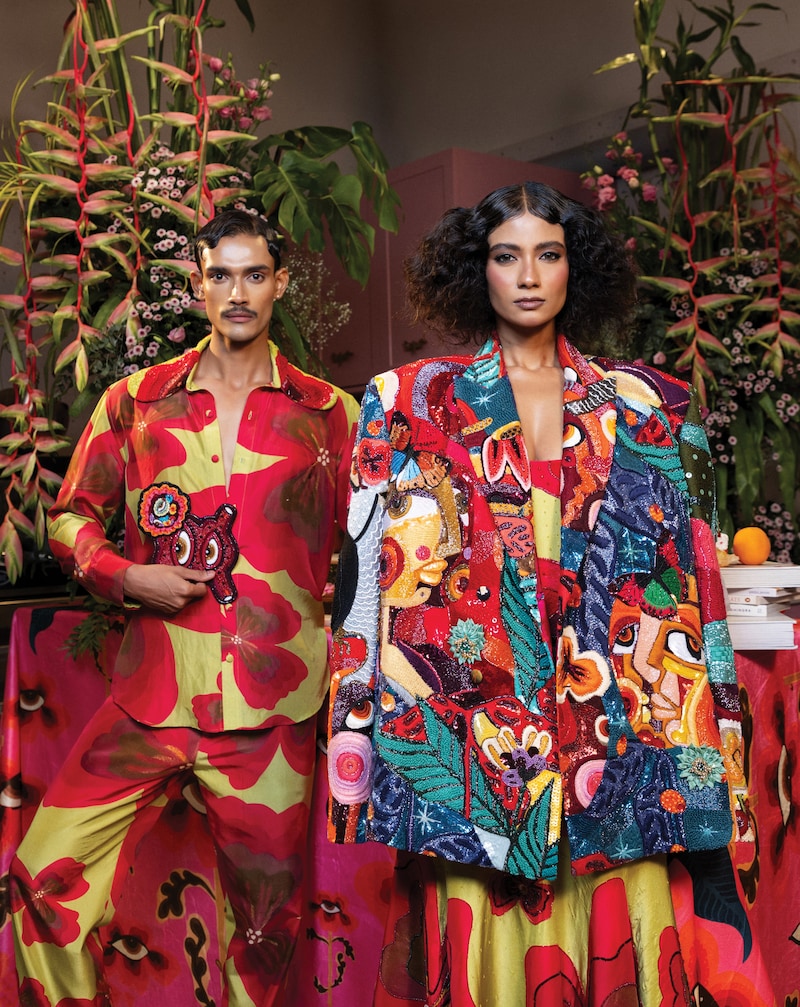
In Bobo Calcutta’s world, fashion resists definition. Instead, it exists as an instinctive confluence of all things close to art and identity. Founded by Ayushman Mitra, the art-laden label has steadily carved a language that is as emotional as it is visual, rooted in memory, mythology, and the quiet chaos of its namesake city.
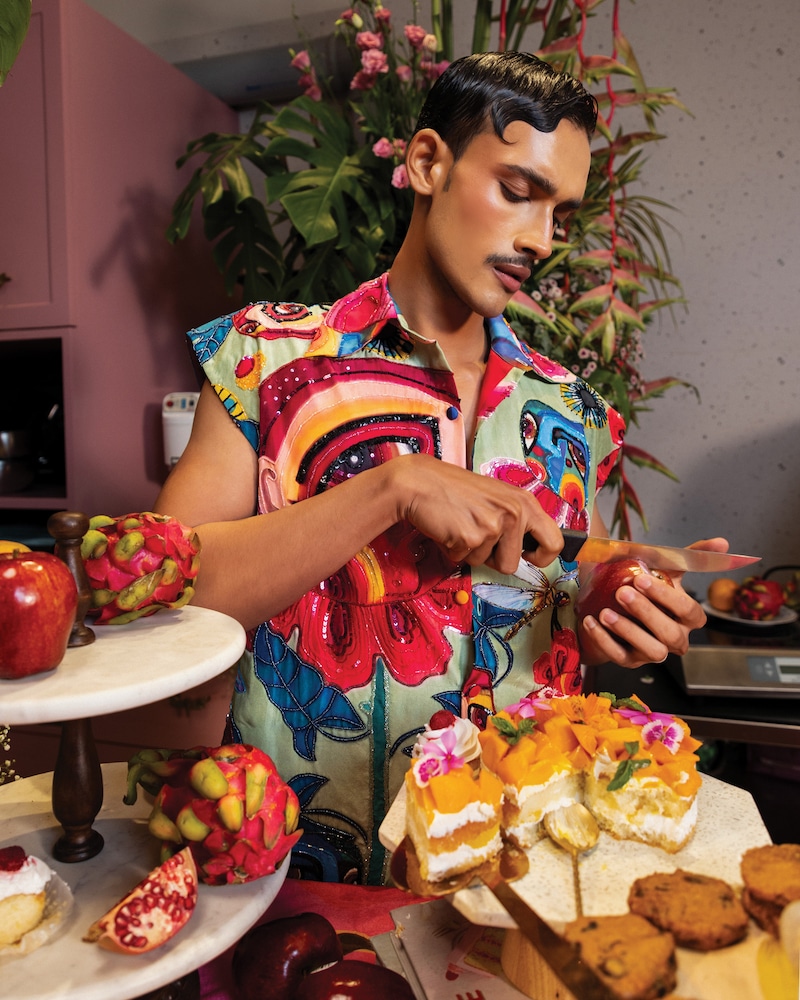
There is a certain rawness to Bobo Calcutta’s work – hand-painted narratives, expressive motifs, and silhouettes that resist definition – yet beneath it lies a deeply personal rhythm. The city remains central to this evolution – its decay, devotion, and fleeting beauty reflected in garments that feel lived-in rather than styled. The brand doesn’t follow a linear design trajectory but moves like a stream of consciousness, shifting between intensity and restraint, much like the city that informs it.
In conversation with First Look, the designer unpacks the emotional and instinctive threads that continue to shape the brand’s ever-evolving narrative.
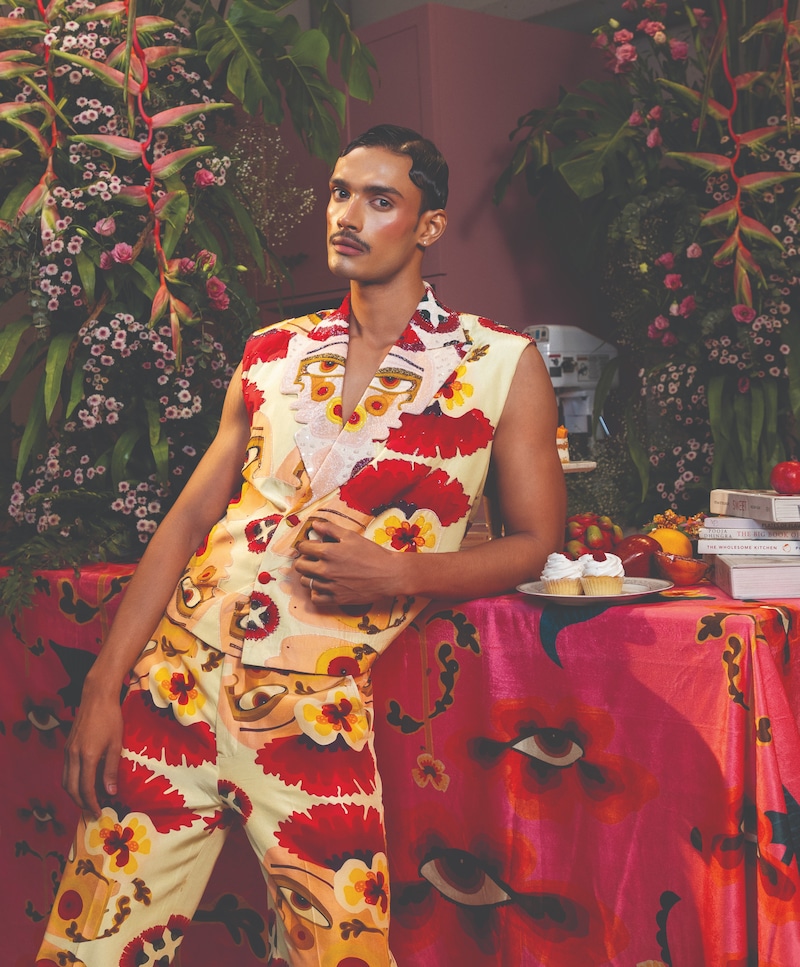
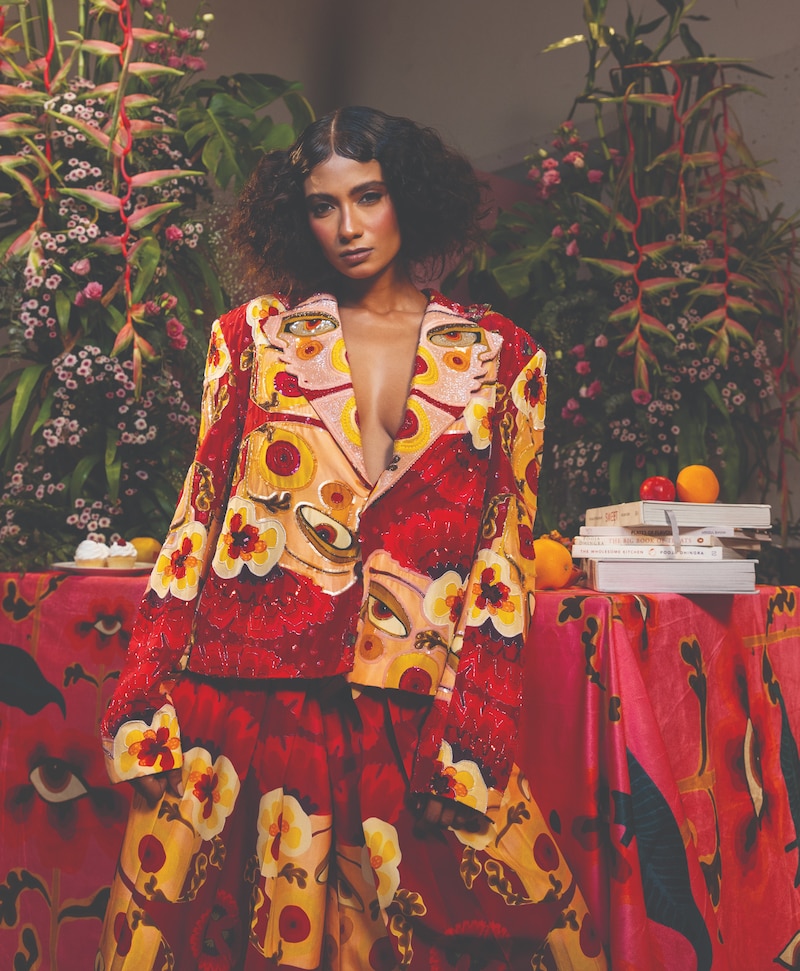
FL: Bobo Calcutta has always blurred the line between art and fashion. How has that relationship evolved over time?
AM: Honestly, I never saw them as separate to begin with. For me, clothing was always just a moving canvas. Earlier, it was more instinctive, very much chaotic. But now it’s still instinctive, but intentional. I think I’ve learned when to let the art scream and when to let it just breathe.
FL: The brand has consistently championed themes of love, freedom, and identity. How do these ideas connect to the way Kolkata has shaped your creative language beyond being just a point of origin?
AM: Every piece is like a letter I didn’t know I was writing. Love, especially – it’s messy, spiritual, physical, confusing, just like Kolkata. Freedom and identity come from that same place. I don’t design to explain things, I design to feel them. Calcutta isn’t just where I’m from; it’s how I think. It’s slow and intense at the same time. It’s decaying but full of life. You walk past a crumbling wall, and there’s a goddess staring back at you. That contrast is everything I do.
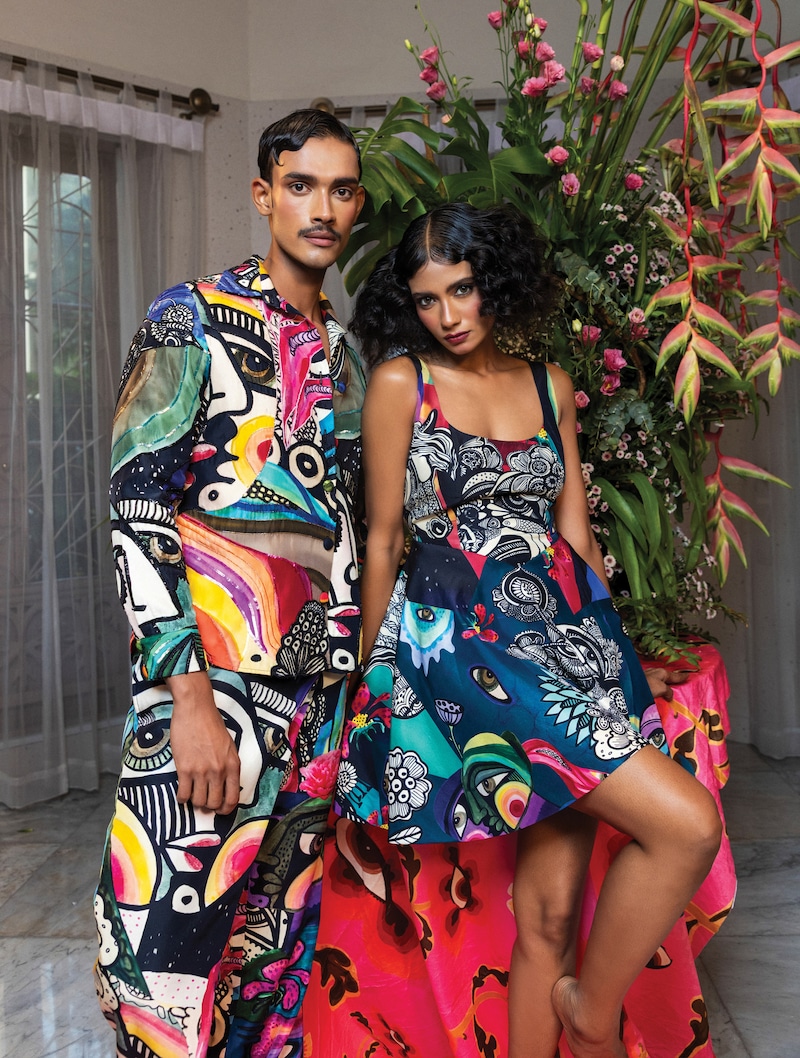
FL: Is there a recurring symbol or visual language that has come to define Bobo Calcutta over time?
AM: The eyes. Always the eyes. They come from the goddesses, from Kalighat, from childhood memories of watching idols being painted. There’s something very intimate about eyes – they see you, but they also judge you a little. I like that tension.
FL: Gender-fluid fashion is central to your work. How do you approach designing without the constraints of traditional categories?
AM: I don’t think about gender when I design, I think about energy. Some clothes feel soft, some feel strong, some feel vulnerable. Why should that belong to one gender? Growing up here, I’ve seen men worship goddesses with such tenderness, it already breaks binaries. In Kumartuli, I’ve watched men paint goddesses as delicately as any woman would, drape sarees onto idols with such care, such devotion. That fluidity has always existed around us. I’m just translating it into clothing.
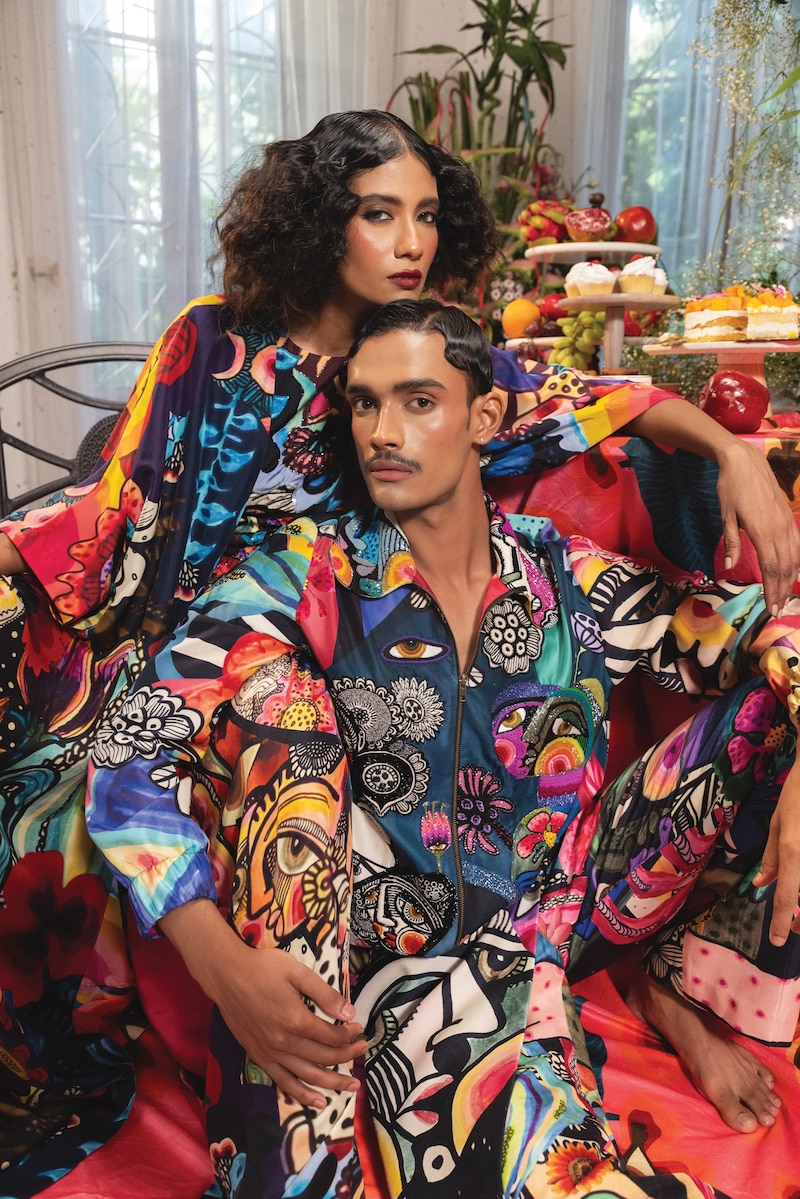
FL: Calcutta Breeze as a title feels evocative and atmospheric. What was the starting point for this collection?
AM: It was as random as the breeze itself. Kolkata summers are intensely humid, so a sudden breeze in the middle of nowhere feels like instant relief. That feeling became the starting point. This time, the summer prints are more minimal – lighter, more breathable, more wearable. There’s a certain ease to them, like they’re not trying too hard… just moving, like air.
FL: What excites you most about the current phase of Bobo Calcutta?
AM: Right now, the brand feels very playful. I’m allowing myself to go all out, while still keeping my roots strong. There’s a certain freedom in that balance. A lot of it comes from my time in London. Being exposed to drag culture during my college years really stayed with me. That sense of exaggeration, performance, and fearlessness has found its way into the work. At the same time, we’ve been exploring various visual languages – monochromes, two-tones, three-tones, and a full blend of prints. Some pieces are fully compositional, almost like moving artworks. It’s a phase where nothing feels restricted, and that’s what excites me the most.


Logging in is quick and secure which is exactly what I need. I feel safe using my account on aaajili357login for my daily sessions.
Found xjilicc through a friend and I am glad I did. The payouts are fair and the customer support is actually helpful. A solid choice for gaming enthusiasts.
A very friendly community and a fair gaming environment. I’ve shared this with a few friends and we are all enjoying the experience. ph29ph
Finally found a site that doesn’t lag during the big wins! The game variety is impressive and it feels very fair. Give pkzx777game a shot if you love slots.
Its like you read my mind! You seem to know a lot
about this, like you wrote the e book in it or something.
I think that you simply could do with some percent
to drive the message house a bit, however instead of that, this
is excellent blog. A fantastic read. I’ll certainly be
back.
Promo: C4bjWthY7dcX8qi
Here is my web-site :: конвеєрна стрічка купити