

Grief behind the Gown
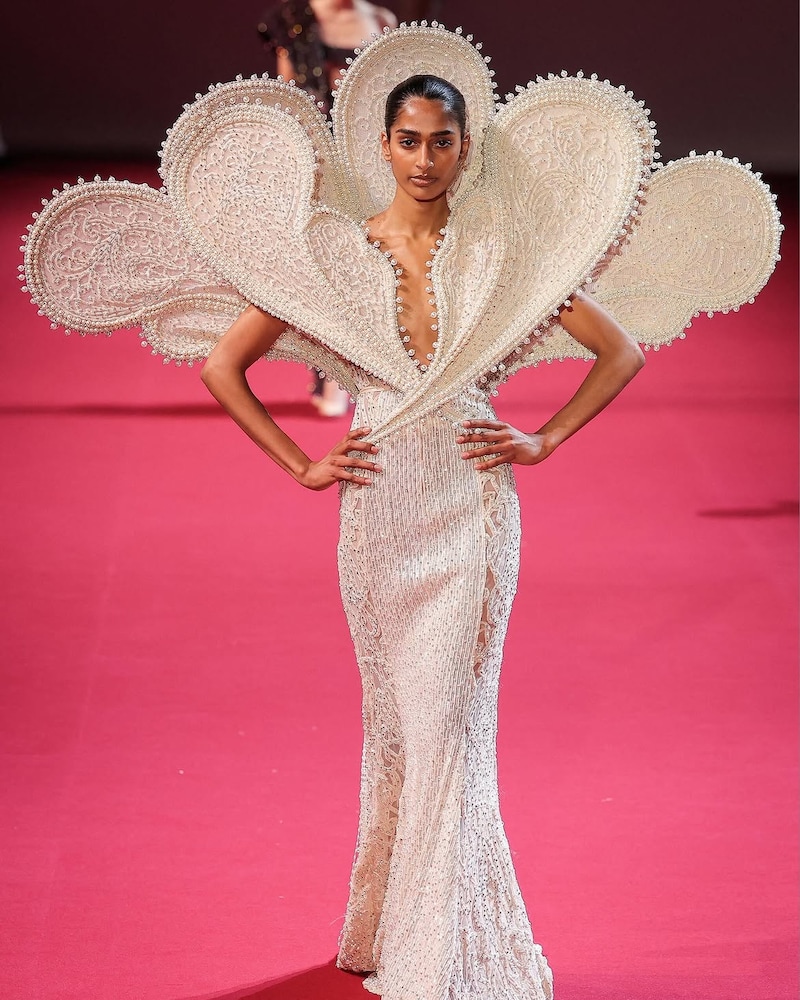
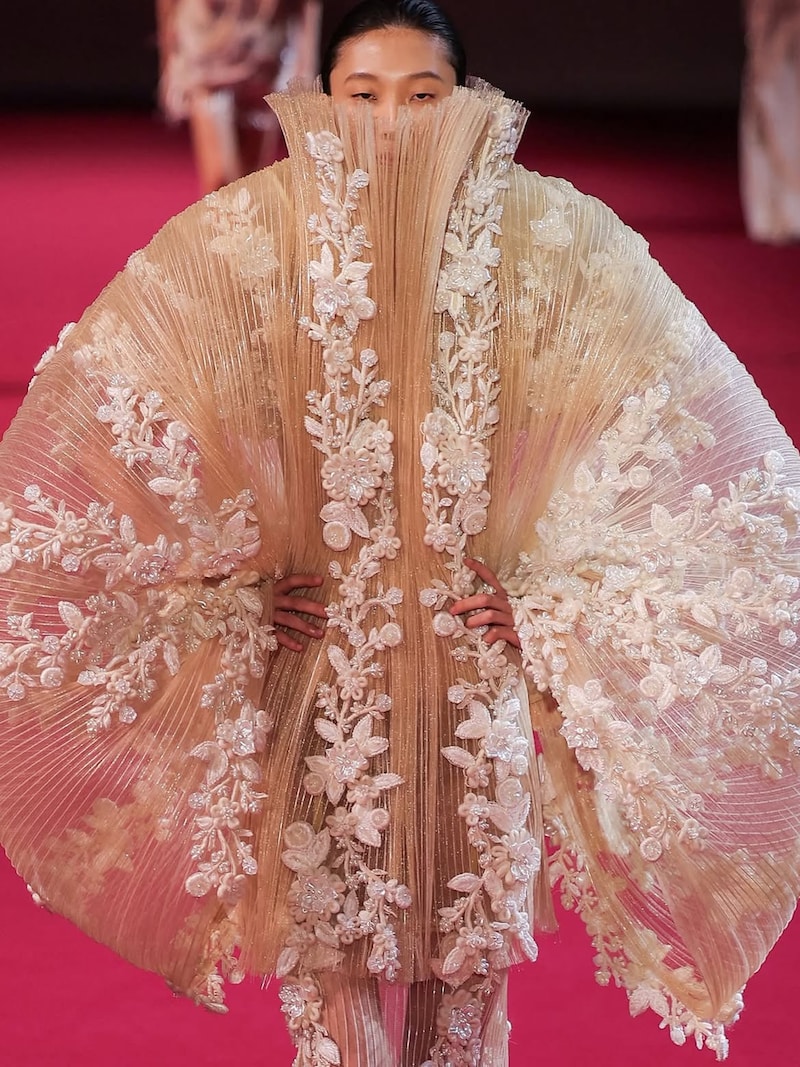
Some collections start with a sketch. This one started with a goodbye. When Manish Malhotra lost his mother, Sudarshan Malhotra, in March 2026, he lost the one person who never asked him to explain himself. Back in the 1980s, when he chose fashion as a career, she didn’t question it. She just trusted him. Months later, he answered that trust the only way he knows how: by making clothes.
That loss found its way into his Fall/Winter 2026-27 couture collection, dedicated to his ‘Maa.’ It’s the most personal work of his four-decade career. “Her passing has transformed memory into reflection, and reflection into creation,” he wrote in his show notes. This wasn’t just a tribute. It was grief, stitched into fabric.
Forty years into building one of India’s biggest fashion houses, Malhotra finally made it onto the official Paris Haute Couture Week calendar. He closed day three as a guest house, alongside Rahul Mishra, Gaurav Gupta and Vaishali S, four Indian designers on the official calendar in one season. For most designers, a Paris debut is the finish line. For Malhotra, it felt more like walking back into a memory he’d carried long before Paris ever called.
The Runway’s Two Moods
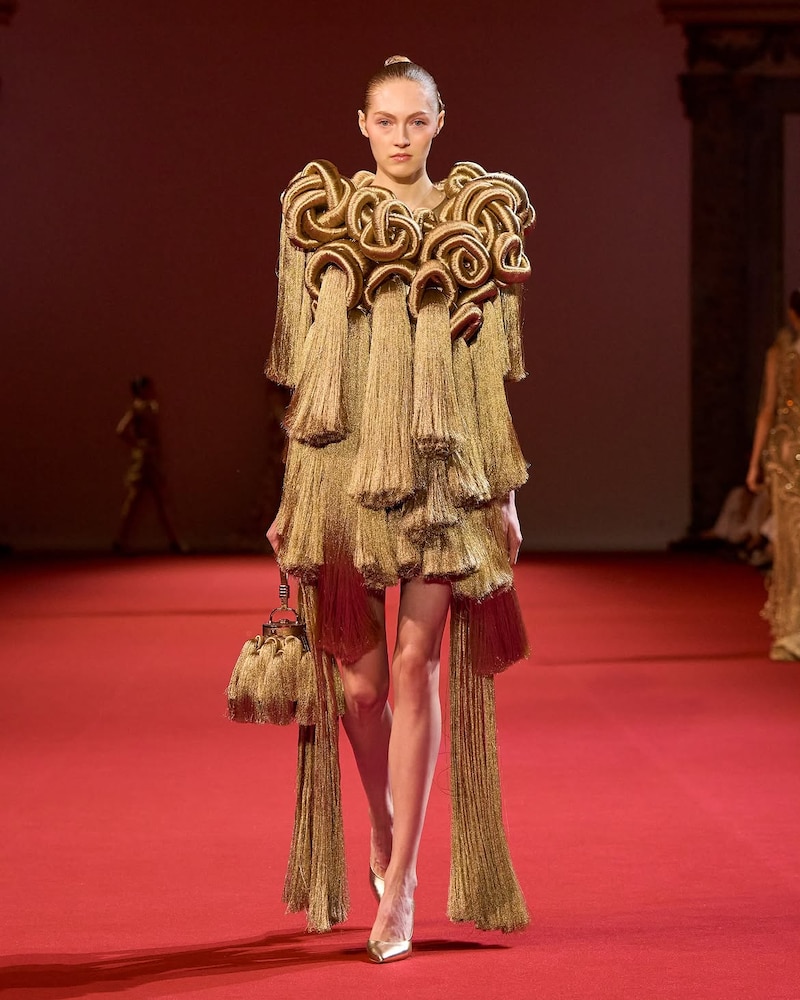
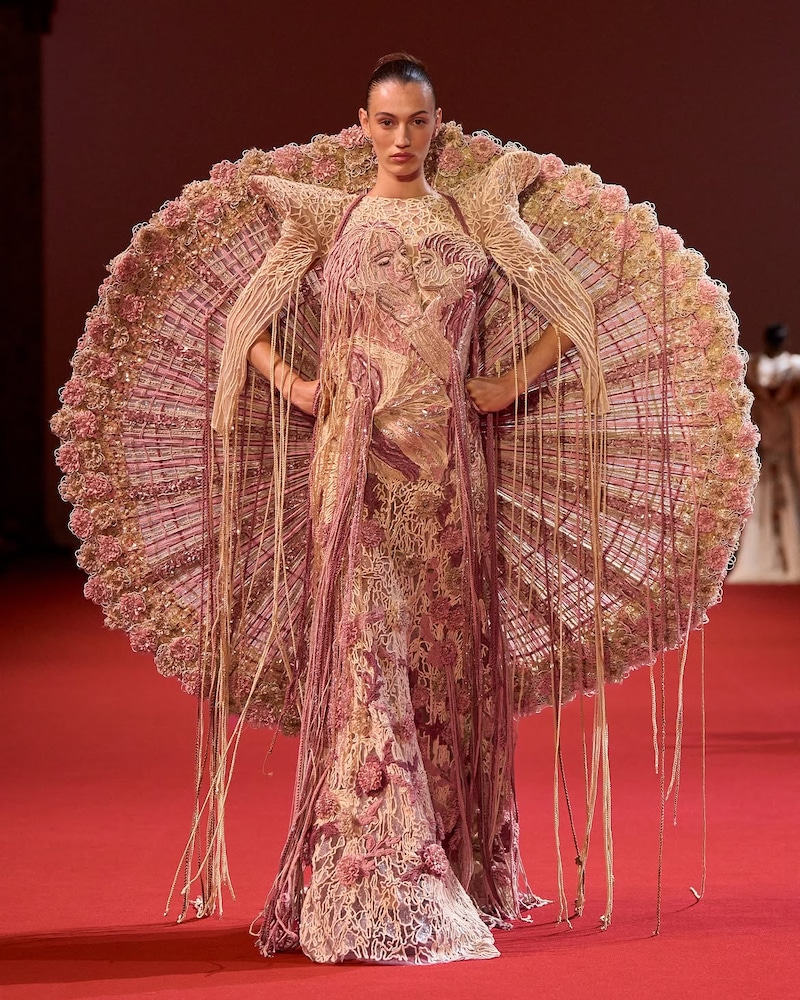
At the Pavillon Cambon Capucines, with its glass-domed roof, there was no room for subtlety. The show opened with bold shapes, heavy embellishment, and volume that made no apologies.
But it knew when to slow down too. Braided thread dresses added texture without losing shape. Petal-covered coats looked more like art than clothing. One ivory gown paired embroidered flowers with dramatic shoulders. Coral-inspired shapes turned the upper body into something you’d want to frame, not just wear.
Then the drama came back. A crimson velvet mini dress had sculpted shoulders dusted in silver leaves. Gold gowns were soaked in gemstones and embroidery, one with a caped shoulder, another with stones placed like a map of stars. The finale went full fantasy, with peacock-inspired backs and purple skirts that flared out at the hip before narrowing at the ankle.
Memory Worn as Craft
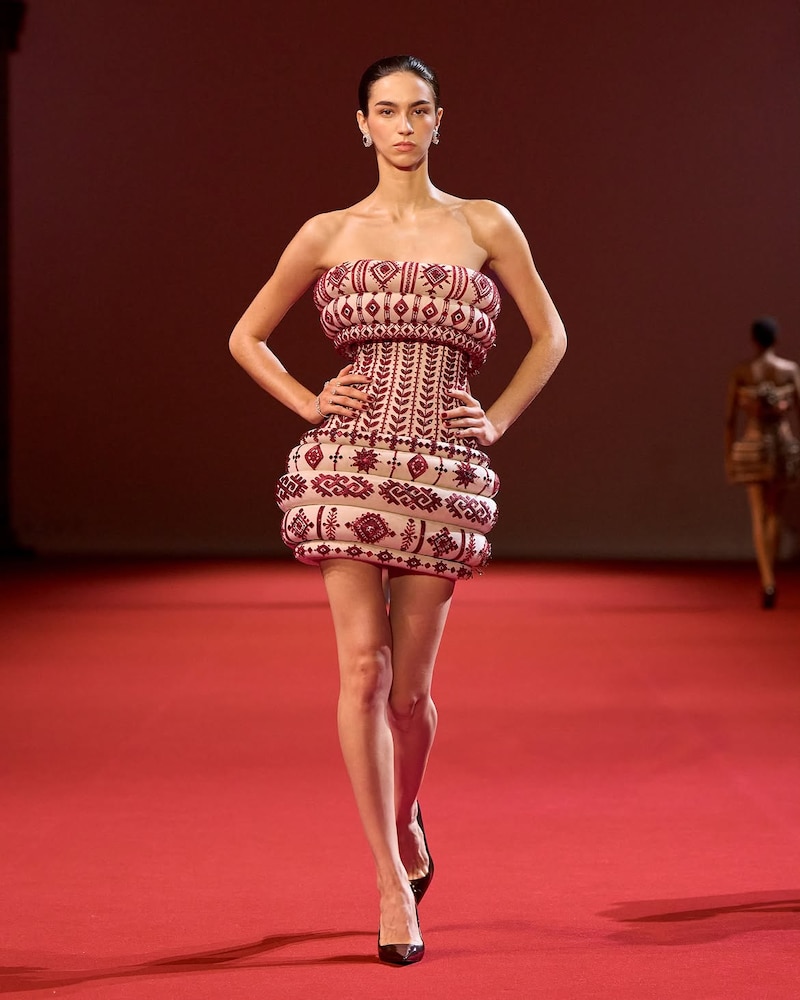
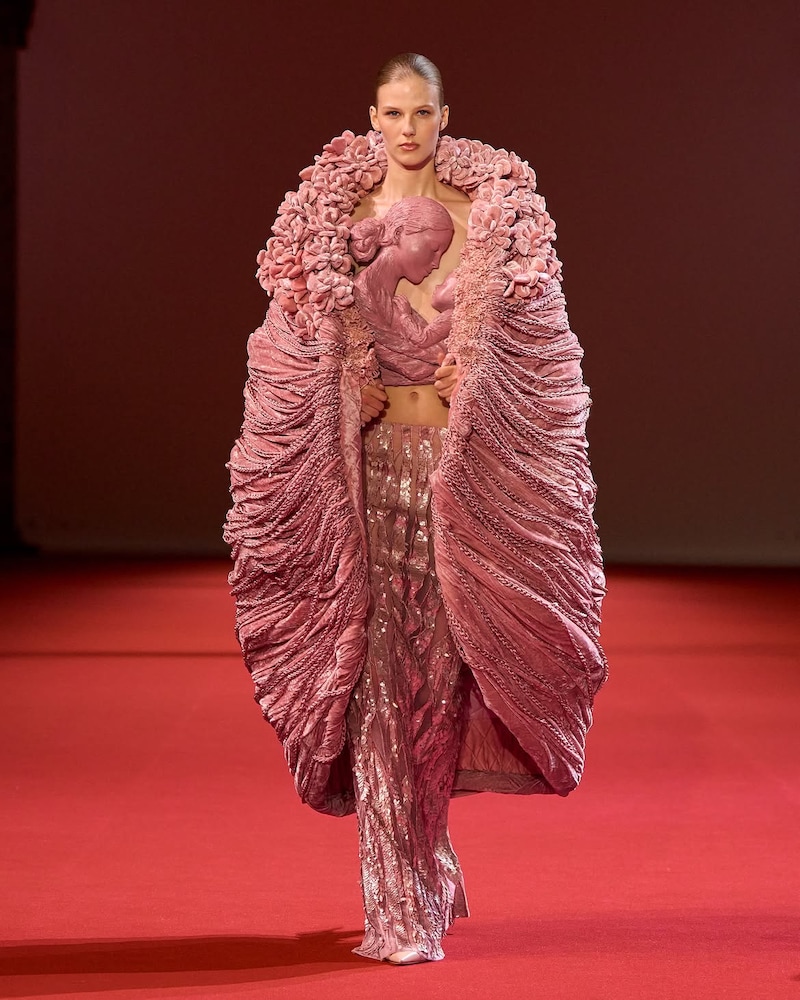
For all the drama, this collection stayed deeply Indian at its core. Chikankari, zardozi, resham threadwork, brocades, pearls and sequins covered velvets, silks and handwoven fabrics. Even the colours were personal. The jewel tones, blush pinks, ivory and metallic gold weren’t picked to look pretty together, they came straight from the sarees his mother wore in the 1970s.
The quietest details hit the hardest, with bustiers and embroidery carrying sculptural motifs of mothers holding their children, turning each ensemble into a portrait. Cocoon-shaped coats in soft pink and translucent gold wrapped the body in embroidery so dense it felt protective, like memory had been sewn in instead of printed on.
The Final Note
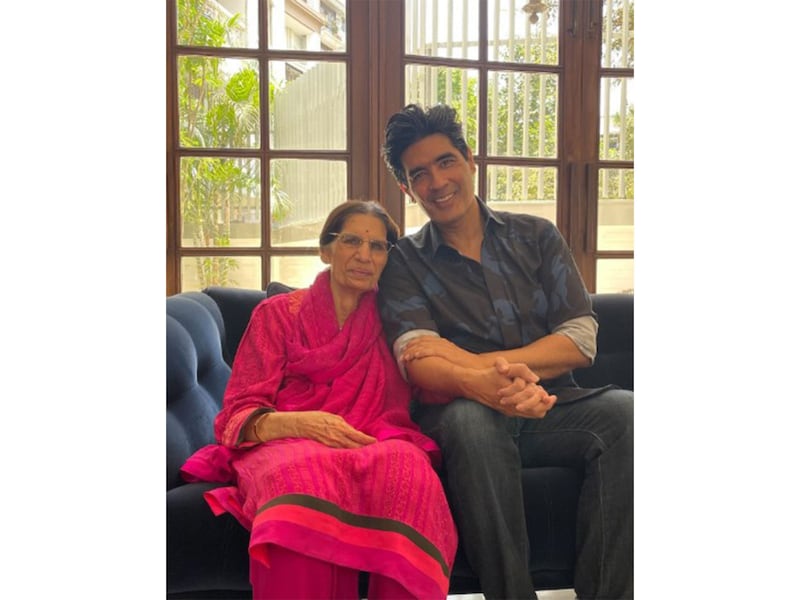
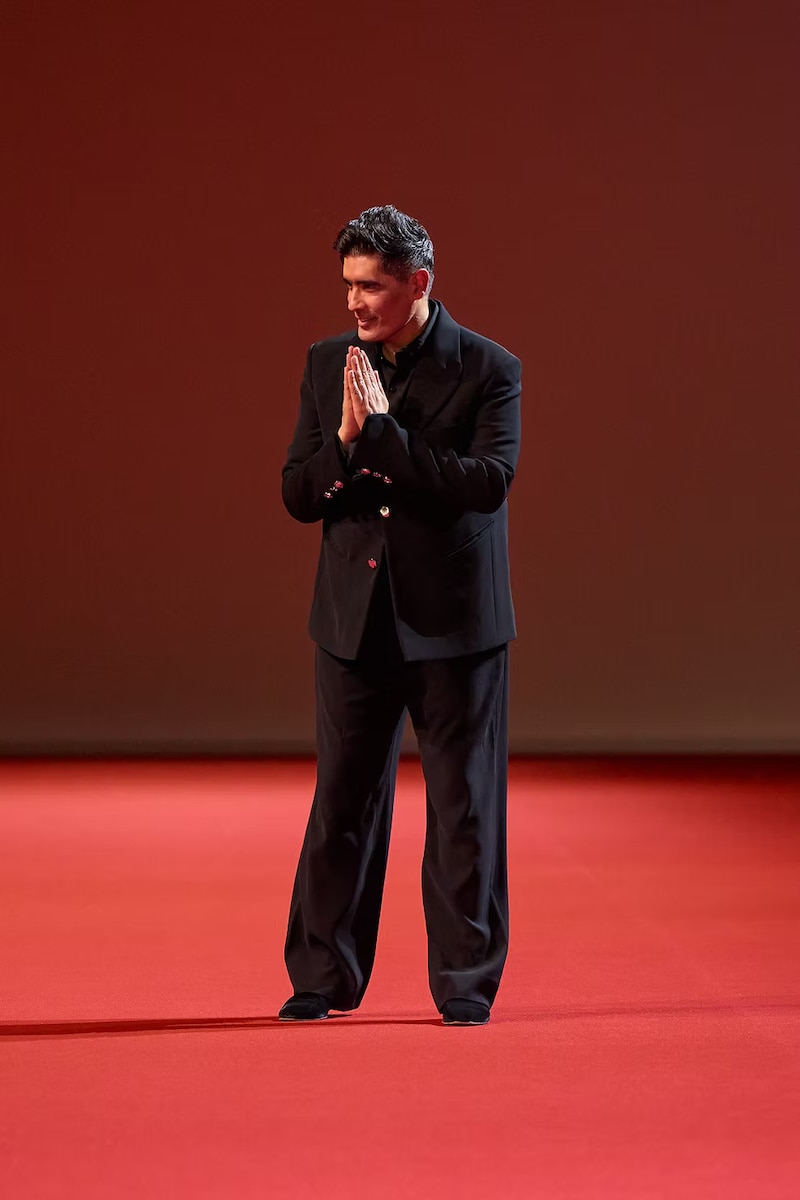
This is what made this collection resonate beyond the runway. It wasn’t trying to reinvent couture or compete for the loudest applause. It simply asked what happens when one of fashion’s most celebrated designers stops looking outward and begins looking home.
Paris may remember the collection as Manish Malhotra’s long-awaited couture debut. But what unfolded on the runway felt like something far more intimate, a son finishing a conversation with his mother in the language he knows best, one spoken through embroidery, colour and four decades of extraordinary craftsmanship.


9mm8kb
zpczr5
The game variety here is insane. I had a great run last night and the payouts were super quick. cipung138slot is definitely my new go-to spot.
This is the go-to spot for Jili fans. The games are always updated and the lag is non-existent. Big love to phjilibay.
Really enjoying the game selection here. The payouts are fair and the interface is super smooth. Definitely my new favorite spot for slots! Check out m4winslot for a great time.
Finally found a way to get the app installed without any hassle. The mobile experience is way better than the browser version. Get it via 355betappdownload.
Just browsing around and came across jiliph888. Anything good happening over there? Any promo codes you guys can share?
Really impressed with the user interface. Everything is where it should be and the games run without any glitches. Keep it up! phjilino2
The app version is a total game changer. So much easier to navigate on my phone than the web version. Grab the app at k777bdapk now.