

Ever wondered why certain pieces remain so difficult to part with. Why does a grandmother’s bangle tucked away in a velvet pouch feel more valuable than something infinitely more expensive bought yesterday? Why do old jewels continue to exert such emotional force long after the people who wore them are gone? Perhaps because there are few objects we inherit as emotionally as jewellery. A sari may eventually fray, a home may be renovated beyond recognition, and furniture can be sold, forgotten, or left behind. But jewellery endures. It moves across generations, across cities, across marriages and migrations. It sits closest to the body, absorbing touch, memory, grief, celebration, and even time.
“Jewellery in India has never been merely decorative,” says Tarang Arora of Amrapali. “It marks birth, marriage, faith, and mourning. It is wearable biography. Unlike clothing that perishes or homes that transform, a necklace survives generations intact. It carries the warmth of the person who wore it, the occasion it witnessed. In a country as layered as India, jewellery becomes perhaps the most intimate, portable form of storytelling across time.”
That idea feels especially resonant at the Amrapali Museum in Jaipur. The story of the museum cannot be separated from the story of Amrapali itself. Founded in Jaipur in 1978 by Rajiv Arora and Rajesh Ajmera, Amrapali emerged at a time when traditional Indian jewellery was yet to receive the global recognition it commands today. Long before conversations around craft preservation, cultural sustainability, or archival luxury entered the mainstream, the founders travelled extensively across India, discovering and collecting antique jewellery, tribal adornments, and rare artefacts from communities whose traditions were already beginning to fade.
What began as an instinctive fascination with India’s extraordinary jewellery vocabulary slowly evolved into one of the country’s most significant private collections. “The shift happened organically as our founders travelled across India sourcing antique jewellery,” says Arora. “What began as a passion for exceptional craftsmanship gradually became a responsibility. We realised we were acquiring irreplaceable objects that would otherwise disappear. Preservation became inevitable once we understood we weren’t just collectors; we were custodians of a vanishing legacy.”
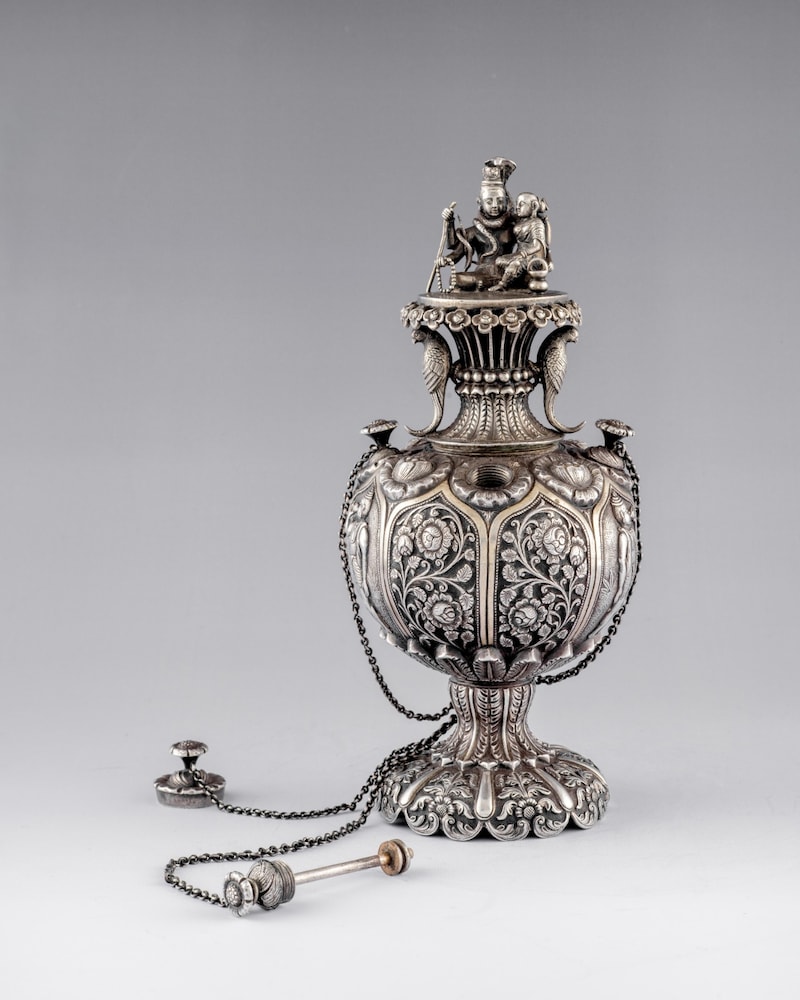
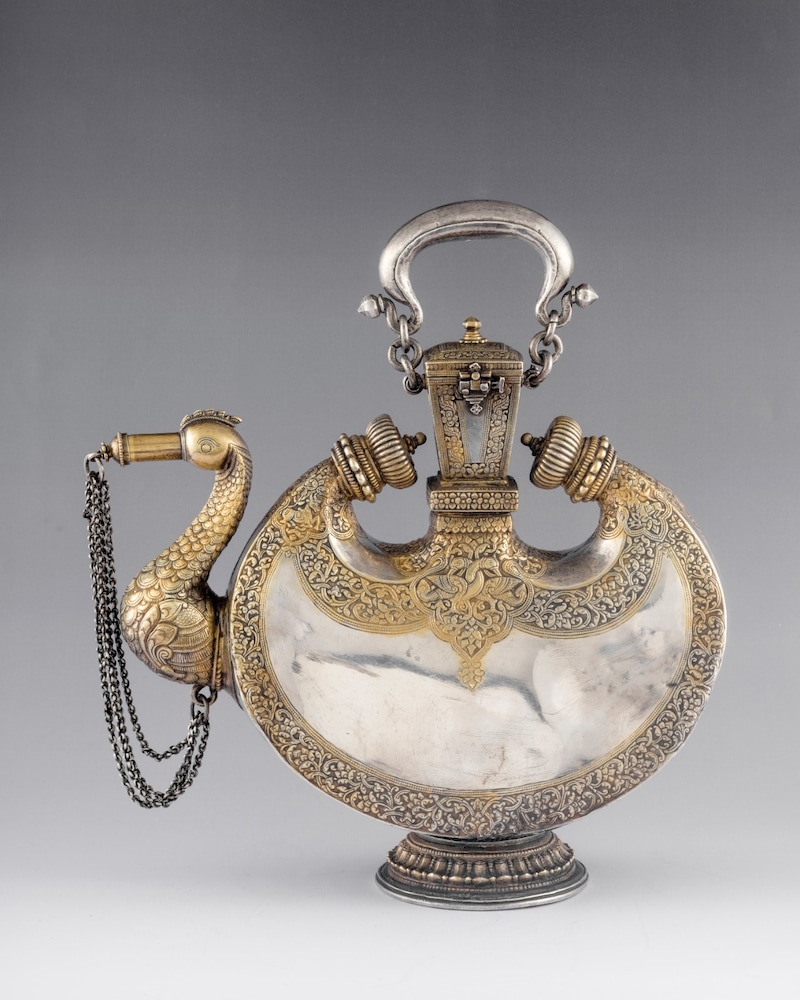
Silver Gangajali (Holy Water Flask), South India, 19th-20th C 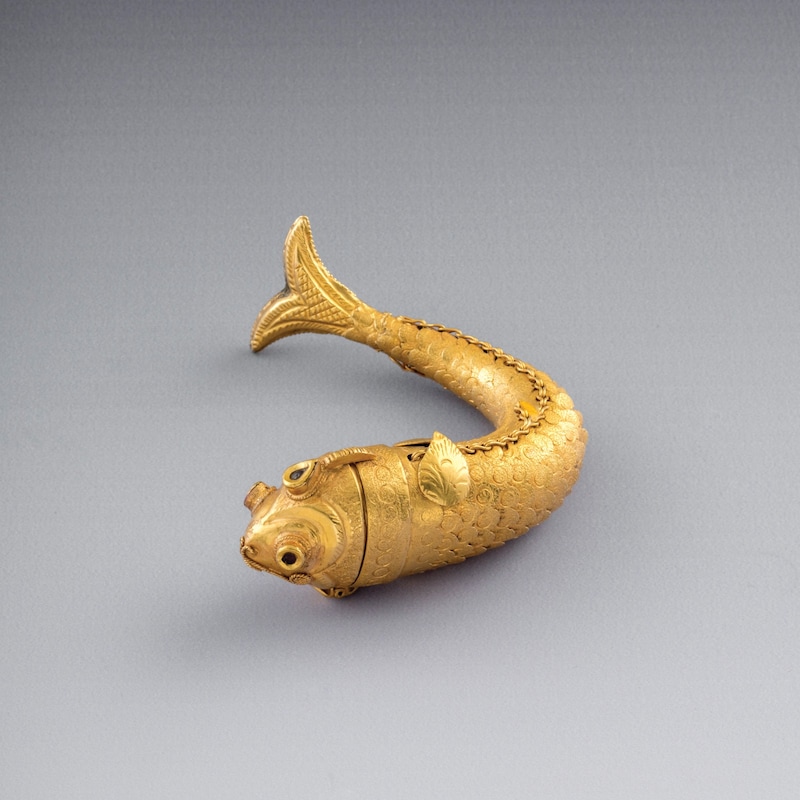
Gold perfume container, Rajasthan, 19th-20th C
For decades, the collection continued to grow quietly. Royal ornaments sat alongside tribal silver. Ceremonial objects shared space with everyday adornments. Piece by piece, a parallel history of India was taking shape, told not through monuments or manuscripts, but through objects worn on the body. Eventually, the scale and significance of the collection demanded a more permanent home.
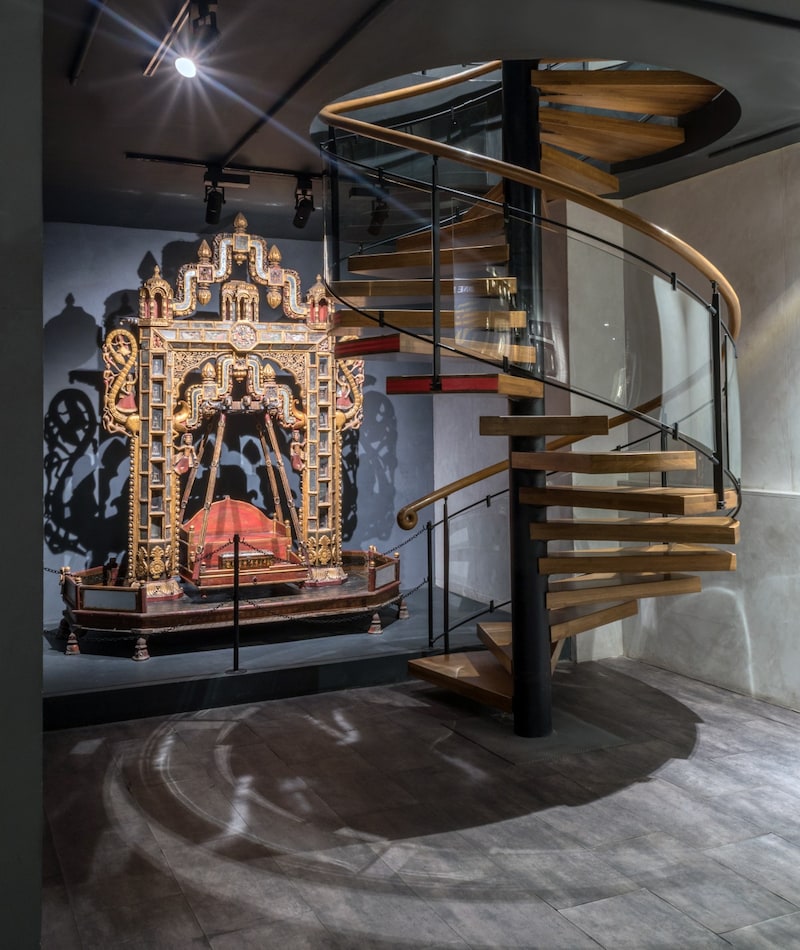
Opened in Jaipur in 2018, the Amrapali Museum was conceived as India’s first museum dedicated exclusively to jewellery and jewelled objects. Today, the collection spans centuries and geographies, housing thousands of artefacts that trace the diverse histories of adornment across the subcontinent. From ceremonial necklaces and courtly jewels to utilitarian objects, ritual adornments, and tribal ornaments, the museum offers a rare glimpse into the social, cultural, and emotional lives embedded within jewellery.
The museum itself emerged from a growing sense of urgency. “We were witnessing rapid erosion. Master craftsmen were ageing without successors, regional traditions were disappearing, and antique pieces were scattering into private collections globally. The museum was our answer to that urgency,” says Arora. “Preservation wasn’t a fashionable conversation then, but we believed strongly that cultural memory shouldn’t wait for the mainstream to catch up.”
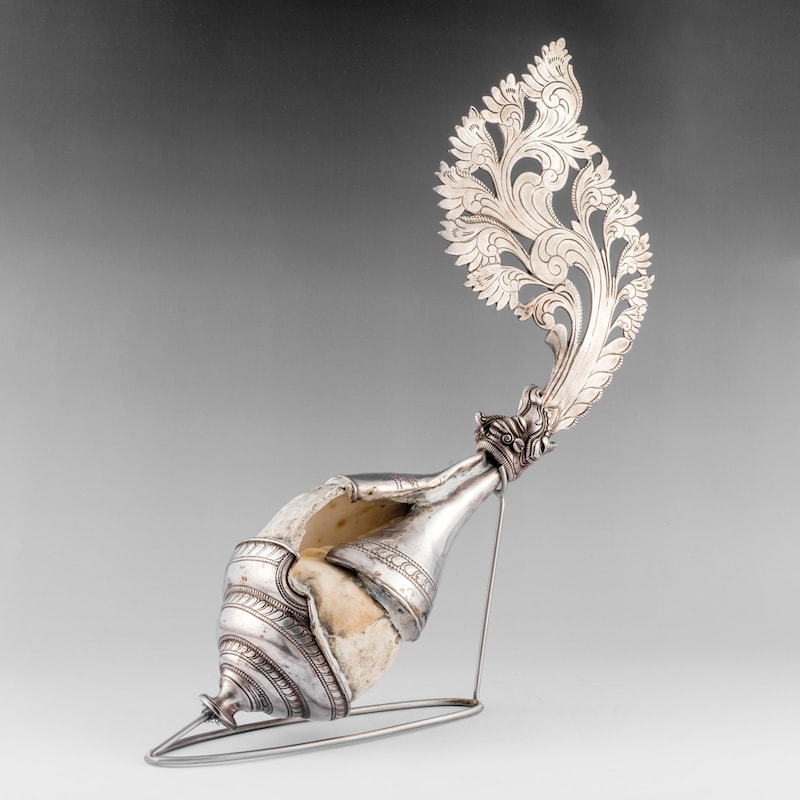
Antique Silver Shankha (Ritual Conch Shell ) 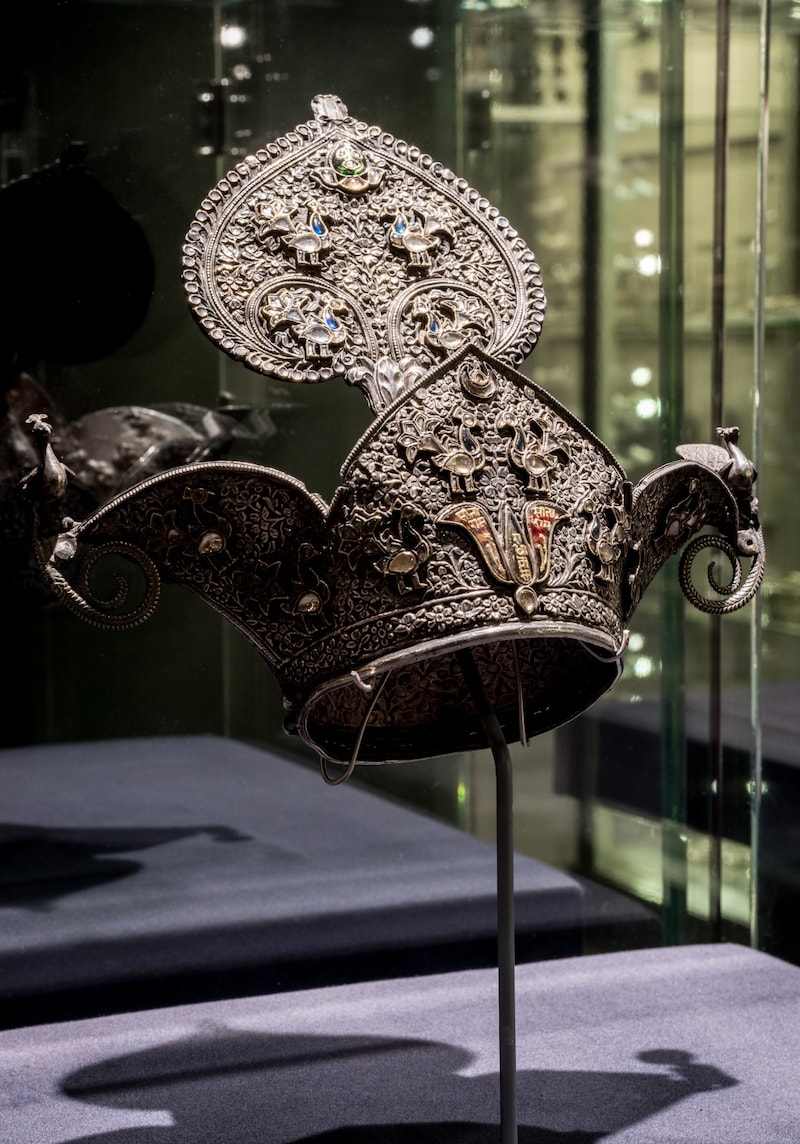
Lord Krishna’s Silver Mukut (Crown), North India
In many ways, the museum challenges conventional ideas of what jewellery represents. Here, jewels are not merely precious objects. They are cultural documents. They tell stories of migration and trade, of faith and identity, of gender, status, protection, inheritance, and belonging.
Going through the museum’s collection, what becomes immediately apparent is the astonishing plurality of Indian adornment. There is no singular narrative of Indian jewellery. “The breathtaking regional diversity surprised us deeply,” says Arora. “Adornment from Nagaland looks nothing like Rajasthan, which looks nothing like Kerala. Each tradition reflects unique cosmologies, rituals, and social structures. The museum taught us that India’s unity is truly found in its spectacular plurality.”
The museum’s curator, Rishav, echoes this sentiment. “While there is no single story of Indian jewellery, there is a shared cultural importance placed on adornment, or shringar, across regions and communities. Every region, community, and social group developed distinct forms of jewellery shaped by local histories, beliefs, environments, and ways of life.”
Jewellery, he explains, functioned as a sophisticated visual language. It communicated identity, marital status, social standing, profession, and spiritual affiliation. It marked ceremonies, festivals, rites of passage, and everyday life. Without context, however, even the most extraordinary object risks becoming solely beautiful. “The story is often as important as the object itself,” says Rishav. “Without context, jewellery becomes an isolated artefact, appreciated only for its form or craftsmanship.”
He recounts the example of a Nothengpi earring from Assam in the museum’s collection. At first glance, it appears to be an exquisite silver ornament. In reality, the hollow earring functioned as a small container used to store valuables on the body, revealing histories of mobility, security, and everyday resourcefulness. “Without this story, we would see only a beautiful object,” he says. “And not insight into systems of mobility, security, resourcefulness, and everyday life.”
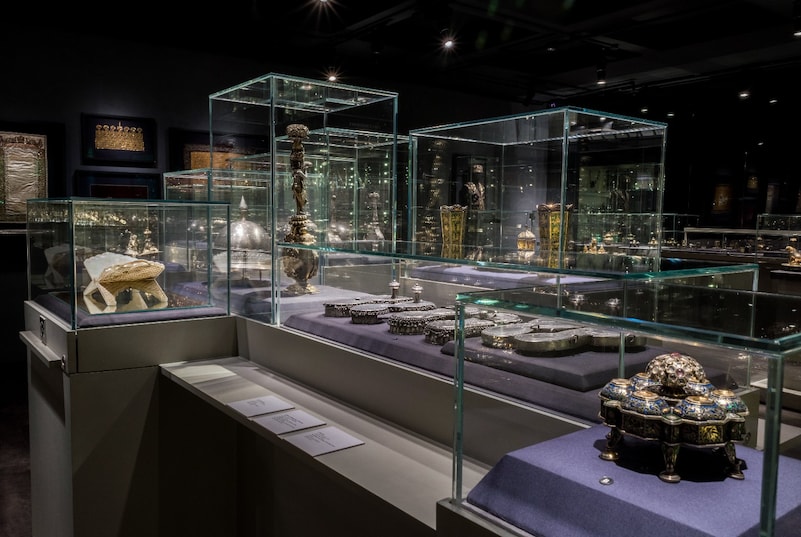
This is what makes museums and archives so compelling. They preserve not only objects, but entire worlds. Some pieces reveal traditions that are rapidly disappearing. Among them is the gokhru earring traditionally worn by Bhil men in Rajasthan, “Objects such as the gokhru remind us that jewellery in India was never exclusively associated with women,” says Rishav. “The museum not only preserves the history of male adornment but also highlights living traditions that continue to be sustained by communities today.”
Yet, the most powerful aspect of archival jewellery lies not in history alone, but in memory. Jewellery survives longer than photographs, letters, and even family records. It becomes an emotional archive. “Absolutely,” says Rishav. “Jewellery carries memories in a way few objects can. It accompanies life’s most significant moments like births, marriages, festivals, inheritances, and rites of passage. Because it is worn on the body, it becomes intertwined with personal experiences and family histories.”
He speaks of a Periya Thali in the museum’s collection, donated to a temple by an elderly couple after celebrating a milestone wedding anniversary. “What began as a marriage ornament eventually became a marker of decades of shared experiences, memories, and companionship.”
These stories reveal something larger about women’s histories as well. “Historical jewellery offers remarkable insights into women’s lives, particularly because many aspects of their experiences were never formally recorded,” says Rishav. “In many ways, jewellery serves as an alternative archive of women’s history, preserving stories that conventional historical records often overlook.”
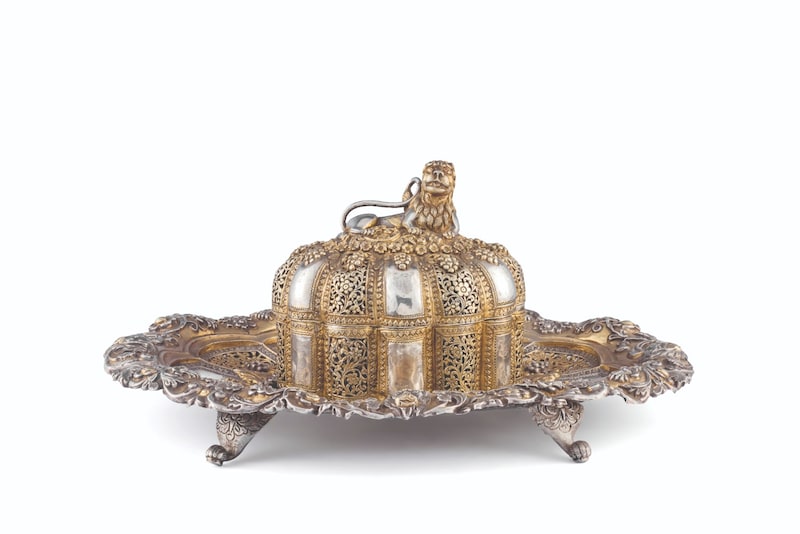
Antique Silver and Gold Paandaan, Banaras 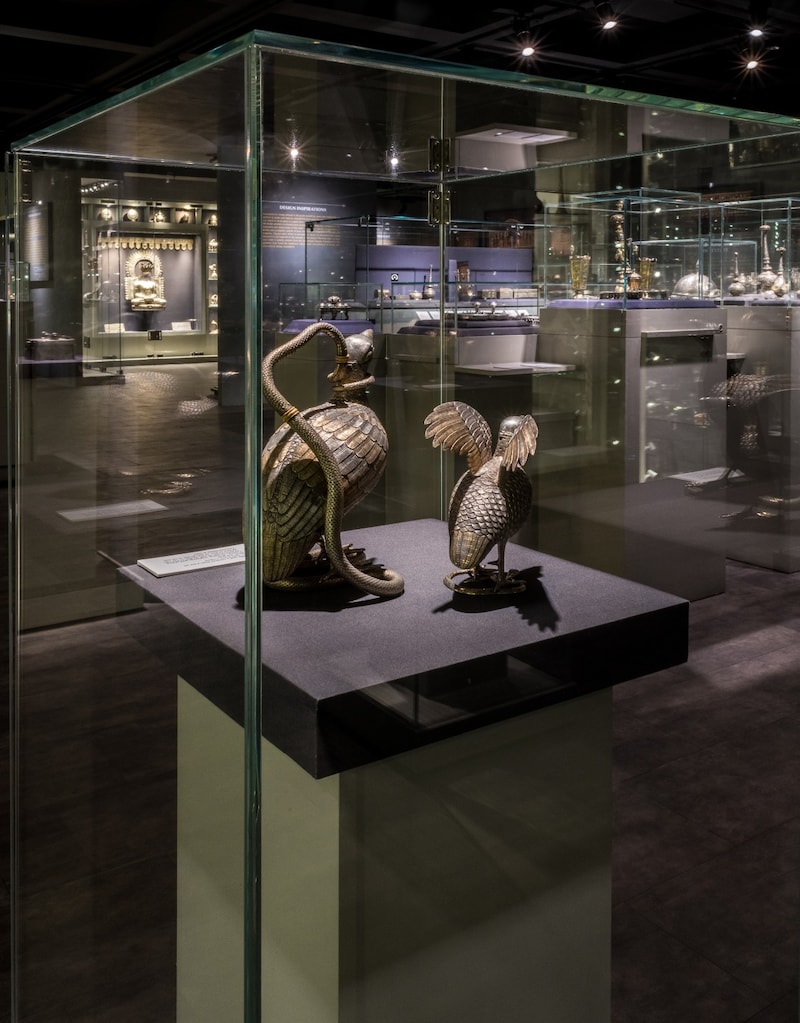
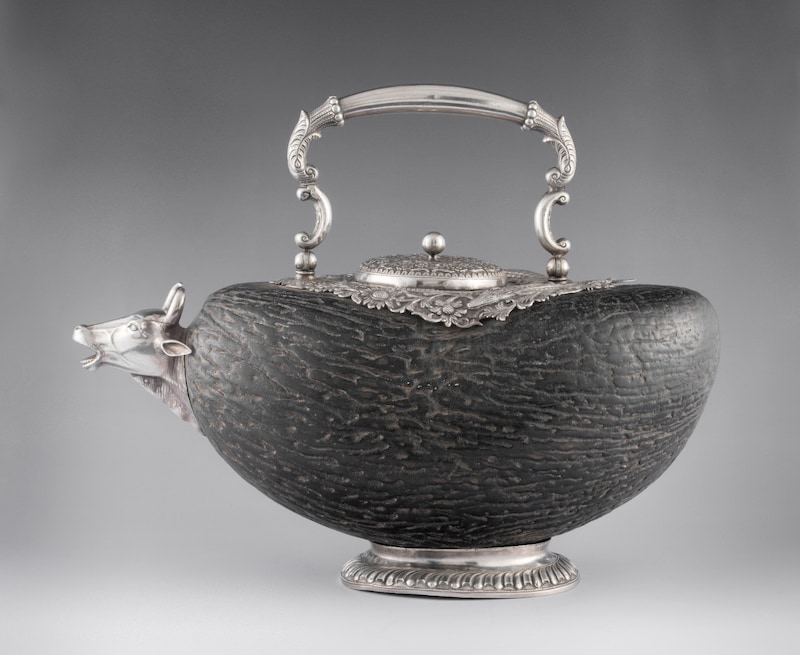
Oomersi Mawji’s Grey Francolin Teapot and Creamer
For centuries, the female body itself functioned as a repository of wealth. Jewellery signified prosperity, formed an important part of dowries, and often offered women economic security in societies where access to property remained limited.
There is, perhaps, a reason younger generations are returning to these objects now. At a time shaped by speed, disposability, and relentless novelty, heirloom jewellery offers something increasingly rare: permanence. “There’s a growing disillusionment with fast, disposable luxury,” says Arora. “Consumers are seeking objects that carry meaning beyond a logo. Provenance, craft, and story are becoming the new markers of value.”
Rishav sees a similar shift. “Younger audiences are looking beyond trends and seeking objects with history, meaning, and craftsmanship. Heirloom jewellery offers a tangible link to family stories, cultural heritage, and traditional knowledge.”
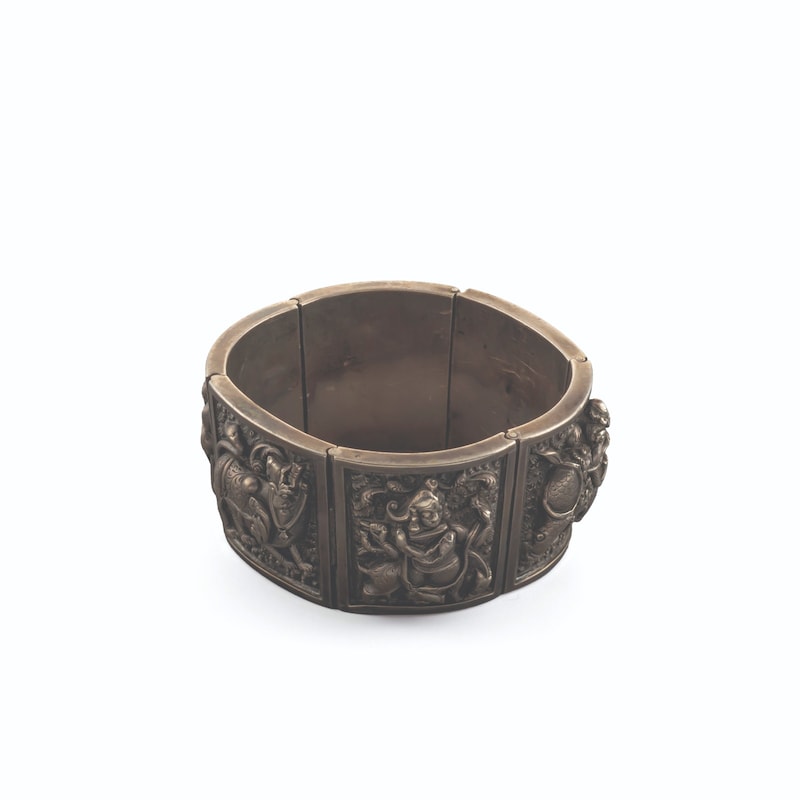
What is particularly exciting is this generation’s approach towards heritage. “We find it wonderfully liberating and deeply encouraging,” says Arora. “This generation is refusing to reserve heirloom jewellery for weddings alone. They wear a grandmother’s earring with a linen shirt, and it feels entirely right. This unselfconscious mixing signals genuine ownership of heritage rather than reverence from a distance.”
The future of heritage, both Arora and Rishav suggest, lies not only in conservation, but in reinterpretation. “Conservation protects the original; reinterpretation keeps the tradition breathing,” says Arora. “Heritage that only lives behind glass eventually becomes history. Heritage that is worn, loved, and reinterpreted becomes culture.” Museums, too, have an important role to play. “Rather than treating jewellery as relics of a vanished past, we can highlight how traditions continue to evolve and influence contemporary practices,” says Rishav.
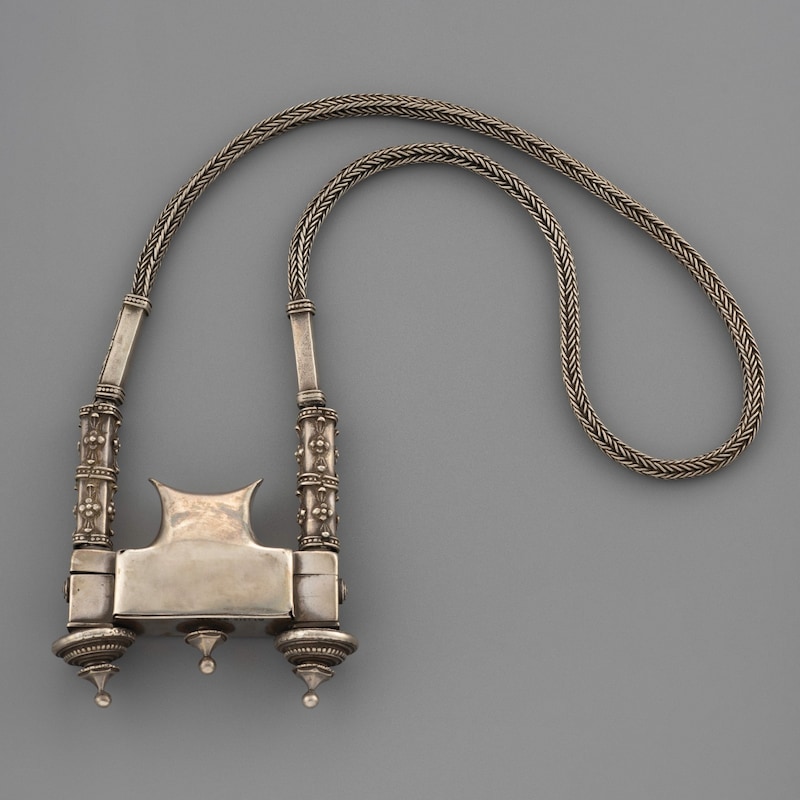
Ayigalu Linga Casket 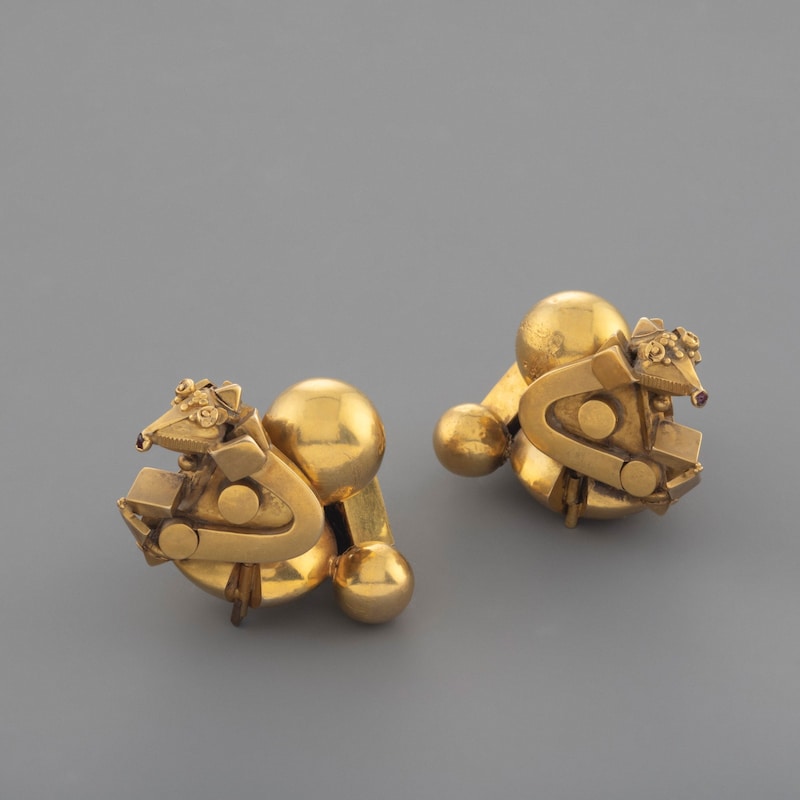
Pampadam (Gold Earrings), South India
Ultimately, archives matter because they offer context. They remind us that luxury without history is simply consumption. “Without that understanding, luxury is simply expensive,” says Arora. “With it, it becomes an inheritance.” When asked if there is a single object in the museum that best represents India’s relationship with memory, inheritance, and adornment, Arora is quick to answer. “A hansli,” he says, referring to the rigid tribal neck ornament found across multiple communities in India. “It is among the oldest adornment forms, worn by women as identity, protection, and inheritance. It transfers from mother to daughter not merely as jewellery but as continuity.”
What moves him most, however, is its remarkable constancy. “Its form hasn’t changed across centuries because it doesn’t need to. It carries memory in its very rigidity. Unchanged, uncompromising, and deeply human.”
Looking ahead, Arora hopes the museum evolves into far more than a repository of objects. “We envision it becoming a living reference point for India’s jewellery heritage, inspiring new collections, academic scholarship, and cultural pride,” he says. “Success means a child from Jaipur looks at a tribal piece and feels the vastness of her own inheritance.” And that is the true power of jewellery archives. They do not simply preserve objects, they preserve emotion. A clasp worn smooth with time, a gemstone reset for another generation, or a piece carried from one woman’s life into another’s. The jewellery survives and so do the sentiments.


The visual design really hits different; that color palette described is quite something! Checking out kuwin club online casino gives a solid feel for the user flow. Need to see how the mobile experience matches this slick aesthetic!
Such a fun community and the game selection is massive. I spend most of my free time here. You should check out phplaytimevicsotto.
[3328]llwin | Link vào trang chủ và hướng dẫn chơi nổ hũ online,llwin cung cấp link vào trang chủ chính thức, hướng dẫn tải app llwin nhanh chóng và chi tiết luật chơi baccarat. Truy cập ngay để trải nghiệm sòng bài trực tuyến. visit: llwin
[9564]Jiun88 | Link vào chính thức và hướng dẫn chơi baccarat,Truy cập jiun88 để tải app nhanh chóng, nạp tiền casino qua momo tiện lợi và khám phá kinh nghiệm quay slot nổ hũ dễ thắng. Đăng ký tài khoản ngay hôm nay! visit: jiun88
Really impressed with the graphics and the overall feel of the platform. It feels very professional and secure. I’m sticking with gtwinapp from now on.
[4227]NBA Odds Login at Slots Gamit ang GCash | Online Casino,Tingnan ang nba odds at mag-enjoy sa slots gamit ang gcash. I-download ang nba odds app at alamin kung paano maglaro ng baccarat. Mag-login na rito! visit: nba odds
[631]wonaco লগইন এবং অ্যাপ ডাউনলোড – বিকাশ দিয়ে সেরা স্লট গেম,wonaco লগইন করুন এবং অ্যাপ ডাউনলোড করে লাইভ ক্যাসিনো খেলার নিয়ম জানুন। বিকাশ দিয়ে অনলাইন ক্যাসিনোতে স্লট গেম খেলতে আজই জয়েন করুন। visit: wonaco
Hi everyone! I recently found a really useful site and figured I’d post it for you. Have a look — https://silverwillow.com/. Curious what you all think
Finally found a place where the bonuses actually work! Had a great run last night and the withdrawal was quick. jilidaycasino is the way to go.
Greetings! I recently found a really useful site and figured I’d pass it along. Take a look — https://harborverve1.net/. Would love your feedback
Hello all! I stumbled upon a helpful resource and figured I’d share it here. Have a look — https://pixelzephyr.shop/. Let me know your thoughts
Hi everyone! I came across a really useful site and figured I’d pass it along. Check it out — https://pixelzephyr.shop/. Hope it helps someone
[822]Cryptoleo লগইন ও অ্যাপ ডাউনলোড | বিকাশ দিয়ে অনলাইন স্লট গেম,cryptoleo login করুন এবং সহজেই অ্যাপ ডাউনলোড করে সেরা অনলাইন স্লট গেম খেলুন। বিকাশ দিয়ে অনলাইন ক্যাসিনো পেমেন্ট করে আজই জয়েন করুন। visit: cryptoleo
[3469]natural8 লগইন বাংলাদেশ – বিকাশ দিয়ে অনলাইন স্লট গেম খেলুন,natural8 লগইন করে বিকাশ দিয়ে অনলাইন ক্যাসিনো উপভোগ করুন। দ্রুত natural8 app download করে মোবাইলে স্লট গেম খেলার নিয়ম জানুন এবং আজই জয়েন করুন। visit: natural8
I had some trouble logging in at first but their support team fixed it in minutes. The site is stable and the odds are very competitive. Try macan123login.
Just hit a decent win here and the withdrawal was processed faster than I expected. The variety of games is impressive. Give luky55game a shot if you want a fair platform.
[7030]ddxsmt | Link vào trang chủ và tải app chơi baccarat online,Truy cập ddxsmt để trải nghiệm sòng bài uy tín. Hướng dẫn nạp tiền casino qua momo nhanh chóng và chia sẻ mẹo quay slot nổ hũ dễ thắng. Tham gia ngay! visit: ddxsmt
The graphics are top notch and the gameplay is super addictive. I really appreciate how easy it is to navigate the menu here. You should try ph6jili if you want some real action.
The stability of the site is top notch. I haven’t encountered any glitches so far which is a rare find. Keeping my account at mm33login for sure.
The graphics are top notch and the gameplay is very fluid. I am spending a lot of my free time on vnnohu999 these days.